
If you have trouble falling asleep or staying asleep, your body might be holding onto tension you don’t even notice. Progressive muscle relaxation offers a research-backed technique to release tension, calm your nervous system, and finally achieve the restorative sleep you need. Sleep research has shown that relaxation techniques like progressive muscle relaxation can improve sleep quality, increase slow-wave sleep during naps, and help reduce stress-related sleep disturbances.
Developed in the 1920s by Dr. Edmund Jacobson, this method remains one of the most effective ways to promote physical relaxation and mental calmness before bed. In this guide, you’ll learn exactly how to practice progressive muscle relaxation for sleep, integrate body scan meditation, and build a routine that works.
Why Progressive Muscle Relaxation Helps Poor Sleep
Progressive muscle relaxation is a structured technique where you systematically tense and then release different muscle groups throughout your body. By deliberately creating tension and then letting go, you train your body to recognize the difference between a tense state and a relaxed one.
This practice directly calms the nervous system by shifting from sympathetic (fight-or-flight) to parasympathetic (rest-and-digest) dominance. Research suggests this shift lowers heart rate, blood pressure, and cortisol levels—all factors that contribute to poor sleep. Sleep research demonstrates that progressive muscle relaxation can improve sleep patterns and reduce stress-related sleep disturbances.
The benefits for sleep quality are significant:
- Increases slow-wave sleep by up to 125%
- Reduces sleep onset latency (time to fall asleep)
- Decreases middle-of-night awakenings
- Promotes alpha brain wave states conducive to rest
For anyone whose insomnia stems from a racing mind or physical tension, this technique addresses both the body and mind simultaneously.
Quick Start: Progressive Muscle Relaxation To Fall Asleep

Progressive muscle relaxation sleep – why progressive muscle relaxation helps poor sleep
Minimal Setup for Your Bedtime Routine
Getting started requires almost nothing:
- A quiet, dimly lit room
- Your bed or a comfortable space
- Loose, comfortable clothing
- 10-20 minutes uninterrupted (or 5 minutes for the condensed version)
- Optional: pillow under knees for lower back support, eye mask
10-20 Minute PMR Session Outline
| Muscle Groups | Tense Action | Duration |
|---|---|---|
| Feet/Toes | Curl toes downward | 5-10 sec tense, 10-15 sec release |
| Calf muscles | Point toes upward | 5-10 sec tense, 10-15 sec release |
| Thighs | Squeeze glutes, lift slightly | 5-10 sec tense, 10-15 sec release |
| Stomach muscles | Tighten core | 5-10 sec tense, 10-15 sec release |
| Chest | Deep inhale to expand | 5-10 sec tense, 10-15 sec release |
| Shoulders | Shrug up toward ears | 5-10 sec tense, 10-15 sec release |
| Arms | Clench fists, flex biceps | 5-10 sec tense, 10-15 sec release |
| Neck | Gently tilt side-to-side | 5-10 sec tense, 10-15 sec release |
| Face/Head | Wrinkle forehead, clench jaw | 5-10 sec tense, 10-15 sec release |
5-Minute Condensed Version
When time is short, focus on high-tension areas only:
- Toes and legs: 20 seconds tense/release
- Hands and arms: 20 seconds tense/release
- Shoulders and neck: 20 seconds tense/release
- Face and jaw: 20 seconds tense/release
- Full-body scan for residual tension
This abbreviated routine is ideal for a rapid wind-down when you need to fall asleep quickly.

Step-by-Step Progressive Muscle Relaxation (Full Routine)
Before beginning, take a few deep breaths and scan your body for initial tension hotspots. Notice sensations without judgment. This technique involves systematically focusing on different parts of the body to promote relaxation, awareness, and tension release.
Starting Position and Comfort Adjustments
Lie on your back with arms at your sides, palms facing up, and legs uncrossed. Close your eyes and let your body relax into the mattress. Adjust pillows for spinal alignment—place one under your knees if you experience lower back strain.
Before beginning, take a few deep breaths and scan your body for initial tension hotspots. Notice sensations without judgment.
Tensing Sequence From Toes to Head
Work through each muscle group systematically:
- Right foot: Curl toes tightly, hold 5 seconds
- Left foot: Repeat
- Both calves: Point toes away from body
- Thighs: Contract quads and hamstrings
- Buttocks: Squeeze firmly
- Abdomen: Draw navel toward spine
- Chest: Inhale deeply to create tension
- Back: Press gently into bed
- Right hand/arm: Clench fist, flex forearm
- Left hand/arm: Repeat
- Shoulders: Raise toward ears
- Neck: Press head back gently (no strain)
- Jaw: Clench lightly
- Eyes: Squeeze shut
- Forehead: Raise eyebrows
- Scalp: Press tongue to roof of mouth
Tension Duration and Deliberate Release Timing
Tense each muscle group at 50-70% intensity for 5-10 seconds. Avoid straining—you want focused attention on the contrast, not fatigue. Then release suddenly and completely, holding the relaxed state for 10-30 seconds.
During release, focus on bodily sensations like warmth, heaviness, or a sinking feeling. This body awareness is where the real benefits occur.
Breathe Naturally Throughout
Maintain natural diaphragmatic breathing. Inhale through your nose for 4 counts during tension, exhale slowly through your mouth for 6-8 counts during release. This prevents hyperventilation and sustains parasympathetic tone.
Progressive Muscle Variations For Different Needs
Short PMR for Middle-of-Night Awakenings
When you wake at 3 AM, a 3-5 minute version targeting only feet, hands, shoulders, and face/jaw minimizes movement and helps you return to quality sleep faster.
Modified PMR for Chronic Pain
Reduce tension intensity to 20-30% or use isometric holds (create tension without movement) for affected areas. Focus more on the gentle release phase and visualize warmth spreading through tissue. Studies in patients with fractures and chronic conditions show this approach alleviates pain interference with sleep.
Guided Audio for Beginners
Self-guided practice yields only 60-70% consistency initially. Using guided recordings with 10-15 minute scripts improves adherence significantly. Consider apps or downloadable audio for structure.
Modifying Tension Intensity Safely
- Skip painful areas entirely
- Use visualization for immobile limbs
- Try bilateral tensing to balance both sides
- If temporary soreness occurs (rare, under 5% with proper instruction), switch to body scan meditation
Integrating Body Scan Meditation And Breathing Exercises

Progressive muscle relaxation sleep – step-by-step progressive muscle relaxation (full routine). Body scan meditation involves bringing awareness to different parts of the body in sequence, helping to promote relaxation and release tension.
Differences Between Body Scan and PMR
While progressive muscle relaxation actively contracts muscles to teach release, body scan meditation involves passive awareness. You mentally sweep from toes to head, noticing sensations without intervention. This mindfulness approach quiets rumination more directly than PMR’s physical focus.
Short Body Scan Meditation Script
Lie comfortably and close your eyes. Take a few deep breaths:
- Direct attention to your toes. Observe any tingling or heaviness for 30 seconds
- Move slowly upward through feet, ankles, calves
- Continue through thighs, hips, abdomen, chest
- Notice sensations in shoulders, arms, hands
- Scan neck, face, and head
- Label sensations (“tight,” “warm”) and relax with each exhale
- End with full-body awareness and a moment of calm
4-7-8 Breathing Exercise Steps
This technique amplifies PMR by synchronizing release phases:
- Inhale quietly through your nose for 4 seconds
- Hold your breath for 7 seconds
- Exhale slowly through your mouth for 8 seconds (make a whoosh sound)
- Repeat for 4 cycles
Research indicates this breathing pattern reduces cortisol 20-30% more than muscle relaxation alone.
Pairing Breathwork with PMR Sessions
Begin with 4-7-8 breathing exercises to center yourself, then move into your PMR sequence. The combination promotes relaxation and prepares both body and mind for rejuvenating sleep.
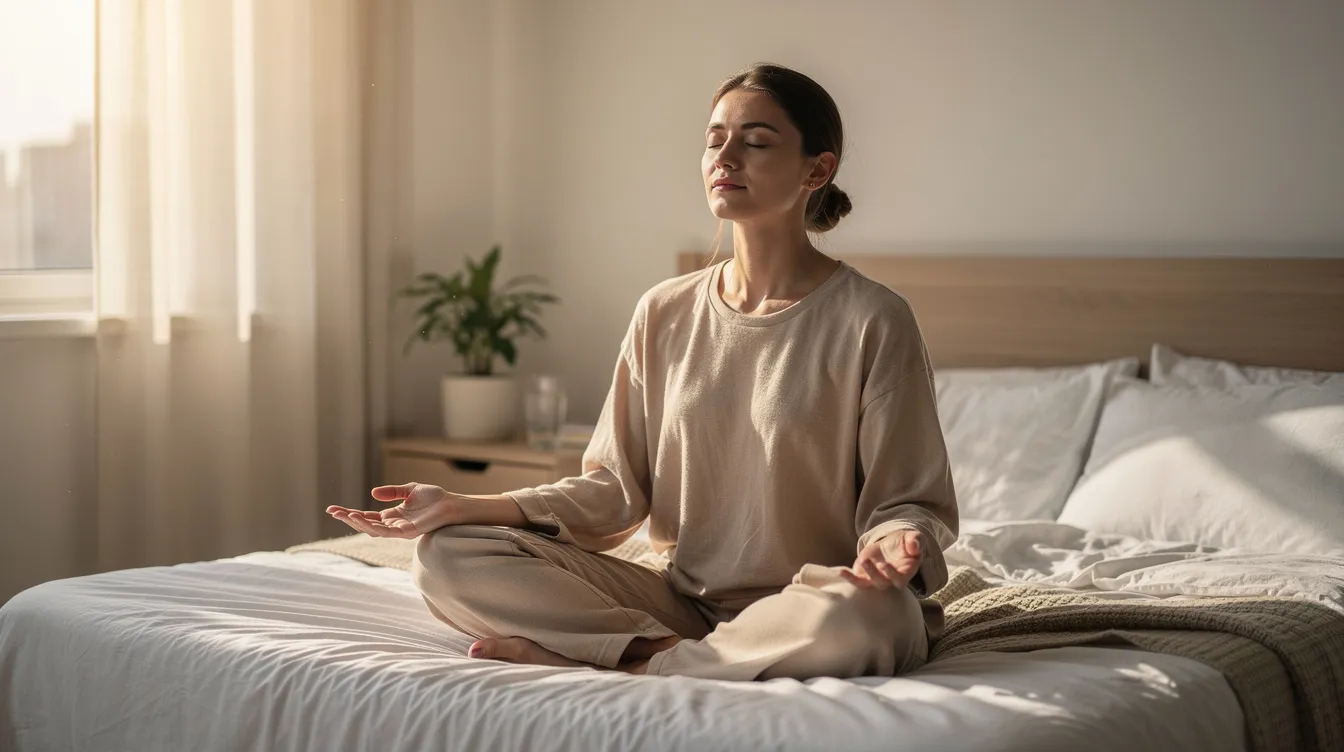
Body Scan For Sleep: Mind Body Connection And Nervous System
Three-Step Body Scan Progression
| Level | Duration | Focus |
|---|---|---|
| Beginner | 5 minutes | Lower body only |
| Intermediate | 10 minutes | Full body |
| Advanced | 20 minutes | Breath anchoring integration |
Frequency for Practice
Daily practice yields cumulative benefits. An international journal review found consistent body scan practice reduces chronic insomnia severity by 25-40% over 4 weeks.
How Body Scan Soothes the Nervous System
Body scan stimulates the vagal nerve, increasing heart rate variability and parasympathetic tone. This shifts your body from stress response into rest mode, supporting overall well being and the present moment awareness needed for sleep.
Gentle Movement And Self-Care To Improve Quality Sleep
Pre-Bed Stretches to Release Tension
Simple movements help your body relax before PMR:
- Child’s pose: Kneel and fold forward, hold 1 minute
- Legs-up-the-wall: Elevate legs against wall for 5 minutes
- Seated forward fold: Release hip and lower back tension
Brief Restorative Yoga Sequence
- Supine twist: Knees to chest, alternate sides (2 minutes)
- Supported bridge: Pillow under sacrum (3 minutes)
- Savasana with PMR integration (10 minutes)
This gentle movement sequence promotes relaxation and parasympathetic shift without raising cortisol.
Avoid Vigorous Exercise Within Two Hours
Intense activity within 2 hours of bed raises core temperature and adrenaline, delaying sleep onset by 30-60 minutes. Statistics indicate 70% of people with poor sleep benefit from following this timing rule. Use self massage instead for relaxation if you exercised late.
Addressing Poor Sleep And Mental Health

Progressive muscle relaxation sleep – gentle movement and self-care to improve quality sleep
PMR can indirectly reveal underlying mental health concerns. Track symptoms like racing thoughts, persistent tension, fatigue, or low motivation.
When to consult a healthcare professional:
- Insomnia persists longer than 3 months
- Daytime impairment occurs regularly
- You experience symptoms of anxiety or depression
- Sleep issues significantly impact your daily functioning
Combining somatic therapy approaches like PMR with cognitive behavioral therapy for insomnia (CBT-I) boosts outcomes by approximately 50%. A healthcare provider can help determine if your sleep difficulties require additional intervention.
Practical Tips And Troubleshooting For Muscle Relaxation
Build the Habit
Practice at a consistent time (around 10 PM) nightly. Research shows 80% efficacy after just 2 weeks of regular practice. Use deep breathing as your cue to begin.
Strategies for Wakeful Nights
If you wake and can’t return to sleep, perform abbreviated PMR without turning on lights. Stay in bed and work through the next muscle group sequence slowly.
When PMR Causes Discomfort
About 10% of beginners experience mild cramping if they over-tense. Switch to body scan or guided imagery if this occurs. Reduce stress on specific areas by decreasing intensity.
Use Noise-Masked Guided Recordings
Guided recordings with white noise overlay improve focus for 75% of users in noisy environments. This helps you stay in the present moment rather than noticing distractions.
Resources And Scripts: Progressive Muscle Relaxation And Body Scan Meditation
Adaptable PMR Script
“Inhale… tense your toes for 5 seconds… exhale slowly, release, feel warmth spread for 15 seconds… move to the next muscle group…”
Body Scan Script
“Bring awareness to your right foot… notice any sensations… accept them without judgment… let go with your breath…”
Reputable Guided Audio Sources
- VA Whole Health Library (free audio sessions)
- Harvard Health guided sleep recordings
- Mindfulness apps with dedicated PMR tracks
All offer accessible, high-rated content for sleep induction. Find a comfortable position and use these resources to establish your practice.
References And Further Reading
Key Studies
- PMC11091277: PMR reduces anxiety and sleep issues across clinical populations
- PMC8272667: PMR superior for physiological relaxation versus controls
- PMC9786620: Documents 125% increase in slow-wave sleep with PMR
Books and Courses
- Edmund Jacobson’s “Progressive Relaxation” (1938, foundational text)
- “Relaxation for Dummies” for accessible scripts
- Coursera’s “Science of Well-Being” course integrating PMR with sleep hygiene
Start tonight with the 5-minute condensed version. Track your sleep quality for two weeks, and you’ll likely notice significant improvements in how quickly you fall asleep and how rested you feel. Your body already knows how to relax—you just need to remind it.