

If you’ve spent countless sleepless nights staring at the ceiling, willing yourself to fall asleep, you know the frustration. For many people, the moment their head hits the pillow, they may experience increased alertness or racing thoughts, making it even harder to drift off. The harder you try, the more awake you feel. What if the solution was doing the exact opposite?
Paradoxical intention for sleep flips conventional wisdom on its head. Instead of forcing yourself to sleep, you deliberately try to stay awake. This counterintuitive technique has decades of clinical sleep medicine research behind it, and it might be exactly what you need to overcome sleep anxiety and finally achieve restful sleep.
This guide walks you through the science, practical application, and integration of paradoxical intention into your sleep habits. Whether you’re dealing with occasional sleep issues or chronic insomnia, you’ll learn actionable steps to break the anxiety cycle that’s keeping you awake.
What Paradoxical Intention Is And Why It Helps You Fall Asleep
Paradoxical intention is a psychotherapeutic technique where you deliberately intend the very thing you fear—in this case, staying awake instead of sleeping. Originally developed by psychiatrist Viktor Frankl in the 1960s, researchers adapted it specifically for insomnia treatment in the 1970s.
Paradoxical intention and cognitive behavioral therapy are also used to treat anxiety, particularly by reducing sleep-related anxiety and stress linked to sleep issues.
The concept is simple: lie in bed in a darkened room and attempt to remain awake as long as possible. Keep your eyes open if needed. By removing the pressure of “I must sleep now,” you eliminate the performance anxiety that blocks natural sleep onset.
Sleep is an involuntary process. The more you try to control it, the more it slips away.
Paradoxical intention is now recognized as a core component of cognitive behavioral therapy for insomnia (CBT-I), often used alongside sleep restriction therapy. The American Academy of Sleep Medicine acknowledges its evidence-based status.
What the research shows:
| Outcome | Finding |
|---|---|
| Sleep onset latency | Adults fell asleep nearly 30 minutes faster |
| Effectiveness vs. controls | Large improvements in systematic review of 10 trials |
| Long-term results | Benefits maintained up to 6 months post-treatment |
A 2021 meta-analysis found paradoxical intention produces significant improvements in key insomnia symptoms compared to passive controls, with studies consistently linking its effectiveness to reductions in sleep-related anxiety.
How Paradoxical Intention Works On The Nervous System

Paradoxical intention sleep – what paradoxical intention is and why it helps you fall asleep
Your nervous system operates in two primary modes that affect sleep directly:
Sympathetic activation (fight-or-flight): Elevated heart rate, hyperarousal, heightened attention to sleep cues. This is what happens when you lie in bed anxiously monitoring whether you’re falling asleep.
Parasympathetic dominance (rest-and-digest): Calm state, lowered heart rate, natural drowsiness. This is what your body needs to transition into sleep.
When you’re stressed about not sleeping, stress hormones flood your system. Your body interprets bedtime performance anxiety as a threat, activating sympathetic responses that directly oppose the relaxation needed for the sleep process.

Paradoxical intention works by removing the “explicit intention to sleep” that triggers this arousal cascade. When you tell yourself to stay awake, you eliminate the threat signal. Your nervous system can shift toward parasympathetic calming, allowing natural sleepiness to emerge.
Professor Colin Espie of the University of Oxford explains that interference from control efforts undermines the sleep process. Paradoxical intention works with natural processes rather than against them.
How It Helps Overcome Sleep Anxiety
Performance anxiety at bedtime creates a vicious cycle:
- You worry about not sleeping
- Worry triggers physical arousal
- Arousal prevents sleep
- Not sleeping confirms your fears
- Tomorrow night, anxiety is worse
This cycle is the hallmark of psychophysiological insomnia—intense preoccupation with sleep loss that paradoxically causes more sleep problems.
Practicing paradoxical intention breaks this loop by shifting your mindset from “I must sleep” to “I will rest awake.” This cognitive shift has measurable effects:
- Removes direct and indirect sleep effort
- Habituates conditioned bedtime anxiety
- Allows natural sleep drive to take over
Studies show participants using paradoxical intention demonstrate noteworthy decreases in subjective sleep onset latency, strongly correlated with diminished sleep effort. One trial noted immediate drops in subjective tension within sessions, with some individuals experiencing paradoxical sleep onset within 10-20 minutes.
Step-by-Step Practice: Bedtime Routine, Go To Bed, And In-Bed Actions
Ready to try paradoxical intention? The technique integrates naturally into a simple bedtime routine.
Start your practice when you feel mildly tired—not exhausted, not wide awake. Go to bed only when genuine drowsiness sets in. Timing matters because forcing yourself into bed early just extends the anxious waiting period.
Here’s your complete protocol, broken into three phases.
Before You Go To Bed
Your pre-sleep environment sets the stage for success. Begin these preparations 30-60 minutes before lights out:
Lighting adjustments:
- Dim overhead lights throughout your home
- Switch to warm-toned lamps or candles
- This naturally boosts melatonin production in preparation for nighttime sleep
Screen and stimulant avoidance:
- Avoid caffeine after noon (it stays in your system 6+ hours)
- Put away electronic devices at least 30 minutes before bed
- Blue light from screens signals your body’s internal clock to stay alert. Maintaining these habits helps regulate the body’s internal clock, which is essential for enhancing overall sleep quality.
Meal timing:
- Finish heavy meals three hours before sleep
- Digestive activity creates physical discomfort and arousal that can affect sleep quality
Consider engaging in quiet activities or relaxing activities during this wind-down period—reading, light stretching, or listening to calm music.
In-Bed Steps To Fall Asleep Faster While Staying Awake
Once you go to bed, implement the paradoxical intention protocol:
- Get comfortable: Lie in your preferred position. Ensure your room is dark and at a comfortable temperature.
- Relax your muscles: Release tension from your face, shoulders, and limbs. Let your body sink into the mattress.
- Keep eyes open briefly: This is key. Instead of squeezing your eyes shut hoping sleep slips in, gently keep them open. Look at a neutral spot on the ceiling or wall.
- Adopt neutral focus: Tell yourself your only job is to remain awake. No judgment, no monitoring, no trying to make anything happen. Simply rest with eyes open.
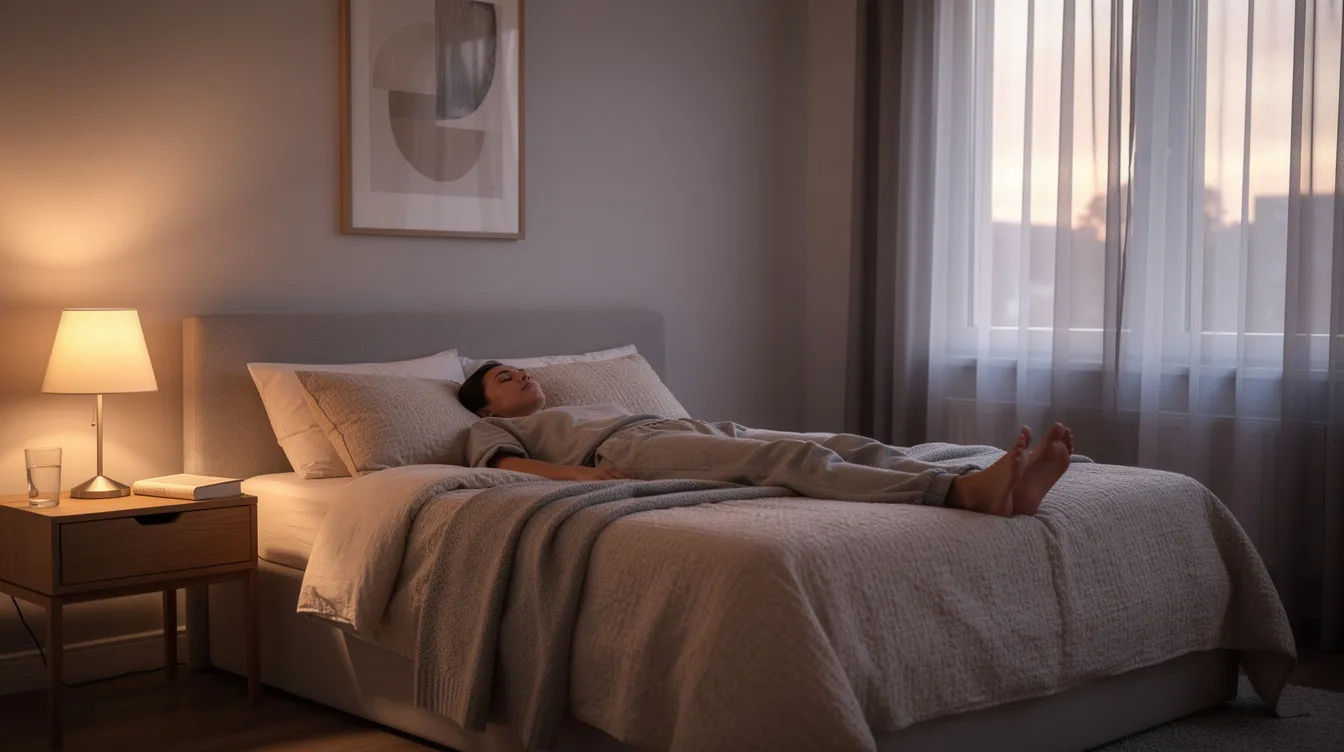
The goal isn’t to force wakefulness—it’s to remove the pressure of forcing sleep.
Many people report that within minutes of committing to staying awake, their eyes grow heavy naturally. The moment you stop fighting for sleep, the involuntary process can proceed unimpeded.
Use Deep Breathing To Support The Technique
Pairing paradoxical intention with deep breathing enhances its effectiveness by promoting vagal tone and parasympathetic activation.
The 4-4-6 breathing pattern:
| Phase | Duration | Action |
|---|---|---|
| Inhale | 4 seconds | Breathe slowly through your nose |
| Hold | 4 seconds | Pause gently, no strain |
| Exhale | 6 seconds | Release slowly through nose or mouth |
Instructions for practice:
- Place one hand on your chest, one on your belly
- Focus on diaphragmatic breaths (belly rises, chest stays relatively still)
- Practice for several minutes before attempting to stay awake
- Avoid hyperventilation—keep the pace slow and natural
This breathing pattern activates the parasympathetic nervous system, helping you feel sleepy without directly pursuing sleep.
Who Should Try This And How It Fits With CBT-I And Mental Health Care

Paradoxical intention sleep – step-by-step practice: bedtime routine, go to bed, and in-bed actions
Paradoxical intention offers particular value for specific insomnia presentations:
Ideal candidates:
- People with performance-anxiety-driven difficulty falling asleep
- Those with psychophysiological insomnia (fear of sleepless nights creates sleepless nights)
- Individuals experiencing frequent awakenings with trouble staying asleep
- Anyone who has tried forcing sleep without success
Integration with CBT-I:
CBT-I remains the gold standard treatment for chronic insomnia, recommended by the Academy of Sleep Medicine. Paradoxical intention fits seamlessly as one component within comprehensive CBT-I plans that include:
- Stimulus control therapy
- Sleep restriction therapy
- Sleep hygiene education
- Cognitive restructuring
If you’re working with a therapist on CBT-I, paradoxical intention can serve as a standalone technique or complement other interventions.
When to seek professional guidance:
Paradoxical intention alone may not suffice—and could potentially be counterproductive—for:
- Sleep apnea (requires specific treatment for obstructive breathing)
- Restless legs syndrome (needs medical evaluation)
- Severe depression with anhedonia
- Mental health disorders requiring comprehensive treatment
- Circadian rhythm disorders
- Underlying health issues affecting sleep
If anxiety is secondary to medical conditions, treating the underlying issues takes priority.
Consult a healthcare provider if you suspect a sleep disorder beyond simple insomnia, or if symptoms persist beyond several weeks of consistent practice.
Complementary Habits To Support Circadian Rhythm And Better Sleep
Paradoxical intention works best within a broader framework of healthy sleep patterns. These complementary practices strengthen your internal clock and natural sleep drive.
Consistent sleep-wake schedule:
- Wake at the same time daily, including weekends
- Variations of more than an hour disrupt your circadian rhythm
- Consistency anchors your body’s internal clock
Morning light exposure:
- Get 10-30 minutes of bright light within an hour of waking
- Natural sunlight is ideal; light therapy boxes work too
- Light exposure resets your suprachiasmatic nucleus (your master clock)
- This strengthens your sleep foundation for deeper sleep at night

Daytime exercise:
- Aim for 150 minutes of aerobic activity weekly
- Exercise regularly to build adenosine accumulation
- Physical activity creates stronger nighttime sleep pressure
- Avoid intense exercise within 3 hours of bedtime
These habits support overall health while creating the biological conditions that make nighttime sleep more achievable.
Additional Relaxation Tools To Pair With Paradoxical Intention
Beyond the core technique, several relaxation techniques can enhance your practice:
Progressive muscle relaxation:
- Systematically tense and release muscle groups
- Hold tension for 5-10 seconds, then release
- Work from feet to face or face to feet
- Pairs well with paradoxical intention for physical de-arousal
Brief guided imagery:
- Visualize calm, peaceful scenes for 5 minutes
- Beach settings, forest walks, or floating clouds work well
- Helps quell racing thoughts before you begin staying awake
- Engages your mind alert in neutral, non-anxious content
Clock management:
- Remove visible clocks from your bedroom
- Clock-watching fuels anxiety via “doom-scrolling” time awake
- Use sleep trackers sparingly—obsessive monitoring can worsen insomnia
The less you monitor your sleep, the less pressure you create.
These tools address both physical and cognitive arousal, creating optimal conditions for the paradoxical intention technique to work.
Troubleshooting: When It’s Not Working And Next Steps

Paradoxical intention sleep – complementary habits to support circadian rhythm and better sleep
Paradoxical intention doesn’t always produce immediate results. Here’s how to troubleshoot common challenges:
Give it time:
- Persist for two to four weeks before judging effectiveness
- Initial sessions may feel strange or even counterproductive
- Some people experience temporary increases in sleep onset latency before improvement
- The technique requires practice to master the mindset shift
Adjust your approach:
| Problem | Adjustment |
|---|---|
| Too alert at bedtime | Go to bed later, only when mildly tired |
| Mind still racing | Add pre-bed relaxation techniques |
| Trying too hard to stay awake | Remember: neutral focus, not forced wakefulness |
| Inconsistent results | Keep a sleep diary tracking SOL and anxiety levels |
Refine pre-bed hygiene:
- Ensure you’ve addressed sleep hygiene basics
- Verify you’re truly avoiding stimulants and screens
- Consider whether chronic pain or physical discomfort needs attention
When to seek professional help:
If symptoms persist beyond four weeks of consistent practice, consider:
- Referral to a CBT-I therapist for comprehensive treatment
- Evaluation for anxiety disorders or mental health conditions requiring treatment
- Medical assessment to rule out sleep medicine concerns
- Discussion with your healthcare provider about whether sleep medications might be appropriate short-term
Meta-analyses note that while paradoxical intention shows promise, response rates vary (60-80% in older studies). Some individuals respond better to other CBT-I components. Professional guidance can help identify the right treatment mix for your specific situation.
Key Takeaways And Writing Prompts
Paradoxical intention offers a counterintuitive but scientifically supported path to better sleep. By deliberately trying to stay awake, you remove the performance anxiety that blocks natural sleep onset. This technique works with your body’s involuntary process rather than fighting it.
Core benefits recap:
- Reduces sleep effort and performance anxiety
- Allows parasympathetic nervous system to promote rest
- Can cut sleep onset latency by 50% in responsive individuals
- Non-invasive with minimal risks
- Sustainable improvements lasting months after treatment
Your action plan for tonight:
- Begin your bedtime routine 30-60 minutes before your target sleep time
- When mildly tired, go to bed in a dark, comfortable room
- Lie down, relax muscles, and gently keep eyes open
- Tell yourself you’ll simply rest awake—no pressure to sleep
- Practice deep breathing using the 4-4-6 pattern
- Notice what happens when you stop trying
Track your results in a simple diary. Note how long you feel it takes to fall asleep and your anxiety level (1-10 scale) each night.
When to take next steps:
If you’ve practiced consistently for several weeks without improvement, or if sleep problems significantly impact your well being, it’s time to seek professional evaluation. A CBT-I therapist can help you integrate paradoxical intention with other evidence-based techniques. Your healthcare provider can assess for underlying issues like sleep apnea, mental health disorders, or conditions requiring treatment beyond behavioral approaches.
Your loved ones and your overall health deserve the attention that addressing poor sleep provides. The path to restful sleep might start with something as simple as telling yourself to stay awake tonight.