The idea of beauty sleep might sound like folklore, but science confirms it’s real. A 2010 study from Stockholm photographed 23 adults after normal sleep and after sleep deprivation. Untrained observers consistently rated sleep-deprived faces as less attractive, less healthy, and more tired.
This article explores how beauty sleep science works at the cellular level, what happens when you don’t get enough sleep, and practical steps to harness your body’s nightly repair processes for healthier skin. Adequate sleep supports the skin’s cellular repair by improving blood flow and circulation, which delivers oxygen and nutrients essential for repairing skin cells and removing toxins. Recent research published in the International Journal of Molecular Sciences (Int J Mol Sci) further explores the molecular mechanisms linking sleep, cellular repair, and skin health.
How Beauty Sleep Triggers Repair Mode And Circadian Rhythm
Your skin enters repair mode each night, driven by your circadian rhythm—the internal 24-hour clock regulated by your brain’s hypothalamus. This rhythm synchronizes clock genes in skin cells, timing when repair proteins activate. Sleep affects various aspects of skin health, including how well your skin repairs itself, its overall appearance, and its resilience against issues like aging, dryness, and dullness.
Sleep stages directly influence skin activity. Light sleep reduces sympathetic nervous system activity, improving blood flow. Deep sleep triggers growth hormone release. REM sleep supports anti-inflammatory processes. Disrupting these stages halves your skin’s ability to repair itself.
Cell Regeneration During Sleep
Cell regeneration peaks during deep sleep, typically between 2-4 AM when cortisol hits its lowest point and melatonin peaks. During this window, cell turnover in your basal skin layer doubles, with keratinocytes—your primary skin cells—entering a hyperproliferative state.
Poor sleep habits dramatically slow this process. Research shows that sleeping fewer than six hours reduces cell regeneration by 30-50%, measured through decreased Ki-67 proliferation markers. You can track regeneration effects through:
- Transepidermal water loss readings (healthy: under 10 g/m²/h)
- Corneometer hydration scores (healthy: above 40 units)
- Visual tracking of skin texture changes over 4 weeks
Collagen Production And Skin Ageing
Collagen production surges 2-3 fold during early sleep cycles. This happens because growth hormone pulses during deep sleep, with plasma levels spiking 200-500% above daytime baselines. Growth hormone stimulates fibroblasts to produce procollagen type I, the building block of skin structure.
Reduced sleep cuts growth hormone secretion by 25-75%, directly accelerating skin ageing.
When collagen production drops, matrix metalloproteinases (MMP-1) increase, breaking down existing collagen faster. Studies show postmenopausal women develop 15% more wrinkles after just one week of sleep restriction. Growth hormone also helps stimulate collagen production, boosts hyaluronic acid synthesis for hydration, and supports elastin crosslinking to keep skin firm and skin resilient.
Blood Flow Peaks And Nighttime Glow
Blood flow to your skin increases 20-50% during sleep. Lower norepinephrine and elevated nitric oxide cause vasodilation, with capillary perfusion rising from 5-10 mL/min/100g tissue during the day to 15-20 mL at night.
This enhanced circulation means better nutrient delivery, delivering oxygen and antioxidants while clearing deoxygenated hemoglobin. The result is visibly improved skin tone and natural glow.
Poor sleep triggers vasoconstriction, reducing facial perfusion by up to 30%. Laser Doppler studies confirm sleep-deprived subjects show 15% lower blood flow, contributing to pallor and uneven complexion.
Consequences Of Poor Sleep And Poor Sleep Quality

Beauty sleep science – how beauty sleep triggers repair mode and circadian rhythm
Poor sleep means sleeping fewer than seven hours—the minimum recommended by the American Academy of Sleep Medicine for adults. Poor sleep quality involves fragmentation, low efficiency (below 85%), or insufficient deep and REM stages.
Research aggregating over 50 studies shows chronic short sleep doubles skin damage risk through oxidative stress and telomere shortening equivalent to 5-10 years of aging. The visible signs after poor sleep include drooping eyelids, paler complexion, and reduced mouth curvature. Insufficient sleep can also lead to lower satisfaction with skin appearance, as poor sleep quality negatively impacts how people perceive their skin.
Dark Circles, Puffiness And Visible Fatigue
Dark circles form because periorbital skin is exceptionally thin (0.5mm versus 2mm on cheeks), making venous blood visible underneath. Sleep deprivation causes hypoxia, increasing deoxygenated hemoglobin that absorbs light at 550nm, creating that characteristic blue-brown discoloration.
Puffiness results from fluid retention when you sleep poorly. Aldosterone levels rise 25% after sleep deprivation, causing 1-2mm of periorbital edema. Short-term fixes include:
- Cold compresses (reduces swelling 40% via vasoconstriction)
- Caffeine-based serums (5% concentration constricts vessels 20%)
- Lymphatic massage (improves drainage 30%)
Inflammation, Breakouts And Barrier Dysfunction
Sleep deprivation elevates cortisol levels, with nighttime peaks running 50% higher than normal. This suppresses anti-inflammatory IL-10 while boosting inflammatory markers IL-6 and TNF-α by 2-3 fold.
Elevated cortisol impairs the skin barrier, which is the skin’s protective layer responsible for preventing damage from environmental stressors and moisture loss. When poor sleep compromises the skin’s protective barrier, it leads to increased sensitivity, dryness, and greater vulnerability to environmental damage such as UV rays, pollution, and harsh weather conditions. Ceramide loss reaches 15-20%, transepidermal water loss increases 25%, and skin’s protective barrier weakens. Your skin loses its ability to retain moisture, leading to dryness and sensitivity.
Chronic poor sleep worsens existing conditions:
| Condition | Impact of Poor Sleep |
|---|---|
| Eczema | Flares 3x more frequent |
| Rosacea | Telangiectasia progresses 40% faster |
| Acne | Increased sebum oxidation |
Blue Light, Screens, And Sleep Disruption
Blue light from screens (460-480nm wavelength) suppresses melatonin production by 20-50%, essentially cutting its effectiveness in half. This happens because intrinsically photosensitive retinal ganglion cells detect blue light and signal your pineal gland to delay melatonin release.
More than two hours of evening screen exposure delays sleep onset by 1-2 hours. This directly affects skin by shortening your time in restorative sleep stages. Protective habits include:
- Blue-blocking glasses (preserves 23% more melatonin)
- Screen-dimming software like f.lux (reduces phase delay 15%)
- 90-minute pre-bed screen curfew
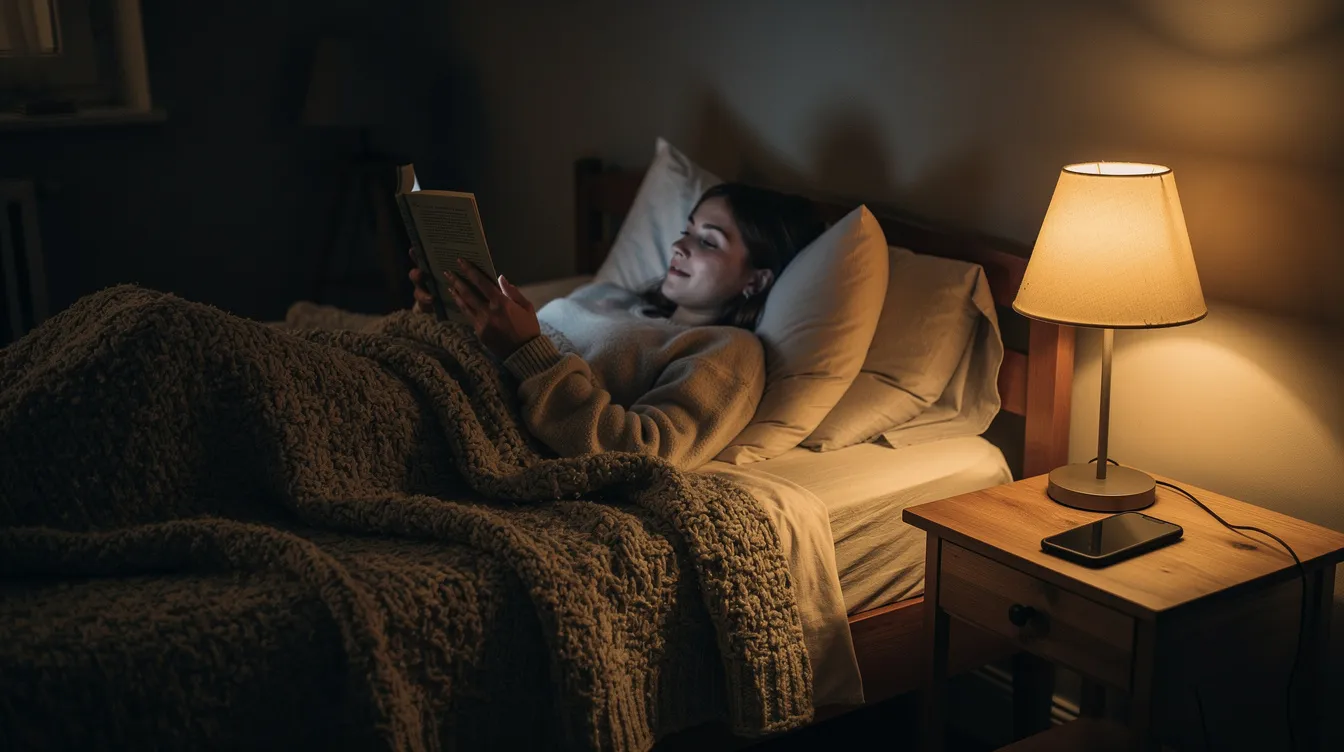
Practical Tips To Improve Quality Sleep For Skin

Beauty sleep science – blue light, screens, and sleep disruption
Building a consistent sleep schedule ranks highest for sleep quality improvement. Going to bed and waking within 30 minutes of the same time daily aligns your circadian rhythm and increases deep sleep by 25%.
Optimize your sleep environment:
- Keep bedroom temperature at 16-18°C
- Use blackout curtains blocking 99%+ of light
- Add white noise to reduce arousal by 40%
Quality sleep helps your skin recover from daily stressors such as pollution and UV exposure, supporting its resilience and repair.
Limit substances that fragment sleep:
- Cut caffeine 6-8 hours before bed (half-life is 5 hours)
- Avoid alcohol within 3 hours (fragments REM by 30%)
Pre-sleep routines matter for adequate rest:
- Practice 4-7-8 breathing (lowers heart rate 15%)
- Try progressive muscle relaxation (reduces sleep onset by 10 minutes)
- Engage in calming activities like light stretching
Morning daylight exposure (10,000 lux for 30 minutes) advances your sleep phase 1-2 hours, helping you fall asleep earlier and maintain your schedule. These sleep habits are essential for achieving and maintaining healthy skin.
Nighttime Skincare To Support Repair Mode
Your skincare routine should support your skin’s natural repair processes. Apply products 1-2 hours before bed to avoid occlusion during peak growth hormone release.
| Goal | Ingredients | Benefit |
|---|---|---|
| Cell regeneration | Retinoids (0.1-0.3%) | Boosts turnover 50% |
| Collagen support | Peptides/Matrixyl | Increases collagen 25% |
| Barrier repair | Ceramides, Niacinamide | Reduces TEWL 30% |
| Skin hydration | Hyaluronic acid | Improves moisture 40% |
These ingredients work with your skin’s natural defenses rather than against them. Timing matters—applying earlier in the evening allows absorption before you enter deep sleep, when your body focuses on internal repair rather than surface-level penetration.
Tracking Results And When To Seek Help

Beauty sleep science – nighttime skincare to support repair mode
Track your hours of sleep alongside skin changes using wearables like Oura or Whoop (80-90% accuracy compared to clinical polysomnography). Journaling sleep duration and skin’s appearance reveals patterns—many people notice a 15% improvement in skin’s appearance after two weeks of 7+ hours sleep.
Consult a dermatologist if you see persistent increased signs of aging like deep wrinkles or age spots despite adequate sleep. Seek a sleep specialist if you suspect sleep apnea or chronic insomnia—30% of early skin ageing links to undiagnosed sleep disorders.
Conclusion And Key Takeaways On Beauty Sleep Science
The connection between sleep and skin is physiological, not mythical. During restorative sleep, your body activates repair mechanisms that reduce fine lines, maintain skin elasticity, support immune function, and protect against external stressors. Skipping adequate sleep means skipping these benefits entirely.
Your beauty sleep checklist:
- Maintain consistent bed/wake times (±30 minutes)
- Create a dark, cool sleep environment
- Avoid screens 90 minutes before bed
- Apply repair-supporting skincare 1-2 hours pre-sleep
- Track sleep duration and skin changes weekly
The science is clear: quality sleep directly affects your overall health and well being, and your skin shows it. A tired complexion from poor sleep, dull skin, and sagging skin aren’t just cosmetic concerns—they’re signals your body isn’t getting the rest it needs.
This week, choose one change from the list above and commit to it for seven days. Whether it’s installing blackout curtains or setting a caffeine cutoff, small adjustments compound into visible results. Your skin increases its repair capacity when you give it adequate rest—the question is whether you’ll let it.