
Sleep disorders affect an estimated 50 to 70 million adults in the United States, yet many cases remain undiagnosed. Whether you’re struggling to fall asleep at night, waking up exhausted despite hours in bed, or dealing with unusual behaviors during sleep, understanding the landscape of sleep wake disorders can help you take the right steps toward better rest.
This guide covers the major types of sleep disorders, from insomnia and obstructive sleep apnea to circadian rhythm sleep wake disorders and sleep related movement disorders. We’ll explore causes, diagnostic approaches recommended by the American Academy of Sleep Medicine, and evidence-based management strategies. The American Psychiatric Association is also a key authority in establishing standardized diagnostic criteria for sleep disorders.
If you’re a healthcare professional looking for diagnostic workflows, a patient experiencing symptoms, or simply someone interested in sleep health, you’ll find practical information to guide your next steps.
Overview of How Much Sleep Is Enough
Before diving into disorders, it’s helpful to establish what normal sleep patterns look like. According to consensus guidelines from organizations like the National Sleep Foundation, adults need seven to nine hours of sleep nightly for optimal health.
Despite this recommendation, nearly 40% of Americans report getting six hours or less regularly.
Insufficient sleep is linked to a range of health consequences, including:
- Increased risk of heart disease, cardiovascular disease, type 2 diabetes, and obesity
- Impaired cognitive function and memory
- Weakened immune system
- Mood disturbances and increased risk of depression
Individual Variability in Sleep Need
Not everyone requires the same amount of sleep. Several factors influence your personal requirement:
| Factor | Impact on Sleep Need |
|---|---|
| Genetics | Some individuals naturally thrive on less sleep |
| Chronotype | Morning vs. evening preferences affect timing |
| Age | Older adults may need slightly less |
| Lifestyle | Physical activity and stress levels play a role |
Health Consequences of Insufficient Sleep
Chronic short sleep (less than seven hours) increases risk for:
- Cardiovascular disease
- Type 2 diabetes
- Obesity
- Cognitive impairment
- Mental health conditions
Sleep deprivation doesn’t just leave you tired. It correlates with motor vehicle collisions, workplace accidents, and increased all-cause mortality. People with comorbid conditions face amplified risks—61% of diabetic patients report poor quality sleep, and 51% screen positive for sleep apnea risk.
Problems Falling Asleep and Insomnia Disorder

Common sleep disorders – overview of how much sleep is enough
Difficulty falling asleep is one of the most common sleep complaints. Insomnia is the most common sleep disorder among adults, affecting a significant portion of the population. Clinically, this presents as sleep onset taking longer than 30 minutes, leaving you frustrated and watching the clock.
Common Presentations
Sleep problems manifest in distinct ways:
- Difficulty initiating sleep: Taking more than 30 minutes to fall asleep
- Trouble staying asleep: Waking multiple times during the night
- Early morning awakening: Waking hours before intended, unable to return to sleep
Each pattern may point to different underlying causes. Difficulty falling asleep often relates to anxiety, poor sleep habits, or circadian misalignment. Nighttime awakenings frequently suggest sleep disordered breathing or periodic limb movement disorder. Early awakenings commonly appear in depression.
Using a Sleep Diary for Assessment
A sleep diary is an essential first step in evaluating any sleep complaint. Track these elements for two weeks:
- Bedtime and estimated sleep onset time
- Number and duration of awakenings
- Final wake time and time out of bed
- Caffeine, alcohol, and medication use
- Daytime naps and their duration
- Subjective sleep quality rating
This data helps identify patterns and rule out confounders like excessive caffeine or inconsistent schedules before pursuing more extensive workup.
Insomnia Disorder and Cognitive Behavior Therapy
According to the International Classification of Sleep Disorders Third Edition (ICSD-3), chronic insomnia disorder requires:
- Dissatisfaction with sleep quantity or quality
- Difficulty falling asleep, staying asleep, or early awakening
- Adequate opportunity for sleep
- Daytime consequences (fatigue, mood disturbances, cognitive issues)
- Symptoms occurring at least three nights weekly
- Duration of at least three months
- Not better explained by another disorder, substance, or medical condition
About 10% of adults meet full diagnostic criteria, with insomnia symptoms affecting nearly a third of the population at any given time. Women experience higher rates (17.6%) compared to men (10.1%).
The clinical practice guideline from the American Academy of Sleep Medicine recommends cognitive behavior therapy for insomnia (CBT-I) as first-line treatment—not medication. Clinical guidelines and evidence-based practices for insomnia disorder are also published in J Clin Sleep Med.
Core CBT-I Components
CBT-I delivers better long-term outcomes than pharmacotherapy, with 70-80% of patients responding to treatment. A brief CBT-I protocol (4-8 sessions) includes:
Sleep Restriction Limiting time in bed to match actual sleep time. If you’re sleeping 5 hours while spending 8 hours in bed, you’d restrict to 5.5 hours initially, then gradually extend as sleep efficiency improves.
Stimulus Control The bed becomes associated only with sleep and intimacy. Rules include:
- Go to bed only when sleepy
- Leave the bedroom if awake longer than 20 minutes
- Wake at the same time daily regardless of sleep amount
- No reading, screens, or work in bed
Cognitive Restructuring Challenging unhelpful beliefs about sleep. Thoughts like “I must get 8 hours or I can’t function” create anxiety that perpetuates insomnia.
Relaxation Training Progressive muscle relaxation, guided imagery, or breathing techniques to reduce physiological arousal at bedtime.
Sleep Hygiene Education Behavioral guidelines supporting restful sleep:
- Maintain a consistent sleep wake cycle
- Avoid screens for 1-2 hours before bed
- Limit caffeine after noon
- Keep the bedroom cool, dark, and quiet
- Practice good sleep hygiene consistently
When to Escalate Treatment
If CBT-I fails after adequate trial, pharmacotherapy may be considered. Short-term options include:
| Medication Class | Examples | Considerations |
|---|---|---|
| Non-benzodiazepine hypnotics | Zolpidem, eszopiclone | Short-term use; dependence risk |
| Orexin antagonists | Suvorexant, daridorexant | Newer option; may sustain efficacy 6+ months |
| Melatonin receptor agonists | Ramelteon | Lower abuse potential |
Psychological treatments should remain the foundation, with medications as adjuncts rather than replacements for behavioral intervention.
Obstructive Sleep Apnea and Excessive Daytime Sleepiness
Adult obstructive sleep apnea affects approximately 22 million Americans—about one in 15 people. Yet nearly 80% of cases remain undiagnosed, making it among the most underrecognized common sleep disorders.
Key Features of OSA
Obstructive sleep apnea occurs when the upper airway repeatedly collapses during sleep, causing:
- Apneas: Complete breathing cessation for 10+ seconds
- Hypopneas: Partial airway collapse with oxygen desaturation or arousal
These events fragment sleep and prevent restorative rest, leading to excessive daytime sleepiness despite adequate time in bed.
Risk Factors
Several factors increase OSA risk:
- Obesity (BMI >30 triples risk)
- Male sex (2:1 ratio vs. women premenopause)
- Age >50 years
- Neck circumference >17 inches (men) or >16 inches (women)
- Family history
- Anatomical features (large tonsils, recessed chin)
Screening Approach
A bed partner often provides crucial history. Key questions include:
- Does the patient snore loudly?
- Has the bed partner witnessed apneas (breathing pauses)?
- Does the patient gasp or choke during sleep?
- Is there excessive daytime sleepiness?
The STOP-BANG questionnaire provides structured screening:
| Component | Criterion |
|---|---|
| Snoring | Loud enough to be heard through closed doors |
| Tiredness | Daytime fatigue or sleepiness |
| Observed apneas | Witnessed by bed partner |
| Pressure | History of hypertension |
| BMI | Greater than 35 |
| Age | Older than 50 |
| Neck | Circumference exceeding thresholds |
| Gender | Male sex |
A score of 3 or higher indicates high risk warranting further evaluation.
Treatment with CPAP
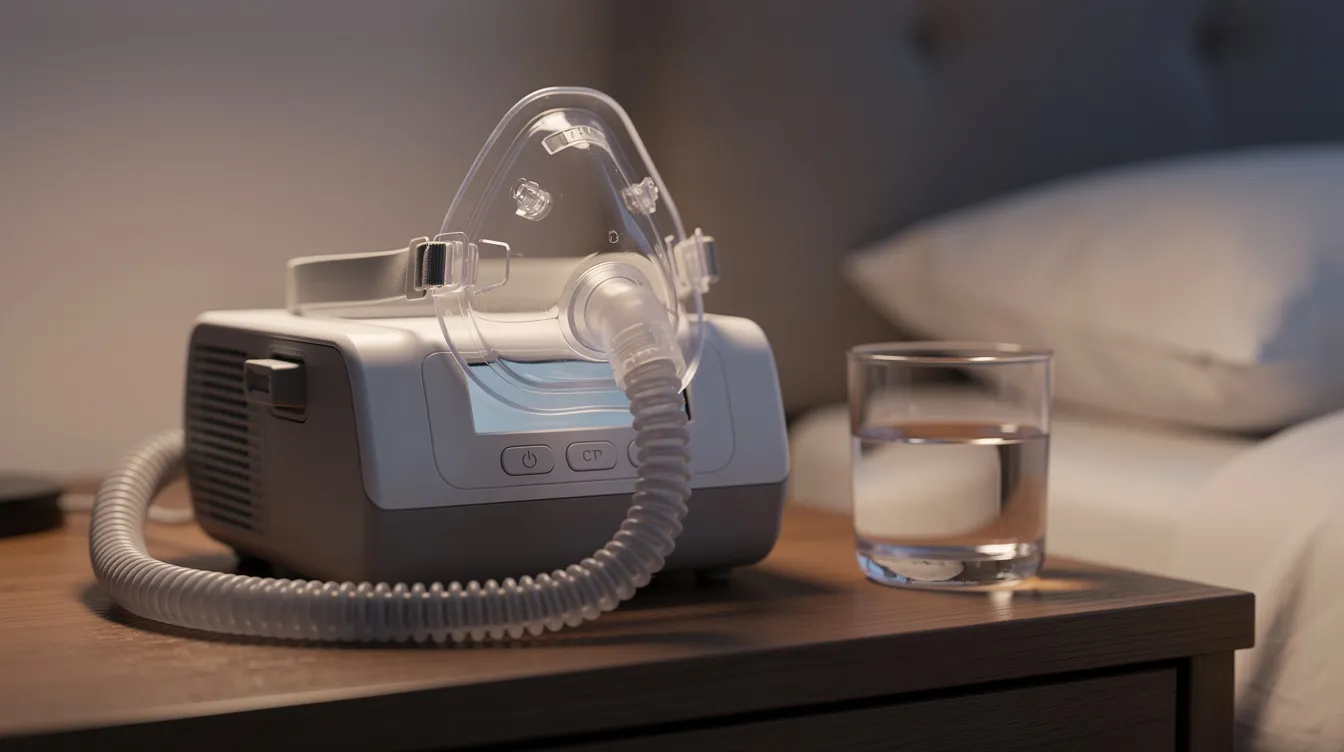
Continuous positive airway pressure remains the gold standard for moderate-to-severe OSA. CPAP delivers pressurized air through a mask, splinting the airway open during sleep.
Efficacy is excellent—CPAP reduces apnea-hypopnea index (AHI) by more than 50% in 70-90% of users. Benefits include:
- Reduced daytime sleepiness
- Improved blood pressure control
- Lower cardiovascular risk
- Better cognitive function
Average adherence runs 4-6 hours nightly. Heated humidification and mask fitting optimization improve comfort and compliance.
Weight Loss Interventions
For overweight patients with mild OSA, weight loss can be transformative. Losing 10% of body weight resolves mild sleep related breathing disorders in over 50% of cases.
Approaches include:
- Structured diet and exercise programs
- Medically supervised weight loss
- Bariatric surgery for severe obesity
Weight loss works synergistically with CPAP and may allow therapy discontinuation in some patients.
Diagnosis: Polysomnography and Daytime Sleepiness Testing
When clinical suspicion is high, objective testing confirms the diagnosis and guides management.
Indications for Overnight Polysomnography
In-laboratory polysomnography (PSG) remains the gold standard for sleep disorders diagnosed through objective testing. PSG indications include:
- High clinical suspicion for sleep apnea
- Symptoms like excessive daytime sleepiness or witnessed apneas
- Comorbidities including hypertension, arrhythmias, or heart failure
- Need for CPAP titration
- Suspected comorbid disorders requiring EEG monitoring
PSG measures AHI, oxygen saturation, sleep stages, and limb movements to characterize sleep disordered breathing severity.
Home Sleep Apnea Tests
Home sleep apnea tests offer a cost-effective alternative ($200-500 vs. $3,000 for laboratory PSG) when criteria are met:
- High pretest probability for OSA
- No significant cardiopulmonary disease
- No suspected comorbid sleep disorder requiring EEG
- Ability to apply device independently
An AHI ≥15 on home testing confirms moderate-severe OSA without laboratory confirmation. Lower AHIs may require follow-up PSG.
Multiple Sleep Latency Test
When excessive daytime sleepiness persists despite treating obvious causes, the multiple sleep latency test evaluates for central hypersomnias. Performed the day after overnight PSG, the MSLT measures:
- How quickly patients fall asleep across 4-5 scheduled naps
- Whether REM sleep appears early (sleep-onset REM periods)
Mean sleep latency under 8 minutes with ≥2 sleep-onset REM periods supports narcolepsy diagnosis.
REM Sleep Behavior Disorder and REM Sleep

Common sleep disorders – obstructive sleep apnea and excessive daytime sleepiness
During normal rapid eye movement sleep, the body experiences muscle atonia—temporary paralysis preventing movement during dreams. In REM sleep behavior disorder, this protective mechanism fails.
Features of RBD
Patients with RBD physically act out their dreams, often with violent or vigorous movements:
- Punching, kicking, or flailing
- Shouting or yelling
- Leaping from bed
- Injuring themselves or their bed partner
Episodes typically occur during the second half of the night when REM sleep predominates. Patients often recall vivid dreams corresponding to their actions.
RBD affects approximately 8.7 per 100,000 persons with a strong male predominance (3:1 ratio).
The Synucleinopathy Connection
Perhaps most importantly, 80-90% of RBD patients eventually develop neurodegenerative synucleinopathies like Parkinson’s disease or Lewy body dementia. RBD can precede motor symptoms by 10-15 years, making it a critical prodromal marker.
Management Approach
Safety-Proofing the Environment Injuries occur in 30-50% of patients. Immediate interventions include:
- Padding bed edges and surrounding floor
- Removing nightstands with sharp corners
- Using bedrails to prevent falls
- Moving the mattress to the floor if needed
- Removing weapons or dangerous objects from the bedroom
Melatonin Therapy Sleep medicine systematic review data supports melatonin as first-line pharmacotherapy:
- Start at 3 mg nightly
- Titrate up to 12 mg as needed
- 70-90% achieve significant improvement
- Minimal side effects
- May help restore REM atonia
Clonazepam for Refractory Cases If melatonin fails:
- Dose: 0.5-2 mg at bedtime
- 80-90% efficacy for suppressing behaviors
- Risks include sedation, tolerance, and falls in elderly patients
- Use cautiously with comorbid OSA
Neurology Referral Given the high risk of progression to Parkinson’s or related conditions, neurology referral is essential for:
- Synucleinopathy risk assessment
- Baseline neurological examination
- Discussion of prognostic implications
- Consideration of DaTscan imaging
Circadian Rhythm Disorders and Circadian Rhythm
Your internal clock, governed by the suprachiasmatic nucleus, runs on approximately a 24.2-hour cycle. When this endogenous rhythm misaligns with environmental demands, circadian rhythm disorders result.
Causes of Misalignment
Several situations disrupt circadian synchronization:
| Cause | Prevalence | Impact |
|---|---|---|
| Shift work | 10-40% of shift workers | Chronic misalignment |
| Jet lag | Transient | Self-limited |
| Delayed sleep-wake phase | 7-16% adolescents/young adults | Intrinsic disorder |
| Advanced sleep-wake phase | Common in elderly | Early sleep/wake times |
Delayed Sleep-Wake Phase Disorder
This rhythm sleep wake disorder is particularly common in adolescents and young adults. Patients cannot fall asleep until 2-6 AM, then struggle to wake for school or work. When allowed to sleep on their natural schedule (weekends, vacations), sleep quality is normal.
The condition isn’t simply poor sleep habits—it reflects a genuine phase delay in melatonin secretion and other circadian markers.
Treatment Strategies
Timed Melatonin Low-dose melatonin (0.5-5 mg) taken 5-7 hours before the delayed sleep onset helps advance the circadian phase by 1-1.5 hours. Timing is critical—taking melatonin too late may worsen the phase delay.
Bright Light Therapy Morning light exposure (10,000 lux for 30-60 minutes upon waking) shifts the circadian clock earlier. This approach proves most effective in younger patients under 25.

Behavioural Sleep Wake Scheduling Gradually shifting bedtime and wake time earlier (15-30 minutes every few days) can help realign the sleep wake cycle. Consistency remains essential—weekend sleep-ins undo weekly progress.
Movement Disorders During Sleep

Common sleep disorders – circadian rhythm disorders and circadian rhythm
Sleep related movement disorders involve repetitive movements that disrupt sleep quality.
Restless Legs Syndrome
Restless legs syndrome represents a common movement disorder affecting approximately 7% of adults, with women affected twice as frequently as men (9.0% vs. 5.4%).
Diagnostic Features RLS requires an urge to move the legs, typically accompanied by uncomfortable sensations described as:
- Crawling or creeping
- Aching or pulling
- Electric or tingling
Symptoms characteristically:
- Worsen in the evening and at rest
- Improve with movement
- Disrupt sleep onset or maintenance
Iron Status Assessment Iron deficiency underlies 20-30% of RLS cases. Check serum ferritin in all patients:
- Ferritin < 50-75 mcg/L suggests deficiency
- Iron repletion to ferritin >100 mcg/L resolves symptoms in 60%
- Oral supplementation: ferrous sulfate 325 mg with vitamin C
Pharmacotherapy
| Severity | First-Line Option | Notes |
|---|---|---|
| Moderate | Gabapentin 300-1200 mg | Lower augmentation risk |
| Severe | Pramipexole 0.125-0.5 mg | Higher augmentation risk (20-70%) |
| Severe | Ropinirole 0.25-2 mg | Alternative dopamine agonist |
Augmentation—paradoxical worsening with symptoms appearing earlier in the day—complicates long-term dopamine agonist use. Alpha-2-delta ligands like gabapentin have become preferred for this reason.
Periodic Limb Movement Disorder
Periodic limb movement disorder involves repetitive limb jerks during sleep (typically every 20-40 seconds) that fragment sleep and cause daytime sleepiness. PLMD often coexists with RLS and affects approximately 40 per 100,000 persons.
Treatment mirrors RLS management. Importantly, PLMD should only be treated when causing clinical consequences—movements alone don’t require intervention.
Disorders That Cause Daytime Sleepiness
When excessive daytime sleepiness persists despite enough sleep and treatment of obvious causes like sleep apnea, central hypersomnias warrant consideration.
Narcolepsy
Narcolepsy affects approximately 44.3 per 100,000 persons. Type 1 narcolepsy includes cataplexy—sudden muscle weakness triggered by emotions like laughter. Type 2 lacks cataplexy.
Associated features include:
- Sleep paralysis (25-50% of patients)
- Hypnagogic hallucinations (vivid sensory experiences at sleep onset)
- Disrupted nocturnal sleep (95% experience fragmented nighttime sleep)
- Automatic behaviors
Idiopathic Hypersomnia
This condition causes prolonged, unrefreshing sleep (>11 hours daily) without the REM abnormalities seen in narcolepsy. Patients wake feeling unrefreshed despite excessive sleep and experience significant sleep inertia (difficulty waking and functioning).
Screening and Diagnosis
The Epworth Sleepiness Scale provides quick screening—scores above 10 indicate abnormal daytime sleepiness warranting further evaluation. The multiple sleep latency test confirms diagnosis after excluding other causes.
Treatment Approaches
Wake-Promoting Agents
- Modafinil 200-400 mg daily improves wakefulness in 60-70%
- Methylphenidate for refractory cases
- Newer agents like solriamfetol available
Sodium Oxybate For severe narcolepsy with cataplexy, sodium oxybate (4.5-9 g nightly in divided doses) reduces cataplexy and consolidates nocturnal sleep. This controlled medication requires specialized prescribing through a restricted program.
Other Sleep Disorders
Several additional conditions fall within the spectrum of sleep wake disorders.
Central Sleep Apnea
Unlike obstructive sleep apnea where the airway collapses, central sleep apnea involves failure of respiratory drive. The brain doesn’t signal breathing muscles appropriately, causing apneas without obstruction.
Common forms include:
- Cheyne-Stokes respiration in heart failure
- Opioid-induced central apnea
- High-altitude periodic breathing
- Treatment-emergent central apnea (appearing after CPAP initiation)
Adaptive servo-ventilation or bilevel positive airway pressure may help, though careful evaluation is essential given complexities in heart failure patients.
Hypoventilation Syndromes
Obesity hypoventilation syndrome combines obesity with daytime hypercapnia (elevated CO2). Unlike pure OSA, patients have inadequate ventilation even while awake. Chronic obstructive pulmonary disease can produce similar hypoventilation patterns.
Parasomnias Beyond RBD
Other sleep disorders include NREM parasomnias:
- Sleepwalking (approximately 3% of adults)
- Sleep terrors
- Confusional arousals
- Sleep related eating disorder
These typically require reassurance, safety precautions, and treatment of any precipitants (sleep deprivation, medications, untreated sleep disorders like OSA).
When to Refer
Seek sleep specialist evaluation for:
- Unclear diagnosis despite initial workup
- Treatment-resistant cases
- Complex comorbidities
- Unusual presentations
- Forensic implications of sleep behaviors
Sleep disorders depend on accurate diagnosis for effective management—specialist input ensures appropriate testing and treatment.
Evaluation, Diagnosis Workflow, and Follow-Up
A systematic approach improves outcomes across certain sleep disorders.
Initial Assessment
Focused Sleep History Tools like the Pittsburgh Sleep Quality Index help quantify sleep disturbances. Key history elements include:
- Sleep timing and duration (weekdays and weekends)
- Sleep environment (noise, temperature, bed partner issues)
- Daytime symptoms (sleepiness, fatigue, irritability)
- Medical and psychiatric comorbidities
- Substance use (caffeine, alcohol, cannabis)
Medication Review Many medications affect sleep:
| Medication Class | Sleep Effect |
|---|---|
| Beta-blockers | May disrupt sleep, cause nightmares |
| SSRIs | Can cause insomnia, worsen RLS |
| Stimulants | Delay sleep onset |
| Opioids | Cause central apneas |
| Antihistamines | Daytime sedation |
Screening Tools The Epworth Sleepiness Scale for daytime sleepiness and STOP-BANG for OSA risk guide further testing.
Objective Testing
Actigraphy Wrist-worn accelerometers recording movement over 1-2 weeks provide objective circadian data without laboratory testing. Useful when:
- History suggests circadian disorder
- Sleep diary reliability is questionable
- Documenting treatment response
Laboratory Testing Consider ferritin for RLS symptoms, thyroid function for fatigue, and other tests based on clinical suspicion.
Follow-Up Plan
After initiating treatment, reassess at 4-6 weeks:
- Review adherence (CPAP usage data, medication compliance)
- Assess symptom response
- Titrate therapies as needed
- Evaluate for complications untreated sleep disorders may have caused
For CPAP users with poor response despite apparent adherence, repeat testing may reveal mask leak, central apneas emerging, or other treatable issues.
Key Takeaways
- Common sleep disorders affect 50-70 million Americans, yet many cases—particularly sleep apnea—remain undiagnosed.
- A sleep diary provides essential baseline data for evaluating most sleep complaints.
- CBT-I is first-line treatment for chronic insomnia, with 70-80% response rates superior to medications.
- CPAP therapy effectively treats moderate-to-severe OSA; weight loss can resolve mild cases.
- REM sleep behavior disorder warrants safety precautions and neurology referral given synucleinopathy risk.
- Circadian rhythm disorders respond to timed melatonin and morning bright light therapy.
- Iron deficiency underlies many cases of restless legs syndrome—check ferritin before starting medications.
Understanding risk factors for each condition helps guide evaluation and treatment. Mental health often intertwines with sleep—addressing one frequently improves the other.
If you’re experiencing persistent sleep disturbances, start by tracking your sleep with a diary for two weeks. Discuss findings with your healthcare provider, who can determine whether referral to sleep medicine is appropriate. Disease control begins with recognition, and better sleep health is achievable with proper diagnosis and evidence-based treatment.