Getting a good night’s sleep feels increasingly difficult in our always-on world. Light from screens, streetlights, and passing cars infiltrates bedrooms, disrupting the rest your body needs. For example, studies have shown that exposure to artificial light at night, such as from streetlights or electronic devices, can significantly reduce sleep quality and negatively impact overall health. This guide explains how total darkness for sleep affects your health and provides practical solutions—from blackout curtains to eye masks—for achieving complete darkness in any environment.
Introduction: Frame Total Darkness for Sleep
A dark room for sleep means achieving light levels below 3 lux, mimicking natural nighttime conditions. This is distinct from exposure to light at 5-10 lux, which research shows can disrupt sleep architecture even when you don’t consciously notice it. Even low levels of light can disrupt the body’s natural sleep cycles and hormone production. A study shows that minimal nighttime light exposure can reduce melatonin secretion, fragment sleep, and increase the risk of metabolic and cardiovascular issues.
Modern light pollution has escalated dramatically. Urban skies now average 100-1000 times brighter than natural starlit nights, exposing over 80% of the global population to elevated nighttime light that suppresses melatonin by up to 50%. These effects are rooted in human biology, as light exposure at night interferes with the biological processes that regulate sleep and circadian rhythms.
How Light Impacts the Sleep-Wake Cycle

Total darkness for sleep – introduction: frame total darkness for sleep
Your brain detects light through specialized cells called intrinsically photosensitive retinal ganglion cells (ipRGCs). These cells contain melanopsin, a photopigment maximally sensitive to 480nm wavelengths—the blue light emitted by screens and LEDs.
When exposed to light at night, these cells signal your pineal gland to delay melatonin production. Even dim light at 5-10 lux can suppress melatonin onset by 90 minutes and reduce peak levels by 20-50%.
Blue light has an outsized effect on your circadian rhythm because its short wavelength activates melanopsin 2-4 times more potently than longer wavelengths. Just 30 minutes of evening screen exposure can shift your circadian timing by up to 2 hours, making falling asleep significantly harder.
Exposure to artificial light at night can lead to disrupted circadian rhythms and has been associated with increased risks of health problems such as cardiovascular disease, diabetes, and depression. Researchers have found that nighttime light exposure not only impairs sleep quality but also contributes to these adverse health outcomes.
Health Effects of Nighttime Light and Light Pollution
New research from Northwestern University examined 552 older adults and found those exposed to more than 5 lux during sleep had 1.8-2.0 times higher odds of hypertension, obesity, and type 2 diabetes. These findings were published in a scientific journal, adding credibility to the evidence. The mechanism involves sympathetic nervous system overactivation, raising heart rate by 5-10 bpm.
Key health risks from light exposure:
| Health Domain | Increased Risk |
|---|---|
| Cardiovascular | 10-20% elevated blood pressure |
| Metabolic health | 15-25% higher fasting glucose |
| Mental health | 1.5-2.5x higher depression rates |
| Overall health | 2-5 point BMI increase |
Light pollution contributes to 5-10% of population-level sleep disorders according to WHO estimates, as reported in a scientific journal. A study found that even less than 1% light transmission through eyelids—equivalent to streetlight glow—doubles cardiometabolic disease risk. Exposure to too much light at night can disrupt circadian rhythms and increase the risk of these health issues. Using blackout curtains and other interventions to reduce nighttime light exposure can support disease control by helping maintain healthy melatonin levels and reducing the risk of sleep-related diseases.
Benefits of Sleeping in a Dark Room and Complete Darkness

Total darkness for sleep – health effects of nighttime light and light pollution
Immediate sleep quality improvements from near total darkness:
- 15-25% higher sleep efficiency
- 30-60 minutes longer total sleep time
- 20-40% more deep sleep (Stage N3)
- 5-10 minutes faster sleep onset
Achieving near total darkness is key to a good night’s sleep, as it helps regulate your body’s natural rhythms and supports restorative rest.
Melatonin restoration in complete darkness reaches natural peaks of 80-120 pg/mL, compared to just 20-50 pg/mL under artificial light. This hormone boost enhances antioxidant capacity 2-3 fold and reduces oxidative stress markers by 25-40%. Maintaining darkness throughout the night’s sleep supports better health outcomes by optimizing melatonin production and improving overall sleep quality.
Long-term benefits include 10-20% lower inflammation markers, improved immune function with 30% fewer reported colds, and 15% better memory recall. Large epidemiological studies link 7-8 hours of sleep in environments below 3 lux to 10-15% reduced all-cause mortality. Improved sleep quality from total darkness can positively influence overall life and longevity, reducing health risks associated with disrupted sleep.
Practical Ways to Create a Dark Room
A layered approach works best for reducing light exposure. Even reducing the amount of light in your bedroom by half can already make a significant difference in sleep quality. Start by measuring your bedroom’s baseline brightness using a phone app, aiming for under 3 lux. Then prioritize highest-impact interventions.
Winding down in a dark environment before bed helps prepare your body for restful sleep.
Use Blackout Curtains to Block Light Pollution
Choose curtains with 99-100% opacity using triple-weave polyester or honeycomb cellular fabrics. Mount them floor-to-ceiling with side channels or magnetic seals to eliminate the 1-2% edge leaks common with standard rods.
Avoid PVC-heavy vinyl options, which off-gas volatile compounds at levels causing headaches in 10-15% of sensitive users. Opt for cotton-backed alternatives that provide the same protection without chemical exposure.
Reduce Light at Night from Electronics and Lighting
Turn off screens 60-90 minutes before bedtime—this simple habit allows melatonin production to rise naturally. Switch bedroom bulbs to warm options under 2700K at minimal brightness.
Additional steps:
- Enable Night Shift or f.lux filters (reduces blue light by 80%)
- Cover router lights with black tape
- Use smart plugs with timers to eliminate standby glow from other light sources
Eye Mask and Eye-Level Solutions
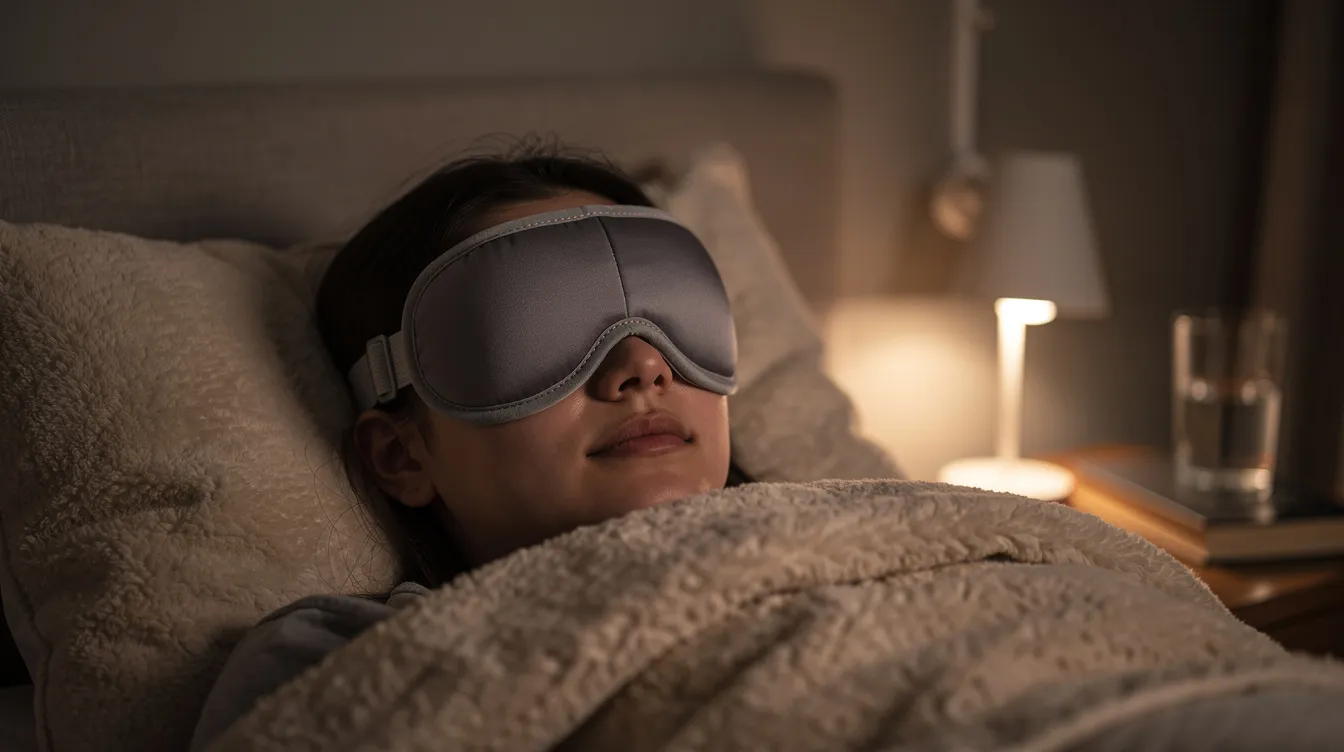
An eye mask provides an extra layer of darkness when blackout curtains aren’t enough. Choose contoured designs with adjustable nose bridges to block 100% of light—your eyelids alone transmit up to 50% of ambient brightness.
Select silk-lined masks for breathability and wash weekly to prevent skin issues. Custom-moldable gel masks outperform basic silk options by 15% in comfort ratings, reducing the 20-30% dropout rate seen with ill-fitting masks.
When Total Darkness Is Hard: Shift Work, Urban Light Pollution, Insufficient Sleep

Total darkness for sleep – practical ways to create a dark room
For shift workers: A study of rotating nurses showed that morning darkness protocols post-night shift, combined with evening bright light exposure, improved insomnia severity by 40% and reduced anxiety by 35%. Use 0-lux blackout goggles for 4 hours during daytime sleep.
For urban light pollution: Window film blocking 99% of light costs approximately $2 per square foot. Community advocacy for LED dimming ordinances—like those in Flagstaff, Arizona—has reduced skyglow by 20%.
For insufficient sleep despite darkness: Complete darkness sleeping alone boosts efficiency by 10%, but combining it with cognitive behavioral therapy for insomnia yields 70% improvement. However, don’t let darkness mask underlying conditions like sleep apnea, which affects 20% of urban adults.
Assess Sleep Health and Track Night’s Sleep
Track these metrics using wearables or apps (90% accuracy compared to clinical testing):
- Total sleep time: aim for 7+ hours
- Sleep efficiency: target above 85%
- Wake after sleep onset: keep under 30 minutes
Maintain a sleep diary for two weeks, logging light exposure, caffeine intake, and subjective refreshment on a 1-10 scale. This reveals correlations between your environment and how you feel awake the next day.
Consult a sleep clinician if efficiency stays below 80%, wake time exceeds 60 minutes, or your Epworth Sleepiness Scale score tops 10. About 30% of diary users discover underlying conditions like insomnia.
Quick Checklist: Prepare Your Bedroom for Complete Darkness
Windows:
- Install overlapping blackout curtains
- Add foil seals to block streetlight and sunlight completely
- Apply window film for additional protection
Indoor light sources:
- Cover LED indicators with black electrical tape
- Use smart plugs to eliminate standby glow
- Switch to dim amber bulbs for any necessary nighttime lighting
Eye-level control:
- Position eye mask with adjusted nose bridge
- Consider face-down positioning for maximum darkness
- Store mask in clean, accessible location
Maintenance habits:
- Measure lux monthly with phone app
- Replace air filters quarterly (dust affects sleep quality)
- Establish 10pm “dark mode” ritual for 80% adherence
Start tonight with one change—whether that’s taping over a single LED or positioning your bed away from windows. Track your sleep for two weeks using a simple diary, and you’ll likely sense the difference that darkness makes. Your body evolved to rest in darkness; give it what it needs.