Most people spend roughly eight hours each night in their bedroom, yet few consider the air they breathe during those hours. Poor indoor air quality silently undermines sleep, leaving you groggy, congested, or unable to stay asleep through the night.
This guide delivers actionable steps to improve bedroom air quality and sleep. Whether you’re an allergy sufferer battling dust mites, a light sleeper sensitive to environmental changes, or a homeowner seeking a good night’s rest, you’ll find practical solutions here.
Why Air Quality Can Affect Sleep
Indoor air quality is closely connected to sleep physiology in ways that aren’t immediately obvious. When you breathe poor air overnight, your body responds with subtle but measurable disruptions.
Elevated levels of airborne pollutants and carbon dioxide can:
- Increase respiratory effort and trigger micro-arousals
- Fragment REM sleep and slow-wave sleep stages
- Raise nighttime awakenings without you fully waking
- Delay sleep onset in stuffy environments
Research from the Technical University of Denmark demonstrated that participants sleeping in rooms with cleaner air reported feeling refreshed, showed better concentration, and performed superior on logical thinking tests the following morning. Poor air quality doesn’t just affect sleep—it affects your mental health and overall health the next day.
Chronic exposure to poor air quality and the resulting poor sleep can contribute to long-term health issues, including an increased risk of heart disease.
Carbon Dioxide in the Bedroom

Bedroom air quality sleep – why air quality can affect sleep
Carbon dioxide accumulates rapidly overnight in any closed room. With windows shut and doors closed for privacy or energy costs, air exchange drops to near zero. Human exhalation pushes CO2 levels three to four times above outdoor baselines (roughly 400 ppm).
In controlled studies, sealed bedrooms routinely exceeded 2500-3000 ppm—levels associated with disrupted sleep, poor concentration, and morning grogginess. Researchers found that 1000 ppm marks the threshold where sleep quality begins to suffer, with 850 ppm identified as the highest no-effect level.
Ventilation tactics to lower bedroom CO2:
- Open windows for 10-15 minutes before bedtime (this alone can slash CO2 by 50-70%)
- Install a demand-controlled fan that triggers at 900 ppm
- Add silent intake vents to maintain passive air exchange
- Target ventilation rates of at least 8 L/s per person—double many residential standards
How Humidity Affects Sleep
Understanding how humidity affect sleep is key to optimizing your bedroom environment. Humidity levels profoundly influence sleep through effects on respiratory health, skin comfort, and allergen growth.
High indoor humidity (above 60%) causes:
- Mold proliferation and dust mites thriving (they survive best at 65-80% RH)
- Nasal congestion, sinus pressure, and breathing difficulties
- Exacerbated asthma symptoms and allergies
- Bacterial growth on bedding
Low humidity (below 30%) causes:
- Dry mucous membranes, leading to snoring and coughing fits
- Sore throats and itchy eyes upon waking
- Cracked skin and static electricity discomfort
- Difficulty sleeping due to airway irritation
Both extremes lead to fragmented rest and difficulty staying asleep through the night.
Best Humidity For Sleep
The best humidity for sleep falls between 30% and 50% relative humidity. This range:
- Protects airway moisture without enabling mite or mold growth
- Maintains ciliary function in nasal passages
- Reduces allergen viability
- Supports skin barrier integrity during prone exposure
To reach your target:
| Problem | Solution | Target |
|---|---|---|
| High humidity | Compressor dehumidifier | 40-45% RH |
| Low humidity | Cool-mist humidifier | 40% RH |
| Dry air from heating | Evaporative humidifier | 35-45% RH |
Use a hygrometer to monitor indoor humidity levels and set devices to auto-maintain your target range.
Common Bedroom Air Pollutants and Sources

Bedroom air quality sleep – how humidity affects sleep
Bedrooms harbor specific indoor pollutants from everyday sources. Understanding what you’re breathing helps you choose the right solutions.
Dust: Comprises 70-80% skin cells, fibers, and tracked-in particulate matter. It settles on bedding and resuspends during movement, triggering allergic rhinitis.
Pet dander: Microscopic proteins from fur and saliva persist airborne for hours and embed in fabrics. Affects 20-30% of households with pets, causing wheezing and sleep disruption.
Volatile organic compounds (VOCs): Off-gas invisibly from furniture (formaldehyde from particleboard at 0.1-0.3 ppm), paints, and cleaners. They accumulate overnight and may irritate airways.
Mold: Humidity-driven (spores viable above 60% RH), mold colonizes walls or mattresses. Releases mycotoxins that provoke coughing, respiratory infections, and chronic fatigue.
These indoor air pollutants interact synergistically—high CO2 amplifies VOC effects, making bedrooms high-exposure zones given eight hours of nightly occupancy.
Air Purifiers for Bedrooms: Types and Benefits
Air purifiers address airborne particles through specialized filtration technologies. Each type has distinct strengths.
HEPA filtration: True HEPA (H13+ efficiency) captures 99.97% of 0.3-micron particles, including dust, pet dander, and PM2.5. Highly effective for allergen reduction in bedrooms up to 20 m².
Activated carbon filters: Adsorb gaseous VOCs and odors—beds with 500-1000g of carbon can trap 200+ compounds. Saturation limits lifespan to 6-12 months.
Ionizers/electrostatic precipitators: Charge airborne particles for plate collection. Low energy consumption but generate trace ozone (under 50 ppb), which may cause respiratory irritation. Less effective on ultrafine particles.
No single air purifier removes every pollutant. HEPA misses gases; carbon misses ultrafines. Hybrid models offer the broadest coverage.
Air purifiers can also benefit individuals with sleep apnea by reducing airborne irritants that may contribute to sleep-disordered breathing.
Choosing the Best Air Purifier for Better Sleep

Bedroom air quality sleep – air purifiers for bedrooms: types and benefits
Selecting the right air purifier requires matching specifications to your room and sleep needs.
Size by CADR (Clean Air Delivery Rate): Match CADR to 2/3 of your room’s square footage. For a 200 sq ft bedroom, look for 133 CFM or higher for 4-5 air changes per hour.
Prioritize these features:
| Feature | Why It Matters |
|---|---|
| True HEPA | Captures allergens; avoid “HEPA-type” |
| Noise under 30 dB | Prevents sleep disruption; doubles as white noise |
| Carbon prefilter | Handles VOCs from furniture and cleaners |
| Low energy (20-50W) | Reduces energy costs over continuous use |
| AHAM verification | Outperforms unrated units by ~50% in particle reduction |
For optimal sleep, choose models with dedicated sleep modes that reduce fan speed and dim indicator lights.
Placement, Operation, and Maintenance
Proper positioning maximizes an air purifier’s effectiveness for restorative sleep.
Placement:
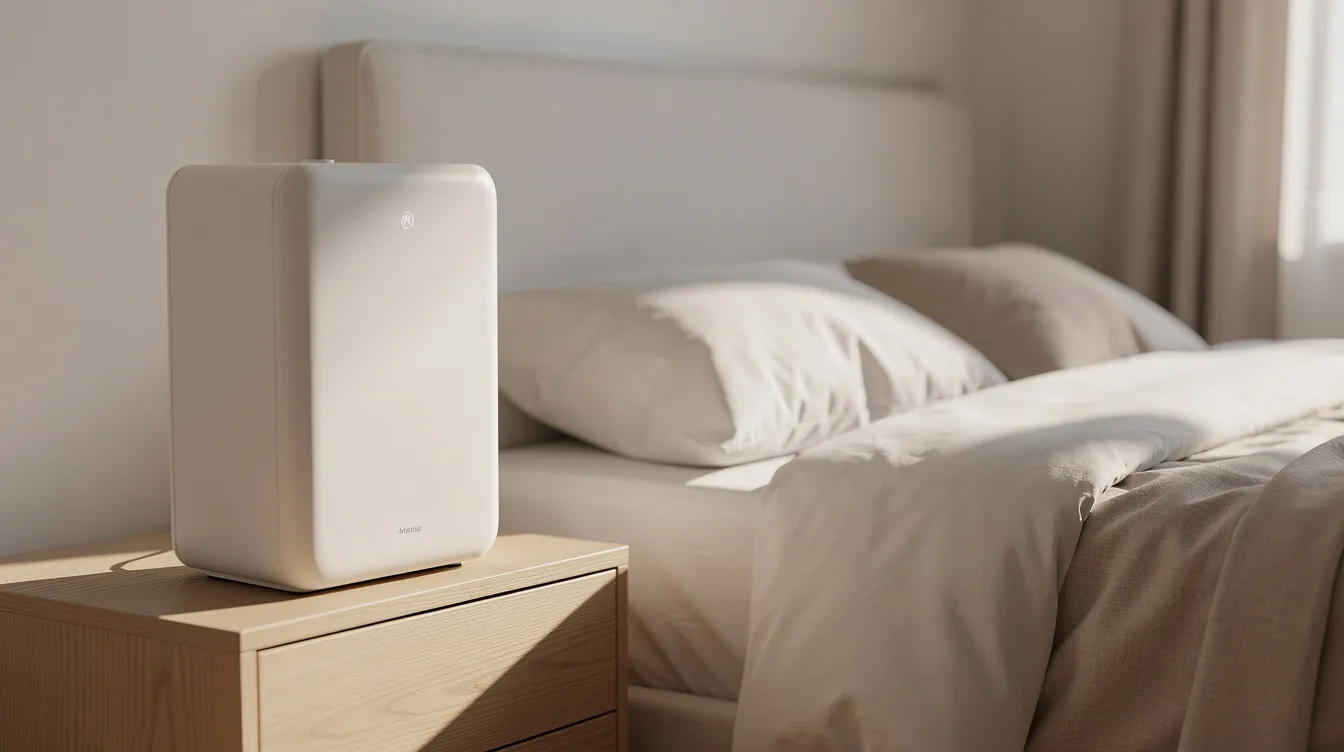
- Position 1-3 feet from bed, headboard side preferred
- Elevate and keep unobstructed for laminar airflow across your breathing zone
- Ensure intake faces the room, not a wall
Operation:
- Run continuously overnight on low mode (50-70% capacity)
- Continuous low-speed operation outperforms intermittent use by 30% in sustained good air quality
- Sleep mode achieves 4-6 air changes per hour without disrupting rest
Maintenance schedule:
- Replace HEPA filters every 6-12 months (or per usage hours)
- Vacuum prefilters monthly to maintain 90% efficiency
- Check motor annually
- Neglected filters can halve CADR within months
Environmental Protection Agency Guidance and HVAC Options
The Environmental Protection Agency emphasizes three pillars for indoor air quality: source control, ventilation, and filtration.
EPA recommendations include:
- Minimum 0.35 air changes per hour, with higher rates (5-10 CFM per person) for bedrooms
- HVAC upgrades using MERV13+ filters (capturing 90% of PM2.5)
- ERV/HRV systems that recover 70-80% energy while diluting CO2 to 800 ppm
When to consult professionals:
- Duct sealing and blower calibration can yield 20-50% air quality gains
- Whole-home ventilation systems address bedroom air quality alongside other rooms
- Annual HVAC system tune-ups maintain performance and prevent increased risk of poor ventilation
Monitoring Bedroom Air and Measuring Results
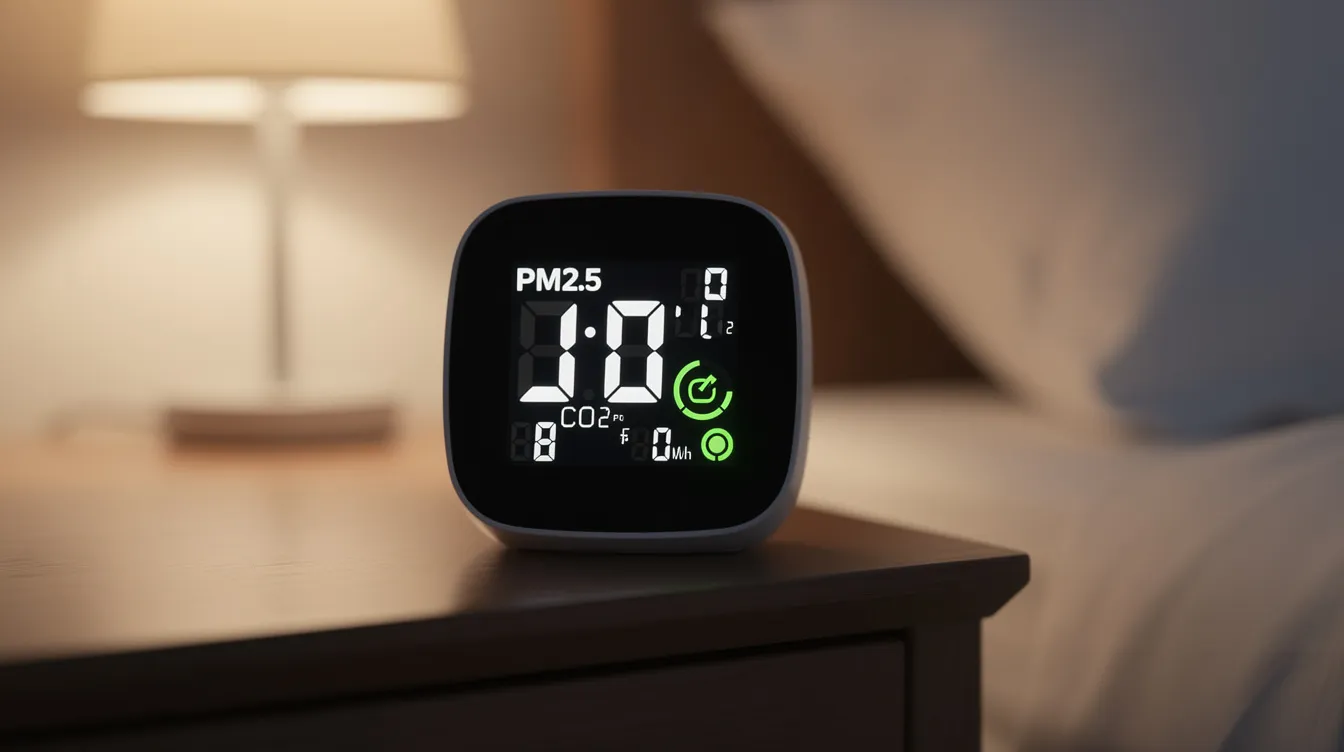
What gets measured gets managed. Tracking air quality parameters helps you correlate improvements with better sleep.
Recommended monitors:
| Parameter | Target | Device Type |
|---|---|---|
| CO2 | Below 800 ppm | Desktop sensor |
| PM2.5 | Below 12 µg/m³ nightly | Particulate monitor |
| Relative humidity | 30-50% | Hygrometer |
Many users find 10-20% improvements in sleep scores (via wearables like actigraphy or sleep tracking rings) after implementing air quality interventions.
Log readings via apps and compare with your wake time, early morning alertness, and how rested you feel. This data helps you fine-tune your approach.
Quick Action Plan Tonight For Better Rest
You don’t need expensive equipment to start improving your night’s rest tonight.
Immediate steps:
- Open windows briefly before bed to refresh air (10-15 minutes drops CO2 50-70%)
- Run your air purifier on sleep mode overnight to cut PM2.5 by 80%
- Remove scented candles and plug-in fresheners that release VOCs
- Set humidifier or dehumidifier to 40% RH target
These changes can help you fall asleep faster and reduce nighttime awakenings without any major investment.
People tend to notice fresher air and reduced nasal congestion within the first few nights.
These simple adjustments to your bedroom air quality can help you achieve a good night’s sleep.
Long-Term Strategies for Better Sleep and Air Quality
Sustainable improvements come from combining multiple interventions and maintaining them over time.
Integrated approach:
- Pair air purifiers (for allergen focus) with ventilation upgrades (8 L/s per person)
- Maintain humidity at 40% RH year-round
- Schedule annual HVAC system checks and filter replacements
- Use blackout curtains if light sensitivity compounds sleep issues
- Consider a sleep mask for additional sleep hygiene support
Maintaining the ideal temperature in your bedroom—around 16-18°C (60-65°F)—supports the body’s natural drop in body temperature during sleep, which is essential for high-quality rest. If the room is too cold, constriction of blood vessels can disrupt sleep and may negatively impact cardiovascular health. Keeping the bedroom at the ideal temperature helps prevent awakenings and promotes restorative sleep.
People sleep better when their environment supports rest at every level. Compounding these strategies can yield 15-30% improvements in good quality sleep over time.
Key Takeaways
- Carbon dioxide above 1000 ppm disrupts sleep; ventilate to stay below 800 ppm
- Maintain 30-50% relative humidity to avoid both dust mites and dry air symptoms
- True HEPA purifiers with carbon filters address most bedroom pollutants
- Position purifiers near the bed and run continuously on low overnight
- Monitor CO2, PM2.5, and humidity to track your progress toward a good night’s sleep
Start Tonight
Small changes to your bedroom air can translate to measurable improvements in sleep health. Open a window, run your purifier, and check your humidity tonight. Track how you feel over the next week—you may find that better rest was just a few breaths of fresh air away.