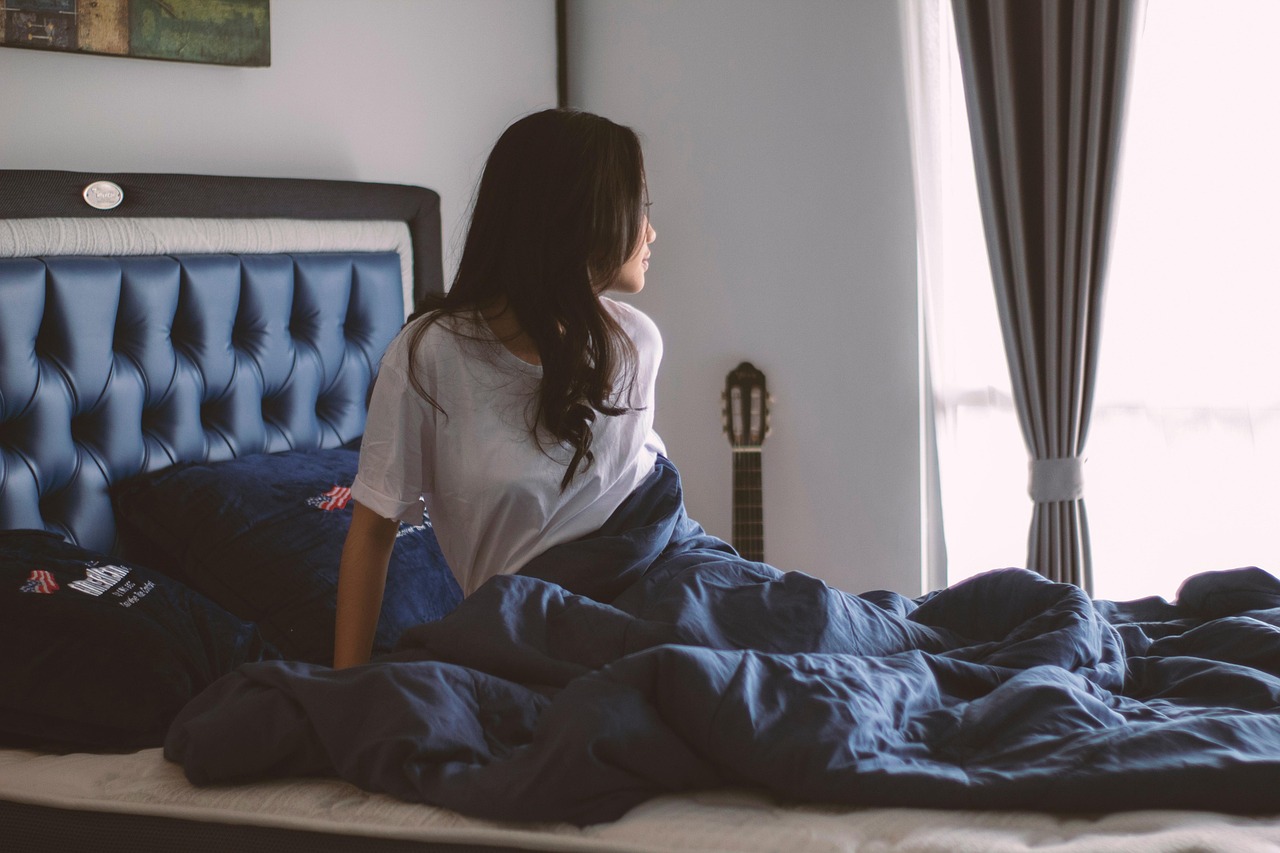
You’re lying awake at 2 AM, wondering why the neighbor’s bass is still thumping through your wall. Or maybe traffic noise makes it impossible to fall asleep before midnight. Perhaps a snoring partner has you retreating to the couch more nights than you’d like to admit. Sometimes, even morning noise—like neighbors making noise early in the day—can disrupt your sleep or wake you up before your alarm.
Whatever the source, nighttime noise steals your rest—and your next-day energy along with it. Worry about being woken up by noise can make it even harder to fall asleep, creating a cycle where stress and negative thoughts about potential disturbances keep you awake.
This guide covers practical strategies to block out noise for sleep, from free behavioral tweaks to targeted product investments. You’ll learn how to assess your specific noise problem, implement physical blocking noise solutions, leverage technology, and even navigate the tricky interpersonal situations that come with shared walls and shared beds. Let’s get you back to a good night’s sleep.
Explain Nighttime Noise Effects on Sleep Quality
Before diving into solutions, understanding what noise actually does to your brain and body helps explain why this matters so much.
Environmental noise includes unwanted sound from traffic, aircraft, neighbors, household appliances, or a snoring partner that penetrates your sleeping space during typical rest hours (roughly 10 PM to 7 AM). Even when you don’t fully wake, your brain registers these disruptions.
What Happens When Noise Disrupts Sleep
According to the World Health Organization, environmental noise—particularly from transportation—causes the loss of approximately 900,000 healthy life years annually in Europe alone due to sleep disturbances. That’s not a minor inconvenience; it’s a public health crisis.
Research shows that noise fragments sleep architecture in measurable ways:
- Increases light Stage 1 sleep while decreasing restorative deep slow-wave and REM stages
- Triggers physiological stress responses (elevated heart rate, blood pressure, cortisol) even without full awakening
- A cross-sectional study of older adults found every 1 dB increase in indoor nighttime noise correlated with a 0.19% drop in sleep efficiency
The consequences extend beyond feeling groggy. Chronic exposure links to metabolic disease, cardiovascular issues, poor concentration, and mental health decline. Your body doesn’t adapt to noise—it just stops alerting your conscious mind while continuing to react.
The good news: noise reduction directly improves sleep quality. Studies show that interventions like white noise in noisy environments significantly improve wake-after-sleep-onset times and sleep efficiency.
Assess Your Bedroom’s Noise Problem

Block out noise for sleep – explain nighttime noise effects on sleep quality
You can’t fix what you haven’t measured. Before buying products or rearranging furniture, spend a few nights gathering data.
Keep a 3-Night Noise Log
Track every sleep disruption for three consecutive nights. Note:
- Timestamp of disturbance
- Perceived loudness (use a 1-10 scale or descriptors like “mild hum” vs. “sharp bang”)
- Source if identifiable (traffic, neighbors, HVAC, wind, etc.)
- Sleep impact (did you fully wake? Trouble falling back asleep?)
This builds self-awareness and creates a baseline for measuring improvement.
Record Sample Audio Overnight
Use a smartphone app like Sleep Cycle or NoiseCapture to capture audio waveforms while you sleep. Review recordings to identify:
- Peak decibel events you may not remember
- Frequency patterns (low-frequency traffic noise at 50-100 Hz penetrates walls more than higher-frequency voices)
- Timing patterns that might inform solutions
Measure Noise Levels with a Phone App
Apps like Decibel X, Sound Meter, or the NIOSH Sound Level Meter provide precise readings. The WHO recommends indoor nighttime noise below 30 dB for optimal sleep—aim for 30-35 dB as your target.
Measure during a typical night, noting both average levels and peak events. If your bedroom consistently exceeds 40 dB, you’ve confirmed a problem worth addressing.
Physical Blocking Noise Solutions
The most effective approach targets noise at its source and entry points. Physical solutions don’t require batteries, subscriptions, or learning new technology.
Start with low-cost, non-invasive fixes before considering renovations. Sound transmission loss depends on mass, density, and decoupling—principles you can apply without tearing down walls. The goal is to maximize the amount of noise that is blocked before it enters your sleeping space.
Soundproofing The Room Using Heavy Curtains And Seals
Install Heavy Curtains Over Windows
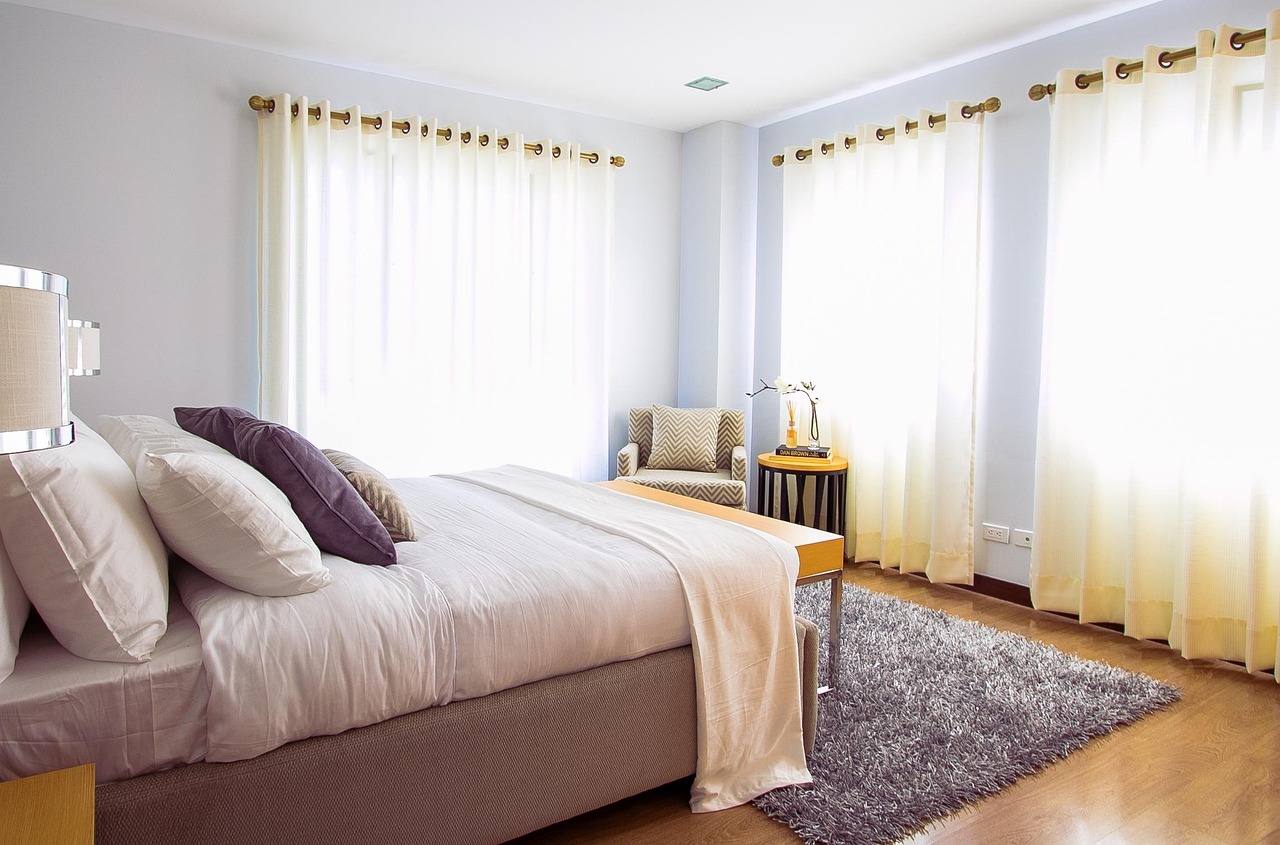
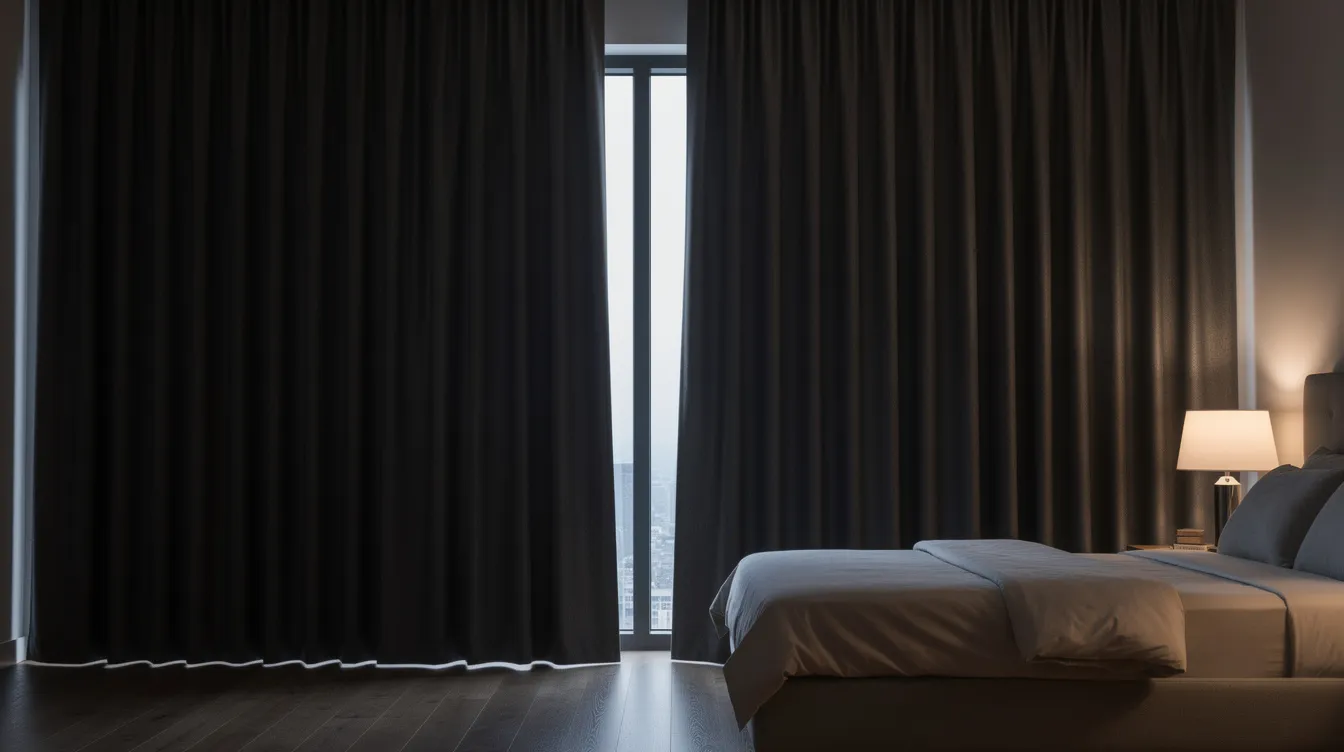
Heavy curtains—particularly thermal blackout models with multiple fabric layers—reduce sound transmission by 5-10 dB. This works especially well against mid-frequency sounds like voices and some traffic noise.
For maximum effect:
- Choose curtains 2-3x your window width for proper pleating
- Select dense materials like velvet or suede-backed polyester
- Use tension rods or ceiling-mounted tracks for full coverage
- Overlap curtains at center and extend past window edges to block sound flanking around the fabric
Weatherstrip Doors and Window Gaps
Sound sneaks through surprisingly small gaps. Weatherstripping with adhesive foam, rubber, or silicone seals can boost sound insulation by up to 15 dB for flanking paths—that air gap under your door or the worn seal around old windows.
Install:
- EPDM rubber gaskets around door and window frames
- Door sweeps along the bottom edge
- Acoustic panels on hollow doors if replacing isn’t an option
Add Rugs and Bookcases to Absorb Sound
Soft, porous materials convert sound energy to heat through absorption. A thick rug with a 1-inch wool or synthetic underlay reduces reverberation. Bookcases filled with varied books (different sizes create acoustic irregularity) placed against shared walls can make a noticeable difference.
Case studies show these combined fixes can drop indoor levels by 8-12 dB in urban apartments—enough to transform your sleep environment.
Earplugs And Ear Canal Guidance
When you can’t eliminate noise at the source, blocking it at the ear becomes the next line of defense. But earplugs work only when used correctly.
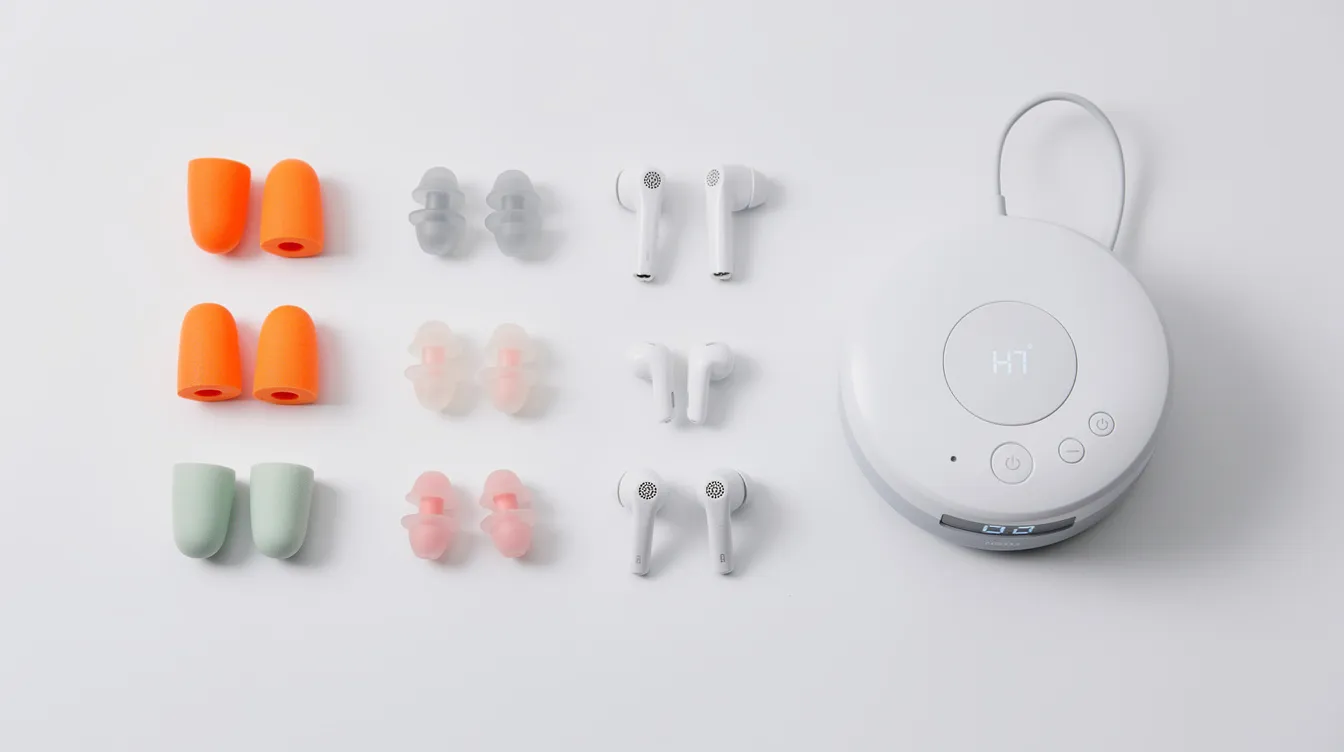
Foam Earplugs vs. Reusable Silicone Plugs
| Feature | Foam Earplugs | Reusable Silicone Plugs |
|---|---|---|
| NRR Rating | 25-33 dB | 20-27 dB |
| Real-world effectiveness | 15-20 dB (derate 40% for fit) | 12-16 dB (derate 40%) |
| Best for | Irregular, loud noise; deep bass | Comfort; smaller ear canals |
| Lifespan | Single use or few nights | 1-3 months (washable) |
| Cost | ~$0.20/pair | ~$15-30/pair |
| Comfort for side sleepers | Variable (pressure buildup) | Generally better |
Foam earplugs excel at blocking low frequencies like traffic noise. They expand via body heat for a custom seal. Reusable silicone plugs (flanged or putty-style) suit those prioritizing hygiene and comfort but provide less attenuation.
Step-by-Step Insertion for Ear Canals
Proper insertion makes a dramatic difference in effectiveness.
For foam earplugs:
- Roll the plug to about 50% of its original size between clean fingers
- Pull your ear up and back with your opposite hand to straighten the ear canal
- Insert the plug fully while relaxed (aim for ¾ canal depth)
- Hold in place for 20-30 seconds until the foam fully expands
- The plug should feel comfortable, not painful—if you can hear normally, it’s not inserted correctly
For silicone putty plugs:
- Warm the putty between your fingers
- Mold it over the tragus (the small flap at your ear opening)
- Press inward gently to create a seal
- Avoid pushing into the ear canal itself
When to Avoid Nightly Earplug Use
Earplugs aren’t suitable for everyone. Consider avoiding regular use if you:
- Are prone to ear infections (otitis externa risk from moisture trapping)
- Experience cerumen (earwax) impaction
- Have TMJ issues that pressure worsens
- Need to hear alarms, children, or security alerts
Experts recommend alternating nights, replacing disposables monthly, and consulting an ENT specialist if you’re a chronic user experiencing discomfort.
Foam Earplugs Buying And Fit Tips
Fit Tests You Should Perform
A properly fitted earplug should make normal speech sound muffled and distant. Try this home test:
- Play a radio or podcast at moderate volume (around 50 dB)
- Insert earplugs using proper technique
- You should hear the audio faintly but not clearly
- If you can understand words easily, adjust insertion depth or try a different size
Many brands offer multi-size sample packs—worth the investment to find your right fit.
Understanding Noise Reduction Ratings
The NRR (Noise Reduction Rating) represents lab-tested attenuation under ideal conditions. In real-world use, derate by approximately 40% due to fit variability.
- NRR 33 → ~20 dB actual protection
- NRR 27 → ~16 dB actual protection
For sleep, prioritize NRR ratings above 29. Higher isn’t always better if comfort suffers—you won’t wear uncomfortable plugs consistently.
Ear Size Guidance and Replacement Schedule
Most brands offer small, medium, and large sizes. If you’re unsure:
- Smaller ear canals (common in women): Start with small or try silicone putty
- Average: Medium foam works for most adults
- Larger size ear canals: Look for “large” or “max” designations
Replace foam earplugs after 3-5 uses maximum—degraded foam loses effectiveness and harbors bacteria. Reusable silicone plugs should be washed weekly and replaced every 1-3 months depending on wear.
Sound Machines, White Noise, And Masking Options
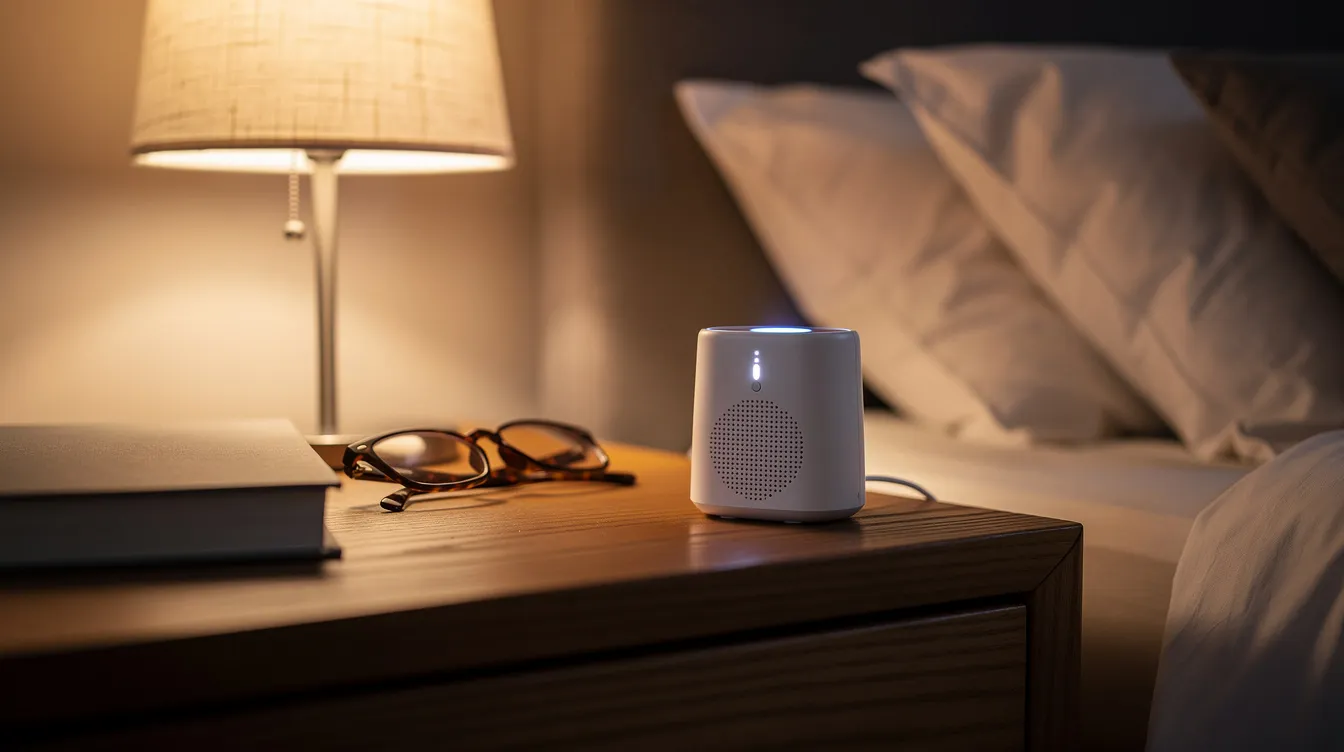
You may have heard of white noise machines as a popular solution for masking disruptive sounds and improving sleep.
When you can’t achieve silence, masking unwanted sound with consistent sound becomes the strategy.
How White Noise Works
White noise machines produce a steady broadband spectrum (20-20,000 Hz equal energy) that blends disruptions into the background. Your brain stops trying to process individual sounds because nothing stands out from the ambient noise.
A 2021 study using the Dohm Classic white noise machine showed significant reduction in wake-after-sleep-onset (WASO) times among participants in noisy environments. Benefits include both physiological stabilization and psychological calming—the latter especially valuable for those whose anxiety spikes when noise feels uncontrollable.
Pink noise (more emphasis on lower frequencies, like steady rain) may work better for some sleepers. Research suggests pleasant sounds can increase sleep spindles—neural bursts that aid memory consolidation—compared to pure white noise.
Sound Machines vs. Smartphone Apps
| Option | Pros | Cons |
|---|---|---|
| Dedicated machines | Consistent output, no ads, no battery concerns | Less customizable, takes space |
| Smartphone apps | Free/cheap, infinite variety, travel-friendly | Battery drain, notification interruptions, phone dependency |
Top dedicated machines include the LectroFan (20+ non-looping sounds) and Hatch Restore (adaptive with sunrise alarm). Quality apps include myNoise (highly customizable), White Noise Lite, and Calm.
Optimal Volume and Timer Settings
- Set volume just above the ambient noise you’re trying to mask (typically 40-60 dB)
- Too quiet: won’t mask effectively
- Too loud: can interfere with sleep quality itself
- Use a 30-60 minute timer or all-night fade if falling asleep takes longer
- Position the sound machine 3-6 feet from your head for even coverage
Tech-Based Noise Reduction

Block out noise for sleep – physical blocking noise solutions
Technology complements physical blocking noise methods when you need portable solutions or face variable noise sources.
Sleep Headphones, Buds, And Noise-Cancelling Devices
Active noise cancellation uses microphones, processors, and anti-phase sound waves to destructively interfere with incoming noise. This works best on low-frequency sounds below 1kHz—perfect for traffic rumble, HVAC hum, or airplane noise.
Sleep Headbands
Products like SleepPhones feature flat speakers embedded in soft fleece headbands. Benefits:
- Comfortable for side sleepers (no hard components pressing into ears)
- Bluetooth connectivity
- 10-24 hour battery life
- Good for playing calming audio, sleep stories, or white noise
True Wireless Sleep Buds
Specialized sleep buds (like Amazfit Zenbuds or similar) feature:
- Molded tips that stay put during movement
- Designed for masking tracks rather than music (which can vary and wake you)
- Smaller profiles for side-sleeping comfort
Prioritize buds under 5g, IPX4 sweat resistance, and 8+ hour battery life.
Over-Ear ANC Headphones
High-end ANC headphones like Sony WH-1000XM5 provide 20-30 dB noise reduction on low frequencies. However, they’re bulky for sleep—best for falling asleep while reading or relaxing, then removing before deep sleep.
Safety Guidelines
- Avoid if you have active ear infections
- Keep volume below 85 dB (roughly 60% of max on most devices)
- Charge devices away from the bed (fire risk with lithium batteries near pillows)
- Ensure you can still hear smoke alarms and security service alerts—test this before relying on them nightly
Smart Sound Machines And Speaker Strategies
Pairing Sleep Apps with Bedroom Speakers
Connect your phone to a dedicated Bluetooth speaker positioned optimally in your room. This preserves phone battery while allowing use of sophisticated sleep apps.
Benefits over phone speakers:
- Better sound quality across frequencies
- Consistent volume throughout the night
- No notifications interrupting playback (use Do Not Disturb mode)
Adaptive Sound Profiles for Variable Noise
Smart sound machines like the Soundcore Sleep A20 use microphones to analyze incoming noise in real-time, adjusting volume and frequency spectrum to match. This handles variable noise sources—traffic that ebbs and flows, intermittent snoring, or wind gusts—better than static settings.
Look for devices with:
- AI-driven adaptive profiles
- Specific settings for snoring, traffic, or urban environments
- App control for customization
Dealing With A Snoring Partner
A snoring partner presents a unique challenge: you can’t simply block the noise without addressing your relationship dynamics.
Understanding Snoring Mechanics
Snoring results from vibrations of the soft palate and uvula when throat muscles relax during sleep. It affects 40% of adults occasionally and 25% habitually. Back-sleeping typically worsens it.
Encourage Medical Evaluation
Snoring can indicate sleep apnea, a serious condition where breathing repeatedly stops during sleep. Untreated sleep apnea raises cardiovascular risks significantly.
Encourage your partner to:
- Complete a home sleep test (AHI above 5 events/hour indicates apnea)
- Consult a sleep specialist if snoring disrupts daily activities
- Rule out underlying conditions before assuming it’s “just snoring”
Frame this as concern for their health, not just your sleep.
Trial Anti-Snoring Devices
Several evidence-based interventions exist:
| Device Type | How It Works | Efficacy |
|---|---|---|
| Mandibular advancement splints (MAD) | Holds jaw forward, opening airway | 50-70% reduction |
| EPAP nasal strips (e.g., Bongo Rx) | Creates back-pressure keeping airway open | Variable |
| Positional therapy pillows/wedges | Promotes side-sleeping | 50%+ AHI reduction |
Joint Solutions
Rather than banishing your partner to the couch or retreating yourself, consider:
- Dual white noise (one machine per side of bed)
- Partner wears anti-snoring device while you wear earplugs
- Staggered bedtimes (you fall asleep first in quiet)
- Mattress wedge under partner’s side to reduce back-sleeping
The goal is quality rest for both partners—not winning a battle.
Communicating With Neighbours And Housemates

Block out noise for sleep – dealing with a snoring partner
When noise comes from beyond your control, communication becomes essential. Noise disturbances can occur not just at night but also in the morning, and these early disruptions can be just as impactful on your sleep quality and daily routines.
Scripts for Polite Noise-Reduction Requests
Starting confrontationally rarely works. Try:
“Hey, I’ve been struggling to sleep due to sounds coming through around [specific time]. I know sound travels weird in these buildings. Could we try keeping things a bit quieter after 10 PM?”
Or:
“I’m a light sleeper and I’ve been waking up when [specific activity]. Would it be possible to [specific request]? I’d really appreciate it.”
Key elements:
- Assume good intent (“I know you probably don’t realize…”)
- Be specific about timing and nature of noise
- Propose a concrete solution
- Express appreciation
Propose Quiet Hours and Compromise Experiments
Suggest a trial period:
“Could we try quiet hours from 10 PM to 7 AM for a week and see how it goes?”
This makes the request feel temporary and collaborative rather than permanent and demanding. Be willing to compromise—perhaps they need occasional exceptions for events.
Apps like Neighborly can facilitate building-wide agreements about quiet hours.
Document Repeated Disturbances
If polite requests fail:
- Continue your noise log with dates, times, and descriptions
- Record audio samples as evidence
- Note any witnesses
- Keep copies of your written communications
This documentation becomes essential if escalation is necessary.
When To Escalate: Landlords, Laws, And Moving
Sometimes individual effort isn’t enough.
Consult Your Landlord About Sound Insulation
Review your lease for “quiet enjoyment” clauses—most include them. Request:
- An insulation audit (blower door tests can identify air gaps)
- Weatherstripping on shared walls
- Carpet requirements for upstairs neighbors
- Mediation with noisy tenants
Put requests in writing and keep copies.
Check Local Nighttime Noise Ordinances
Many US cities cap nighttime noise at 45-55 dB (commonly 50 dB from 10 PM to 7 AM). If neighbors violate these ordinances:
- Non-emergency police can issue citations
- Repeated violations may result in fines
- Documented violations strengthen complaints to landlords
Research your local regulations—enforcement varies widely.
Consider Moving Your Bedroom
Sometimes the easiest solution is temporary or permanent relocation:
- Move to a room further from the noise source
- Switch bedrooms with a less noise-sensitive household member
- In severe cases, relocate to a quieter building
Test any potential new sleep space before committing—spend a few nights there first.
Behavioral Tools: Sleep Stories And Mind Training
You can’t always control your environment. Behavioral tools help you control your response to it. These tools can help break the cycle of worry and stress that often accompanies noise-related sleep problems.
Include Sleep Stories in Your Nightly Routine
Sleep stories are gentle narratives designed to distract your brain from environmental stimuli. Apps like Calm report 70% of users fall asleep faster with sleep stories than in silence.
The mechanism: your brain focuses on following the narrative rather than monitoring for threats (which is what it does when processing random noise). This reduces hyperarousal and allows natural sleep onset.
Experiment with:
- Monotone narration (less stimulating)
- Nature soundscapes with minimal plot
- Familiar stories you don’t feel compelled to “finish”
Guided Meditations to Reduce Noise Reactivity
Regular meditation practice—even 10-20 minutes before bed—reduces amygdala reactivity. The amygdala processes threat responses, including the startle reflex to sudden sounds.
Meditation trains your nervous system to be less sensitive to disruptions. Over time, sounds that previously triggered full awakening may only cause brief, forgettable arousals.
Body scan meditations work particularly well for sleep—they direct attention inward rather than toward external stimuli.
Cognitive Strategies to Reframe Unavoidable Noise
Cognitive Behavioral Therapy for Insomnia (CBT-I) includes reframing techniques for noise:
- “That’s just the city breathing” (normalizing urban sounds)
- “Traffic means the world is working” (assigning meaning reduces threat response)
- “I’ve slept through worse” (building self-efficacy)
The goal isn’t pretending noise doesn’t exist—it’s reducing the harm your stress response adds to the disruption itself.
Product Comparison And Buying Guide
If you’re curious about which solutions might work best for your situation, the following comparison can help you decide.
After understanding your options, here’s a consolidated comparison to guide purchasing decisions.
Foam Earplugs vs. Reusable Plugs
| Product | NRR | Price | Best For | Drawbacks |
|---|---|---|---|---|
| Mack’s Ultra Soft (foam) | 33 dB | ~$10/50 pairs | Maximum blocking, bass frequencies | Disposable, can feel uncomfortable |
| Howard Leight MAX (foam) | 33 dB | ~$15/100 pairs | Deep insertion, snoring partners | Not for smaller ear canals |
| Loop Quiet (silicone) | 27 dB | ~$25/pair | Comfort, reusability, eco-friendly | Less low-frequency blocking |
| Flents Quiet Please (foam) | 29 dB | ~$8/50 pairs | Budget option, decent comfort | Shorter lifespan than premium |
Top Sound Machines and White Noise Apps
| Product/App | Price | Key Features | Best For |
|---|---|---|---|
| LectroFan Evo | ~$50 | 22 non-looping sounds, compact | Travelers, consistent white/pink noise |
| Hatch Restore 2 | ~$130 | Adaptive sounds, sunrise alarm, app control | Those wanting integrated sleep system |
| Dohm Classic | ~$50 | Mechanical fan-based sound | Purists preferring “real” sound |
| myNoise (app) | Free/$10 | Infinite customization, layering | Those who want precise control |
| White Noise Lite (app) | Free | Simple, reliable, battery-efficient | Basic needs, travel |
Quick Pros and Cons by Category
Physical blocking (curtains, seals, rugs):
- Pros: One-time cost, no maintenance, no batteries, always working
- Cons: Limited effectiveness against low frequencies, visible changes to room
Earplugs:
- Pros: Highly portable, inexpensive, effective
- Cons: Require proper fit, not suitable for all ear types, can’t hear alarms
Sound machines/apps:
- Pros: No insertion required, customizable, can enhance sleep beyond masking
- Cons: Battery/power dependent, adds another device, some find masking sounds annoying
Tech-based ANC:
- Pros: Excellent for low frequencies, portable, often includes music/stories
- Cons: Battery life concerns, comfort issues for side sleepers, cost
Emerging Trends
The market is moving toward AI-adaptive ANC buds that learn your sleep patterns and adjust in real-time. “Sonic wallpapers”—wall-embedded speakers creating cancelation fields—are entering development. Expect personalized soundscapes driven by wearable sleep data within the next few years.
Quick Checklist To Secure A Good Night’s Sleep Tonight
You don’t need to implement everything at once. Here’s what you can do right now:
Immediate Actions (Tonight)
- Seal gaps: Check under your bedroom door and around windows. Stuff a rolled towel under the door if you don’t have a door sweep.
- Hang heavy curtains: If you have any heavy blankets or curtains elsewhere in the house, temporarily hang them over your bedroom window.
- Insert properly fitted earplugs: Follow the technique described above. If they feel comfortable but you can still hear normally, they’re not in far enough.
- Start a white noise or sleep story track: Download a free app tonight and set it to play for 60 minutes at moderate volume.
- Move your bed: If possible, position your bed at least 3 feet from the noisiest wall. Even 12 inches helps.
This Week
- Order earplugs in your right fit (multi-size sample pack recommended)
- Weatherstrip at least one door or window
- Complete a 3-night noise log
- Measure baseline noise levels with a phone app
This Month
- Invest in one dedicated sound machine if apps work for you
- Address snoring or neighbor situations with appropriate conversations
- Add rugs and soft furnishings to absorb reverberation
- Consult landlord if structural noise issues exist
Wrap Up And Next Steps
The difference between restless nights and quality rest often comes down to a few strategic changes. You don’t need to soundproof like a recording studio or wear uncomfortable gear every night. You need targeted interventions that address your specific noise sources.
Start tonight by choosing two actions from the checklist above. The combination that works best varies by person—some thrive with earplugs alone, others need white noise layered over physical barriers. In the long run, experiment until you find your formula.
If noise continues to interfere with your life despite implementing these strategies, consider consulting a sleep specialist. Chronic sleep disruption harms your health in ways that matter, and sometimes professional guidance identifies solutions you wouldn’t discover alone.
Your brain needs rest to protect your focus, mood, and physical health. Don’t let noise steal what’s supposed to be your most restorative hours.
Next step: Pick one physical solution and one masking solution to try tonight. Report back to yourself in three days—has your sleep improved?