
Jet lag is a temporary sleep disorder caused when rapid travel across multiple time zones misaligns your body’s internal clock with the local day-night cycle. Typical recovery time runs about 1 to 1.5 days per time zone crossed, though traveling east generally extends this period compared to traveling west.
This guide covers everything from recognizing jet lag symptoms to implementing fast recovery plans that get you back on schedule.
Recognize Jet Lag Symptoms
Common jet lag symptoms include difficulty falling asleep, excessive daytime drowsiness, headaches, lack of focus, extreme fatigue, upset stomach, and mood changes like irritability. These symptoms typically begin immediately upon arrival or within the first day at your destination.
Symptoms often impair daily function within 24-48 hours, reducing your mental and physical performance, alertness, and cognitive abilities. For shifts greater than eight hours, symptoms can persist for up to a week.
Common Symptoms Caused by Jet Lag
Sleep-related symptoms:
- Insomnia or difficulty falling asleep at night
- Frequent awakenings during sleep
- Early morning awakenings
- Disrupted sleep patterns
Daytime fatigue and concentration issues:
- Extreme tiredness despite local daytime hours
- Feeling sleepy during important activities
- Impaired focus and foggy mental state
- Reduced cognitive function
Digestive and mood-related symptoms:
- Stomach aches and other stomach problems
- Constipation or diarrhea
- General feeling of being unwell
- Irritability and mood swings
Why Jet Lag Happens: Time Zone Shifts
Your body runs on a circadian rhythm controlled by the suprachiasmatic nucleus in your brain. When you cross into a different time zone, this internal clock becomes desynchronized from external light-dark cues.
Rapid plane travel outpaces your body’s natural adjustment speed. Your circadian system realigns at roughly 1-1.5 days per time zone—far slower than any long flight covers distance. This mismatch creates sleep disruption and other symptoms.
Light exposure serves as the primary cue resetting your body’s internal clock. Sunlight triggers melatonin suppression and signals when to wake and sleep, controlling processes like temperature regulation, digestion, and heart rate.

Factors That Make Jet Lag Worse
Several factors make jet lag worse beyond simple time zone math:
- Long haul flight durations exceeding eight hours
- Overnight flight schedules that disrupt normal sleep
- Traveling east (harder than traveling west due to phase-advance difficulty)
- Irregular work or shift schedules creating pre-existing circadian disruption
Dehydration from dry cabin air aggravates symptoms significantly. Alcohol suppresses REM sleep and dehydrates further, while excessive caffeine interferes with your ability to rest when needed.
Before You Fly: Adjust Your Sleep Schedule
Gradually shift your bedtime toward your destination time by going to bed one hour earlier (for eastward travel) or later (for westward travel) each day for several days before departure.
Move your wake time in small daily increments of 30-60 minutes to preemptively realign your sleep wake cycle. This approach helps your body adjust to the new time before you even board the plane.
For critical events like business meetings or weddings, arrive 1-2 days early to allow partial adaptation, reducing the risk of impairment during important moments.
Packing and In-Flight Gear: Sleep Mask and Comfort
Essential packing for jet lag recovery:
| Item | Purpose |
|---|---|
| Blackout sleep mask | Blocks cabin and hotel light to promote melatonin production |
| Comfortable neck pillow | Supports ergonomic sleep positions, minimizing neck strain |
| Noise-cancelling earplugs or headphones | Reduces engine noise and announcements that disrupt rest |
These items help you sleep on the plane and adapt faster once you arrive at your new location.
In-Flight Choices: Food, Drink, and Sleeping Pills
Eat small meals during your long flight to avoid stomach aches and digestive overload from cabin pressure and immobility.
Avoid alcohol completely—it acts as a diuretic, worsening dehydration and fragmenting sleep despite initial sedation. Many travelers find alcohol makes their travel fatigue significantly worse.
Limit caffeine to early flight hours to stay alert without causing later insomnia. Drink plenty of water throughout the flight to combat the 20-30% dehydration rates common in aircraft cabins.
Use sleeping pills cautiously and only under medical advice. Prescription options like zolpidem carry risks of grogginess and dependency. Talk to your doctor before flying if you’re considering this option.
On Arrival: Adapt Quickly to the New Time Zone and New Time
Set all watches, phones, and devices to local time immediately upon landing. This psychological anchor helps your brain adjust to the new time zone faster.
Schedule meals strictly according to destination time to entrain the peripheral clocks in your gut. Avoid naps longer than 20-30 minutes, as longer rest periods deepen circadian misalignment.
Prioritize natural daylight exposure—it’s the strongest signal for resetting your internal clock. Head outside rather than staying in your hotel room.
Light, Activity, and New Time Adjustments
Plan bright light exposure strategically based on your travel direction:
- Traveling east: Seek morning light within 1-2 hours of local waking to suppress melatonin and advance your clock
- Traveling west: Seek evening light exposure to delay your rhythm and stay awake longer
Pair light exposure with brief 10-20 minute exercise bouts like walking. This combination amplifies adaptation by boosting alertness and core body temperature cues. Even a late morning walk can significantly reduce jet lag symptoms.

Diet and Caffeine: Smaller Meals and Hydration
Recommend smaller, more frequent meals to ease digestion strained by shifted mealtimes. Jet lag impacts gastrointestinal motility, making heavy meals harder to process.
Drink water regularly throughout your trip. Many travelers underestimate how dehydration contributes to fatigue and head fog during the adjustment period.
Time caffeine strategically—use it during daytime only to leverage its alerting effects without nighttime interference. An early afternoon cutoff works well for most people.
Medications and Supplements: Sleeping Pills and Melatonin
Melatonin, available as a sleep aid supplement, can speed resynchronization when timed correctly:
| Direction | Timing | Dose |
|---|---|---|
| Eastward | 5-7pm local time | 5-10mg |
| Westward | 10pm-2am local time | 5-10mg |
Research from sleep medicine studies shows melatonin can speed recovery by 0.5-1 day per dose when used properly.
Sleeping pills such as benzodiazepines carry side effects including next-day impairment, rebound insomnia, and gastrointestinal upset. Consulting a healthcare provider before use is essential, especially for those with existing conditions.
Advise short-term, monitored medication use only—limit to 1-3 nights to avoid tolerance and dependency issues.
When Jet Lag Is Worse or Persistent: See a Healthcare Provider
If symptoms persist beyond the expected recovery time (roughly 1.5 days per time zone or more than a week total), something else may be at play.
A sleep specialist referral may be needed to rule out underlying sleep disorders like delayed sleep phase syndrome. Your doctor can help determine if your persistent issues stem from jet lag or other conditions according to disease control guidelines and systematic review findings.
Special Populations and High-Risk Travelers
Frequent flyers and shift workers accumulate chronic circadian strain. Consistent strategies like melatonin protocols and regular sleep schedules help manage ongoing exposure to time change disruptions.
Parents with infants or children should note that babies often adjust faster (roughly 1 day per zone), but parental fatigue compounds the challenge. Flexible routines help both parent and child adapt.
Pregnant individuals risk exacerbated nausea from digestive symptoms and should avoid melatonin without obstetric approval. Always talk with your provider before your trip.
Older adults over 65 experience 20-50% slower recovery due to diminished circadian flexibility. Gentler adjustments and medical oversight are recommended. Wearing dark glasses in the evening can help older travelers manage light exposure more effectively.
Fast Recovery Plans: 24- and 48-Hour Strategies
24-Hour Plan:
| Time | Action |
|---|---|
| Morning | 30-minute daylight walk, light protein breakfast |
| Mid-morning | Caffeine if needed |
| Noon-afternoon | No naps, stay active |
| Evening | Dim lights, avoid screens |
| Bedtime | Melatonin if advised, aim for full local bedtime sleep |
48-Hour Stepwise Plan:
- Day 1: Focus on light and activity entrainment, maintain local meal times
- Day 2: Consolidate sleep hygiene, extend outdoor time, avoid bed until proper local bedtime
Quick tips for important events:
- Strategic napping under 20 minutes before noon only
- Blue-light blocking glasses in the evening
- Hydration tracking to ensure adequate fluid intake
- Arrive at your destination with one hour buffer before critical meetings
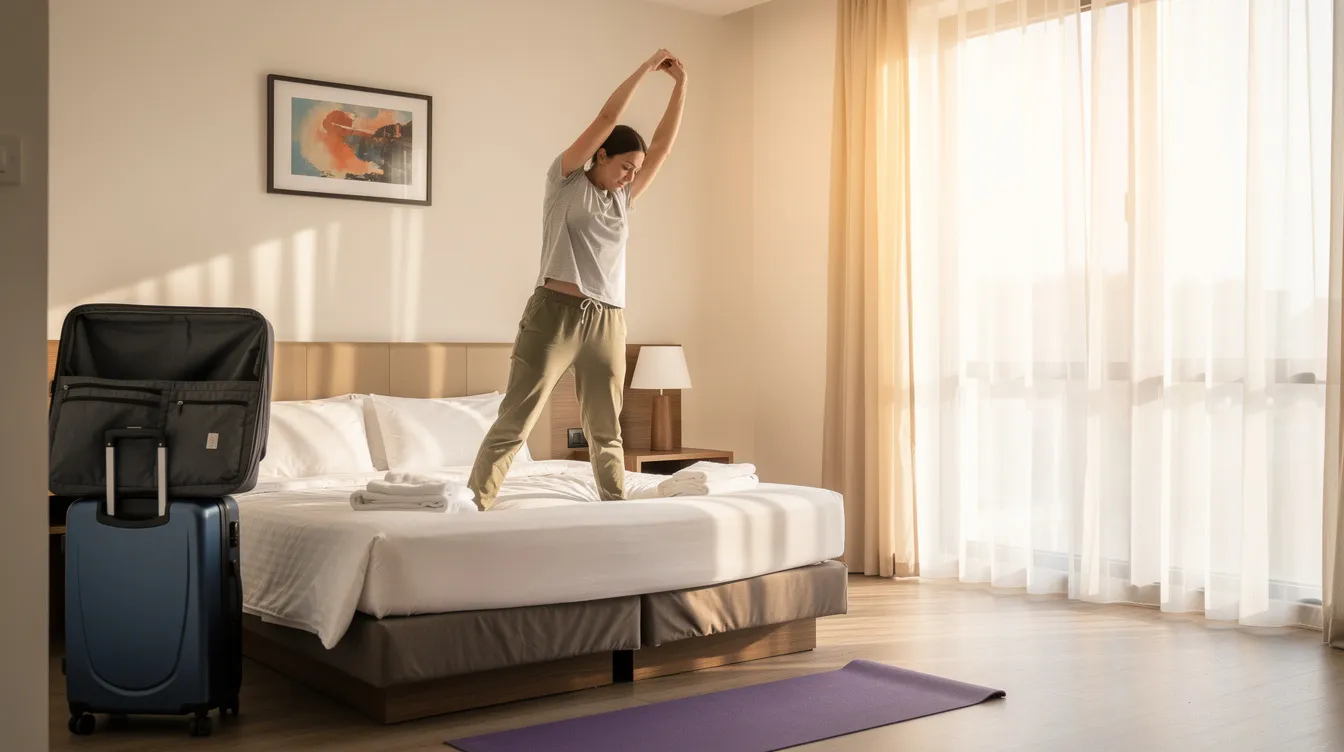
Pre-Trip Checklist: Pack Sleep Mask and Plan Meals
Before your next flight, run through this checklist:
- Pack sleep mask for total darkness during flight and hotel sleep
- Pack earplugs or noise-cancelling buds to block 85dB cabin noise
- Plan small meals around your flight schedule
- Set phone and devices to destination time before departure
- Download a jet lag app for personalized light exposure timing
- Hydrate well the day before flying
- Adjust bedtime by one hour for at least 2-3 days pre-flight
A few tips can make all the difference: preparation beats reaction when it comes to jet lag recovery. The travelers who recover fastest are those who start their adjustment before they even board the plane.
With the right strategy, you can reduce jet lag symptoms significantly and arrive ready to perform—whether for business or pleasure. Start implementing these techniques before your next trip, and consider consulting your healthcare provider if you’re a frequent traveler dealing with persistent sleep disruption.