

Getting a restful night’s sleep depends on more than just clocking eight hours. Your sleep posture and the surface beneath you play critical roles in whether you wake up refreshed or aching. Mattress ergonomics—the science of designing sleep surfaces that balance comfort and support—directly influences spinal alignment, pressure distribution, and overall sleep quality. This guide breaks down how to match your sleep position to the right mattress, address common pain issues, and make smarter buying decisions.
Why Mattress Ergonomics Matters for Sleep Health and Sleep Quality
Mattress ergonomics refers to the science of designing sleep surfaces that optimize the balance between comfort and support. The goal is maintaining neutral spinal alignment by preserving the spine’s natural curves, minimizing pressure points on areas like shoulders, hips, and lower back, and promoting healthy sleep posture throughout the night. This field adapts to individual body types, body weight, and preferred sleep positions.
Two key studies underscore the connection between your mattress and sleep outcomes:
- Jacobson et al. (2008) used Visual Analog Scales on participants switching from their old mattress to new medium-firm options. Results showed significant improvements in subjective sleep quality, back pain reduction, and morning restedness.
- Lee and Park found that comfortable mattresses yielded higher sleep efficiency, more deep sleep percentage, and lower Wake After Sleep Onset compared to uncomfortable ones.
How does this translate to your sleep health? A supportive mattress stabilizes sleep architecture by reducing micro-arousals, extending deep sleep stages, and lowering variability in total sleep time. Proper mattress ergonomics are essential for achieving a good night’s sleep, which is the foundation of sleep hygiene and overall well-being. Poor mattress ergonomics—like a soft mattress that lets your hips sink too deep—can increase sleep stage shifts and impair rapid sleep onset. Over time, inadequate mattress support may exacerbate chronic pain cycles and compromise your overall health and mental health.
Sleep Position, Sleep Posture, And Good Posture

Mattress ergonomics – why mattress ergonomics matters for sleep health and sleep quality
Understanding your dominant sleep position is the first step toward choosing the right mattress. Here are the most common positions:
| Position | Prevalence | Posture Effects |
|---|---|---|
| Side sleeping | 55-60% | Shoulder and hip compression unless relieved; spine may curve laterally without support |
| Back sleeping | 30-35% | Neutral alignment potential but risks lumbar flattening without contouring |
| Stomach sleeping | 5-10% | Exaggerated thoracic curve and cervical rotation, straining neck and back muscles; increased pressure on the chest can make breathing more difficult as the rib cage works harder to expand during inhalation |
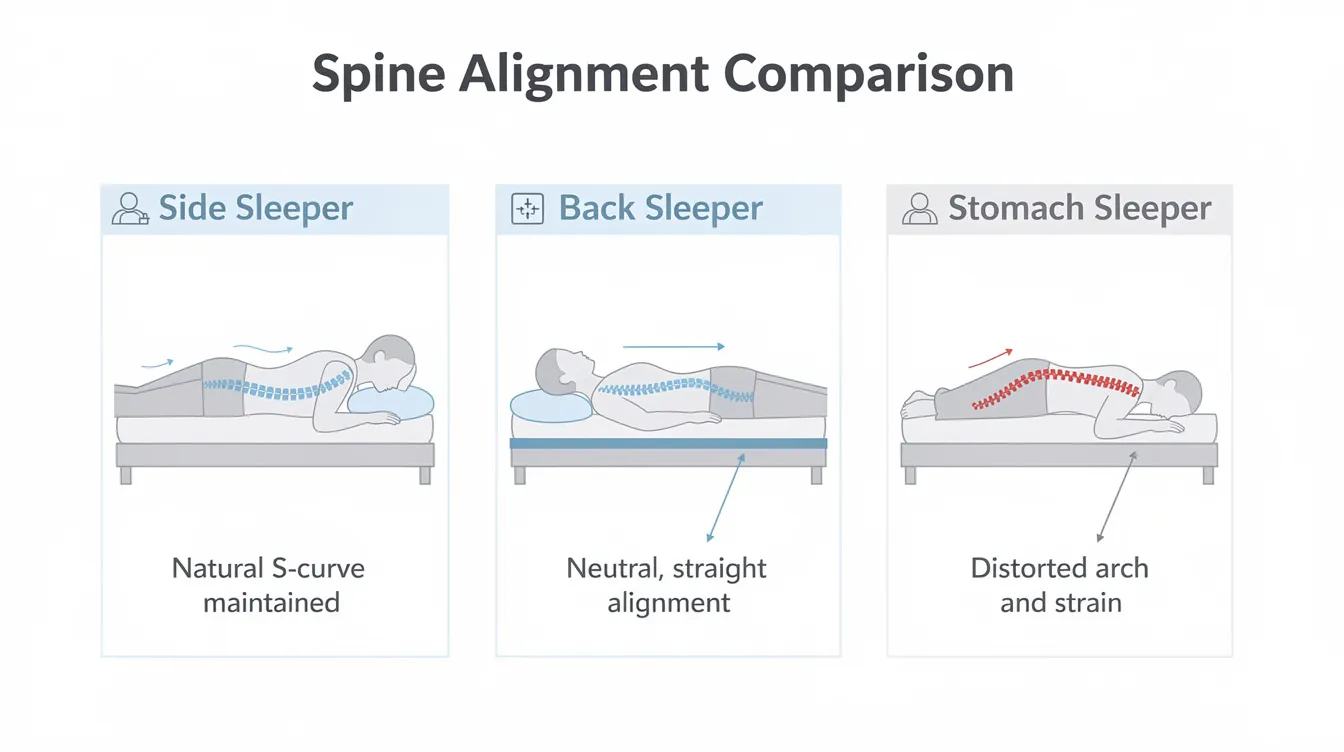
Each position places distinct demands on your body. Side sleeping requires enough support at the waist while allowing shoulders and hips to sink. Back sleeping needs medium contour to maintain proper posture through the night. Stomach sleeping forces the spine into unnatural curves that stress muscles and joints and can restrict chest expansion, impacting breathing comfort.
How Sleep Position Affects Back Pain And Neck Pain
Spinal alignment varies dramatically across different positions:
- Side sleepers preserve the natural S-curve if the mattress allows 2-4 inches of shoulder and hip immersion while supporting the waist
- Back sleepers maintain lordosis with medium contouring, keeping spine aligned from neck to hips
- Stomach sleepers hyperextend the lumbar region, increasing disc pressure by 20-30% according to biomechanical models
Evidence on neck pain risks: Stomach sleeping requires 45-60 degree head rotation, raising cervical facet joint stress and muscle spasm likelihood. Studies show stomach sleepers report 2x higher morning stiffness. Side sleepers risk trapezius strain without proper pillow height matching the distance from neck to shoulders.
The best sleep position to reduce back pain is back sleeping, as it minimizes gravitational torque on intervertebral discs. Side sleeping is viable with proper ergonomic support.
Best Sleep Position And Choosing The Right Mattress
The criteria for optimal sleep position prioritize:
- Neutral spine alignment (head, shoulders, hips, knees in a straight line)
- Pressure redistribution below ischemia thresholds
- Minimal joint torque
These factors favor back or side sleeping over stomach sleeping.
Mattress features map directly to position needs:
- Side sleepers need plush top layers (3-5 inches of soft foam) for shoulder and hip pressure relief paired with a firmer core for lumbar zone support
- Back sleepers require a medium firm mattress (5-7 on a 10-point scale) with subtle contouring
- Stomach sleepers benefit from a firm mattress (7-9/10) with elevated midsection support to prevent arching
Comparison Table: Position vs. Mattress Features
| Sleep Position | Ideal Firmness | Sinkage Level | Key Feature |
|---|---|---|---|
| Side | Soft-Medium (4-6/10) | Deep at pressure points | High pressure relief |
| Back | Medium-Firm (6-8/10) | Minimal | Lumbar support |
| Stomach | Firm (7-9/10) | Very minimal | Elevated midsection |
Best Mattress Types For Side Sleepers And Side Sleeping
Side sleepers dominate at around 60% prevalence among adults. If you’re a side sleeper, here’s what to look for:
Ideal firmness: Soft-to-medium (4-6 on a 10-point scale), allowing 20-30% body weight sinkage at pressure points.
Memory foam provides superior pressure relief at shoulders through its viscoelastic slow response. It molds precisely to your body, delivering up to 35% peak pressure reduction compared to standard polyfoam. The trade-off: memory foam may trap heat.
Latex offers buoyant support with faster response time (2-3x quicker bounce-back than memory foam). This reduces the “stuck” sensation and enhances mobility—ideal if you shift between different positions throughout the night.
A hybrid mattress delivers zoned support through pocketed coils with varying gauge (thicker under hips and back). This construction combines foam comfort layers with spring durability and breathability. A latex hybrid specifically pairs responsive latex comfort layers with coil support for sleepers wanting both bounce and contouring.
Addressing Back Pain With The Best Mattress And Good Posture

Mattress ergonomics – best sleep position and choosing the right mattress
Mattress firmness directly modulates lower-back stress through contact pressure and shear forces:
- Soft mattresses (< 4/10) increase lumbar hyperextension by 10-15mm deviation, elevating disc pressure
- Medium firmness (5-7/10) matches torso weight distribution, reducing paraspinal muscle activity by 25%
- Firm mattresses (>8/10) risk hyperlordosis in lighter users
There are several strategies to address back pain related to sleep issues, including:
- Use contoured cervical pillows elevating the head 4-6 inches to keep neck aligned with ear-shoulder-hip
- Add lumbar rolls or wedges under knees (back sleeping) or between knees (side sleeping) to offload pelvis tilt
- Evidence shows these adjustments cut morning low-back pain scores by 30-40% in office workers
A flat pillow may not provide enough support for side sleepers, while a firm pillow helps maintain the cervical curve. Some sleepers find a rolled towel under the neck adds additional support.
Case study placeholder: Reference Low et al. (2017) trial where latex users reported 35% peak pressure drop and significant pain relief versus polyurethane foam users.
Implementing these strategies can help achieve a restorative night’s sleep by improving spinal alignment and reducing pain.

Optimizing Sleep Health: Maintenance, Sleep Quality, And Lifespan
Your mattress has a finite lifespan. Plan replacement according to these timelines:
- Foam and latex: 7-10 years
- Innerspring: 8-12 years
End-of-life signs to watch for:
- Sagging greater than 1 inch
- Visible lumps or uneven surfaces
- Creaking coils
- Doubled wake-ups per night compared to when the mattress was new
Cleaning and Rotation Checklist:
- Vacuum mattress surface monthly
- Rotate 180 degrees quarterly (especially for hybrids)
- Air out 8 hours weekly when possible
- Use waterproof mattress covers
- Avoid direct sunlight and heat above 120°F to preserve foam integrity
Warranty and trial considerations: Look for 10-25 year warranties and 100+ night sleep trials with free returns. Data suggests 20-30% of buyers exchange mattresses due to firmness mismatch—generous return policies reduce stress around this decision.
Buying Guide: How To Test The Right Mattress In-Store Or Online

Mattress ergonomics – optimizing sleep health: maintenance, sleep quality, and lifespan
In-Store Testing Checklist
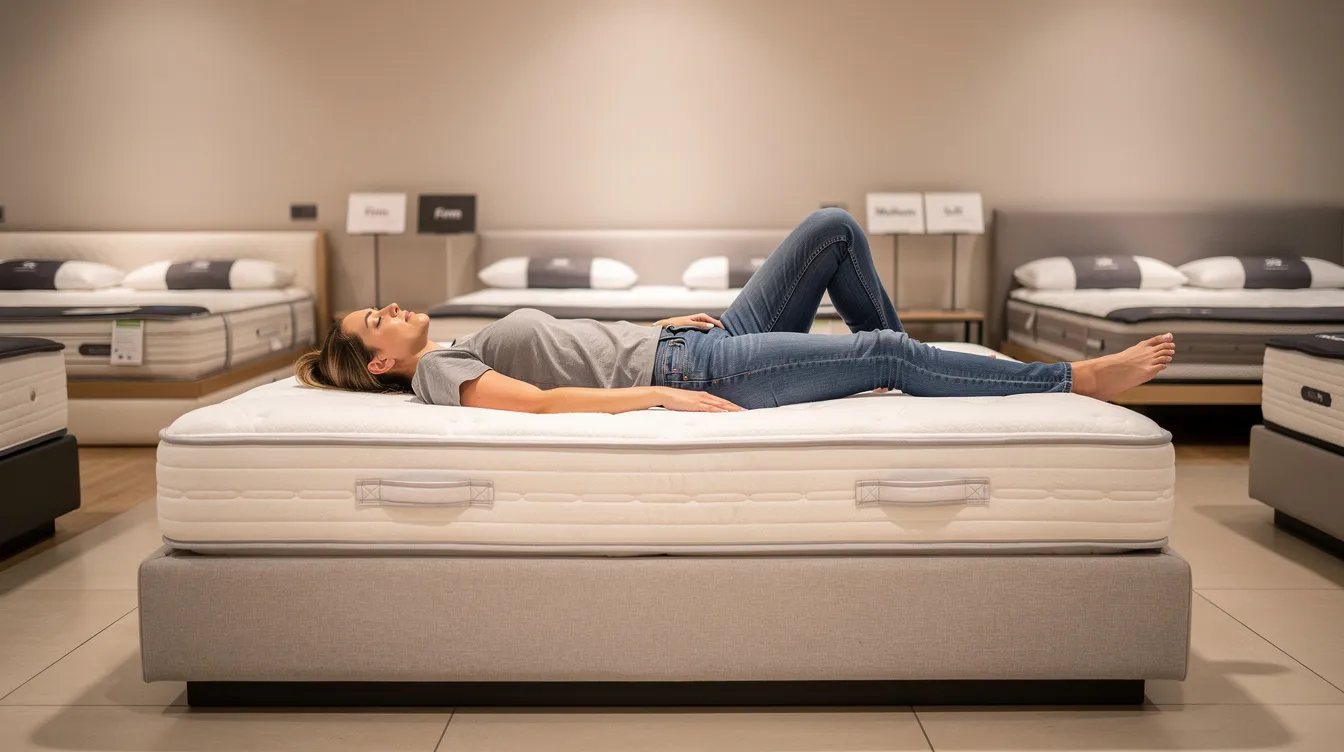
- Lie 10-20 minutes in each position mimicking your nightly habits
- Check spine alignment by sliding your hand under your lumbar area (should fit 1-2 fingers)
- Press edges for stability if you share a bed or sleep near the edge
- Note partner motion isolation by having someone move on the other side
- Assess temperature regulation—does the surface feel comfortable or hot?
Remote-Buy Checklist
- Verify trial length (look for 100-365 night trials)
- Confirm 100% money-back return policy
- Check compression shipping viability and setup requirements
- Review detailed firmness guides with BMI and position charts
- Filter customer reviews by body type and sleep position
- Confirm return fee waivers
Five Questions to Ask Retailers
- Does the foam have CertiPUR-US or GREENGUARD certifications?
- What are the zoned support details (coil counts, gauges by region)?
- What’s the expected sinkage depth at shoulders and hips?
- What motion transfer metrics can you share?
- How long is the typical off-gassing duration?
Tips Specifically For Side Sleepers And Side-Sleeper Content
How to Use Knee Pillows Correctly
Knee pillows (6-10 inches height with firm fill) position between the knees to prevent pelvic rotation and keep hips and spine aligned:
- Lie on your side in your normal sleep position
- Place the pillow snug between your knees
- Adjust until knees form approximately a 90-degree angle
- Add a small roll under your waist if there’s a gap between your body and the mattress
- This setup yields 15-25% torque reduction on the lower spine
Mattress Toppers for Pressure Relief
If your current mattress lacks sufficient cushioning but isn’t ready for replacement:
- Choose a 2-3 inch gel-infused memory foam or latex topper
- Look for ILD ratings between 14-20 for optimal softness
- Prioritize breathable covers for heat dissipation
- Queen size toppers typically cost $100-300 and can extend mattress life 1-2 years
Sizing Advice for Couples
When partners have different firmness needs:
- Consider split king adjustable airbeds where each side controls firmness independently
- Dual-zone hybrids offer different support levels on each half
- Ensure minimum 13.5-inch width per person to feel comfortable and avoid edge fall-off
- Test motion isolation—pocketed coils isolate movement better than traditional innerspring acting as one unit
Content Extras: FAQs, Models, And SEO Focus
FAQ: Neck Pain and Mattress Queries
Q: Can the wrong mattress cause neck pain? A: Yes. Inadequate support can twist the cervical spine beyond 20 degrees during sleep, per posture studies. Solution: pair a medium firm mattress with a 4-6 inch loft pillow to maintain proper posture.
Q: What’s the best mattress firmness for side sleepers with back pain? A: A 5-6/10 firmness optimizes alignment based on PSG data, providing enough support without creating pressure points at shoulders and hips.
Q: Should I use a water bed for back pain? A: Water beds can conform to body curves but lack zoned support. Most research favors medium-firm foam or hybrid options over water beds for chronic pain management.
Q: How do personal preferences factor into mattress choice? A: While medium firmness works for 70-80% of sleepers, individual BMI, age, and position habits matter. Heavier users typically need firmer options; lighter sleepers may prefer softer surfaces.
Comparison Chart: Top Best Mattress Options for Side Sleepers
| Model | Type | Firmness | Best For | Consideration |
|---|---|---|---|---|
| Tempur-Pedic Adapt | Memory Foam | 5/10 | Pressure relief | May retain heat |
| Saatva Latex Hybrid | Latex Hybrid | 6/10 | Buoyant zoned support | Higher price point |
| WinkBeds | Hybrid | 5.5/10 | Lumbar emphasis | Edge support excels |
| Helix Midnight | Hybrid | 5/10 | Shoulder pressure relief | Good motion isolation |
Key Takeaways
- Mattress ergonomics balances comfort and support to maintain proper spinal alignment and reduce discomfort
- Your sleep position determines ideal firmness: side sleepers need softer surfaces; back sleepers benefit from medium firm; stomach sleepers require firm support
- A medium firm mattress works for most adults, reducing sleep latency by up to 38% and improving sleep efficiency
- Replace mattresses every 7-12 years depending on type, watching for sagging and increased wake-ups
- Use accessories like knee pillows, lumbar rolls, and appropriate pillow heights for less pain and more support
- Always test mattresses for 10-20 minutes in-store or utilize generous trial periods when buying online
The right mattress paired with good posture habits can transform your nights from restless to restorative. Start by identifying your primary sleep position, match it to appropriate firmness and materials, and don’t skip the trial period. A good night’s sleep—and a restorative night’s sleep over time—depends on getting this foundation right.