
Ever wonder why your roommate bounces out of bed at 5 a.m. while you’re hitting snooze for the third time? The answer lies in sleep chronotypes—your body’s hardwired preference for when to sleep and when to stay alert. This guide breaks down the science behind chronotypes and delivers actionable takeaways to help you finally achieve better sleep.
Overview: Sleep Chronotypes And A Good Night’s Sleep
Sleep chronotypes represent your body’s natural inclination to sleep at certain times during a 24-hour period. Understanding your chronotype matters because adapting to it can improve your sleep quality, energy levels, and overall mood.
Sleep chronotypes are closely linked to individual sleep patterns, which refer to the habitual timing and structure of your sleep and wake periods throughout the day and night.
Research shows that normal variation between early risers and night owls spans two to three hours—meaning a morning person and an evening type may naturally wake at completely different times yet sleep the same total duration.
What Is Circadian Rhythm And The Internal Clock?

Sleep chronotypes – overview: sleep chronotypes and a good night’s sleep
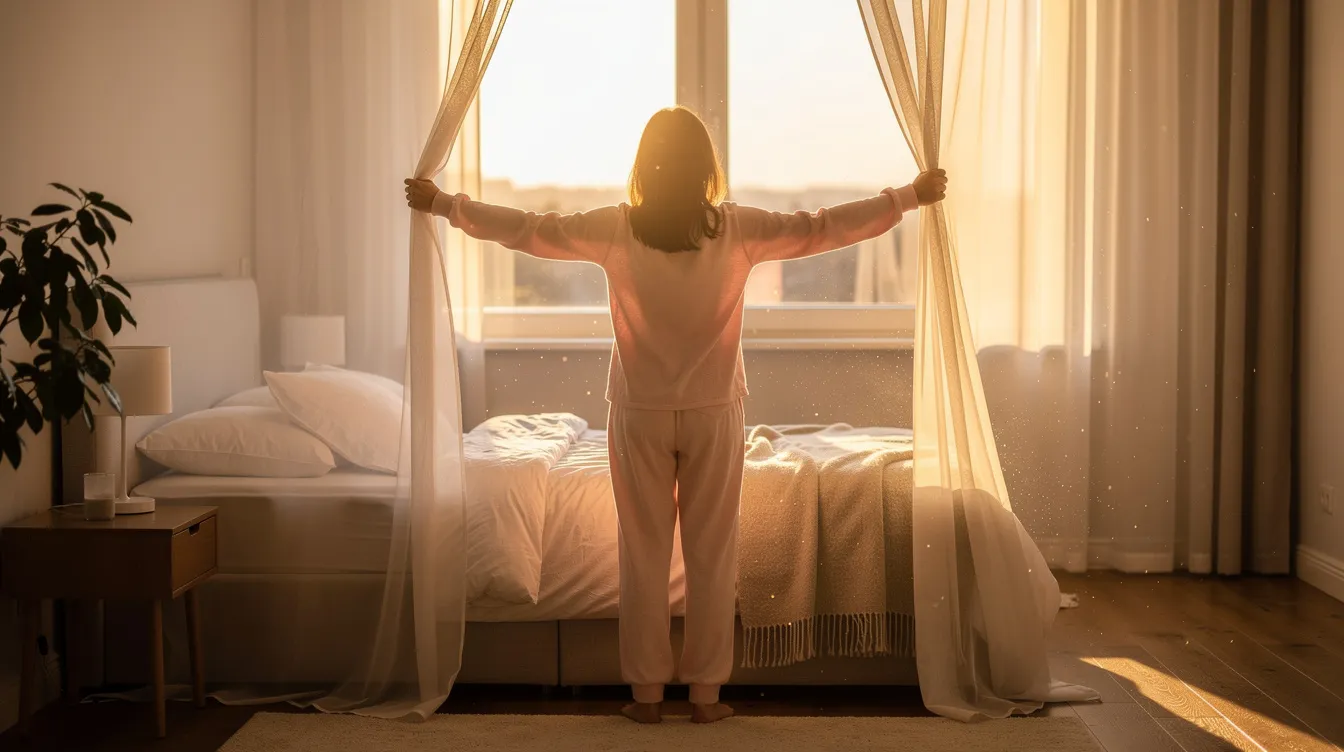
Your circadian rhythm is your body’s 24-hour internal clock that regulates sleep wake patterns, hormone release, appetite, and core body temperature. This internal clock is controlled by the suprachiasmatic nucleus (SCN) in your brain’s hypothalamus.
Light serves as the primary cue for this system:
- Darkness triggers melatonin production, making you feel sleepy
- Light suppresses melatonin, helping you stay alert
- This mechanism keeps your internal clock synchronized with the external day-night cycle
Your chronotype, then, is the subjective way you experience this underlying circadian machinery.
Circadian Typology: How Chronotypes Form
Circadian typology emerges from a complex interplay of genetic and environmental factors. Your chronotype is largely influenced by genetics—it’s hardwired into your biology, not simply a habit you can easily change.
Key factors in chronotype formation:
| Factor | Influence |
|---|---|
| Genetics | Primary determinant; multiple genes encode circadian clock proteins |
| Age | Adolescents shift slightly toward evening preferences; older adults trend earlier |
| Environment | Light exposure patterns, seasonal variations may modulate expression |
Research has also found that certain personality traits are associated with different sleep chronotypes. For example, morning types tend to score higher on conscientiousness and agreeableness, while evening types are more likely to exhibit impulsivity and may have a higher risk of mental health issues.
Importantly, chronotypes fall on a spectrum rather than into fixed categories. Most people land somewhere in the middle, with some flexibility in their sleep period timing—though pushing against your natural type comes at a physiological cost.
How Chronotype Affects Health, Mood, And Performance

Sleep chronotypes – circadian typology: how chronotypes form
Your chronotype affects far more than just when you go to bed. Research documents associations across multiple domains:
Metabolic and mental health:
- Appetite timing and core body temperature fluctuations follow chronotype patterns
- Evening chronotypes report higher subjective sleepiness
- Chronic misalignment creates ongoing health risks
Cognitive performance: Your chronotype determines your peak time for concentration, physical performance, and creativity. Early risers are most productive in the morning hours, while night owls reach their most productive periods in the evening.
Social jetlag: When your biological rhythms clash with societal schedules—like an evening type forced into early shifts—you experience a form of chronic jet lag. This misalignment degrades both sleep architecture and daytime functioning.
Occupational implications: Extremes outside the normal range can cause difficulty participating in normal work, school, and social activities, impacting well being and productivity.
How To Identify Your Chronotype
Sound familiar: you either drag yourself through mornings or crash early while others are just getting started? Here’s how to pinpoint where you land:
- Use validated questionnaires like the morningness eveningness questionnaire or munich chronotype questionnaire
- Take a chronotype quiz as a simple, accessible way to determine your chronotype based on your sleep-wake preferences and behaviors
- Track your sleep and wake times for two weeks—note when you naturally wake without an alarm
- Record peak alertness periods daily to identify your productivity windows
Pay attention to weekends or vacation days when you’re free from external obligations. Your natural patterns emerge most clearly when you’re not fighting a work schedule.
Lion Chronotype (Early Bird)
The lion chronotype represents the classic early bird. Lions typically go to sleep between 8 and 9 p.m. and wake up early—often between 4 and 5 a.m.—feeling refreshed and ready.
Characteristics:
- Peak productivity in early morning hours
- Energy levels lag by late afternoon
- Tend to sleep more consolidated hours overall
Practical tip: Schedule demanding cognitive tasks before noon. Your alertness naturally dips by mid-afternoon, making that window ideal for routine work or meetings.
Bear Chronotype
The bear chronotype follows the sun—most alert during daylight hours, sleepy when it’s dark. Bears represent the majority of the population and align well with conventional schedules.
Characteristics:
- Wake times match sunrise patterns
- Midmorning productivity peak (typically 10 a.m.–noon)
- Natural energy dip in early afternoon
Bears thrive on a conventional 9-to-5 structure. If you’re a bear, lean into standard workday scheduling rather than fighting for early-morning or late-night productivity.
Dolphin Chronotype
Dolphins are the light sleepers—those with sporadic rhythms who often have a hard time falling asleep and staying asleep. This chronotype is marked by sensitivity and insomnia tendencies.
Characteristics:
- Light-sleep prone with fragmented rest
- Constantly seeking better sleep structure
- May feel tired despite adequate time in bed
Management strategies:
- Maintain a consistent sleep schedule: go to bed and wake up at the same time every day to help regulate circadian rhythms and improve sleep quality
- Strict sleep hygiene: consistent bed and wake times, cool dark room
- Limit stimulants after noon
- Consider cognitive behavioral therapy for insomnia if problems persist
Delayed Sleep Phase Syndrome And Related Disorders

Sleep chronotypes – how to identify your chronotype
When wolf chronotype tendencies become extreme and intractable—preventing normal participation in society—sleep medicine classifies this as delayed sleep phase syndrome (DSPS).
Diagnostic hallmarks:
- Inability to fall asleep until very late (often 2–6 a.m.)
- Difficulty waking for conventional schedules
- Normal sleep architecture once asleep
Individuals with delayed sleep phase syndrome often sleep late, which is associated with increased health risks, including mental health issues such as anxiety and depression, particularly among evening chronotypes and older adults.
Initial behavioral management:
- Strategic morning light exposure
- Fixed sleep wake cycle adherence
- Evening light restriction
When to see a sleep specialist: Refer to a sleep doctor when behavioral interventions fail after 4–6 weeks, when sleep deprivation significantly impairs daily functioning, or when you suspect additional sleep disorders. The american board-certified sleep medicine reviews cases where standard approaches aren’t working.
Strategies For Better Sleep And Aligning With Your Chronotype
Not everyone can redesign their life around their chronotype—but you can make strategic adjustments:
| Strategy | How It Works |
|---|---|
| Morning light exposure | 20–30 minutes of bright light after waking advances your clock earlier |
| Fixed sleep-wake times | Maintain consistent times for two weeks minimum to stabilize rhythms |
| Evening dim light | Reduce screen brightness and room lighting 2 hours before bed |
| Melatonin timing | Low-dose melatonin 3–5 hours before target bedtime (under clinician guidance) |
The key principle: your sleep routine should work with your biological rhythms, not against them. Small phase shifts accumulate over time.
Practical Daily Schedules By Chronotype For Better Sleep
Lions (Morning Types)
- 5:00 a.m. – Wake, expose to bright light
- 6:00–10:00 a.m. – Deep work and demanding tasks
- 2:00 p.m. – Light tasks, meetings
- 8:00 p.m. – Begin wind-down routine
- 9:00 p.m. – Lights out
Bears (Intermediate Types)
- 7:00 a.m. – Wake with sunrise
- 10:00 a.m.–12:00 p.m. – Peak productivity window
- 1:00–3:00 p.m. – Administrative tasks (post-lunch dip)
- 10:30 p.m. – Target bedtime
Dolphins (Light Sleepers)
- Avoid naps entirely—preserve sleep drive
- 9:00 p.m. – Dim all lights, start relaxation routine
- 10:00 p.m. – Consistent bedtime, even if not sleepy
- Use the bed only for sleep—no screens, no reading
The wolf chronotype (the true night owl) functions best with creative work scheduled for certain times in the evening, though societal constraints often require phase-advancing strategies.
Interventions, Therapies, And When To Seek Help
Light therapy basics:
- Use a 10,000-lux light box
- Position 16–24 inches from face
- 20–30 minutes within an hour of waking
Chronotherapy: A controlled technique where sleep times shift slightly later each day (typically 2–3 hours) until you rotate around to your target schedule. This requires careful planning and is best supervised by a sleep specialist.
Referral criteria:
- Persistent insomnia despite behavioral interventions
- Suspected comorbid conditions (sleep apnea, restless legs)
- Significant occupational or safety concerns
Social Jetlag, Shift Work, And Policy Considerations
Human behavior doesn’t always match human biology. Consider these systemic factors:
Workplace flexibility: Employers benefit from allowing flexible start times. Evening types forced into early shifts show reduced productivity and increased error rates.
School start times: Adolescents experience a normative phase delay during puberty. Evidence supports later school start times for teen overall health and academic performance.
Shift workers: Chronotype-informed scheduling—matching workers to shifts that align with their time zone preferences—reduces accidents and improves life satisfaction.
Research Methods And Evidence: A Comprehensive Review
Current chronotype research relies on several established tools:
- Morningness-Eveningness Questionnaire (MEQ): Most widely validated instrument
- Munich Chronotype Questionnaire (MCTQ): Assesses sleep timing on work vs. free days
- Actigraphy: Objective measurement of sleep-wake patterns via wearable devices
Major findings confirm that chronotype has genetic underpinnings, with multiple genes contributing to circadian variation. Studies by researchers including Michael Breus have helped popularize chronotype categories.
Limitations: Animal models illuminate mechanisms but can’t capture the social complexity of human chronotypes. Future research directions include gene-environment interactions and interventions for extreme types.
Summary: Use Your Internal Clock To Achieve Better Sleep
Your chronotype isn’t a preference you can simply override—it’s closely related to your genetic makeup and biological rhythms. But understanding it gives you leverage.
Practical next steps:
- Identify your type using validated tools
- Track your natural patterns for two weeks
- Align your ideal schedule with peak alertness windows
- Use light exposure strategically
- Seek professional guidance if problems persist
The research supports optimism: adapting to your natural chronotype can meaningfully improve sleep quality, energy, and mood. Start with one small adjustment this week—whether that’s morning light exposure or a fixed wake time—and iterate from there.
Your awake hours deserve the same attention as your sleep. When your schedule and biology work together, a good night’s sleep becomes far more achievable.