

If you spend hours lying in bed wide awake each night, your brain may have learned to associate your bedroom with wakefulness rather than rest. Stimulus control therapy rewires these associations, helping you fall asleep quicker and stay asleep longer.
Quick Summary: Stimulus Control Within Cognitive Behavioral Therapy
Stimulus control therapy is a behavioral technique developed in the 1970s to address the conditioning problem at the heart of chronic insomnia. When you repeatedly lie in bed awake, your brain begins treating the bed as a cue for alertness, worry, and frustration rather than sleep. Beliefs and emotional states can affect your ability to fall asleep and lead to sleep disturbances, as unhelpful thinking patterns may negatively influence sleep quality.
Within cognitive behavioral therapy for insomnia (CBT I), stimulus control serves as a core component alongside sleep restriction. This therapy targets the perpetuating factors that keep poor sleep going, helping patients achieve 70-80% remission rates in clinical trials—outcomes that outperform medication in long-term effectiveness.
Target Sleep Problems and Indications

Stimulus control therapy – quick summary: stimulus control within cognitive behavioral therapy
Stimulus control works best for specific insomnia patterns:
- Prolonged sleep onset latency (taking 30+ minutes to fall asleep)
- Frequent nighttime awakenings with difficulty returning to sleep
- Extended time spent in bed awake during the night
This approach is less suited for isolated early-morning awakening without middle-of-the-night arousals, as these often stem from circadian rhythm issues rather than conditioning.
Referral to sleep medicine specialists is warranted if sleep apnea, restless legs syndrome, or severe medical conditions are present.
Core Principles of Behavioral Therapy for Insomnia
The foundation of stimulus control rests on re-establishing your bed as an exclusive cue for sleep rather than wakefulness.
Bed-sleep association principle: Consistent pairing of the bed with rapid sleep onset weakens wakeful cues over time. Every minute you spend in bed awake reinforces the wrong association.
Sleep drive consolidation: Restricting sleep opportunity builds homeostatic pressure, making your body naturally sleepy at bedtime instead of alert.
Consistent wake time: Rising at the same time every morning—including weekends—anchors your circadian rhythm and prevents fragmented sleep habits.
Maintaining good sleep habits is essential for both physical and mental health, as quality sleep supports overall well-being and reduces the risk of chronic health conditions.
The treatment timeframe is deliberately brief: 2-4 weeks of strict adherence typically yields initial improvements, with full CBT protocols spanning 4-8 sessions.
Stimulus Control Steps for CBT-I: Practical Instructions

Stimulus control therapy – core principles of behavioral therapy for insomnia
Follow these six rules consistently:
- Go to bed only when feeling sleepy — distinguish true drowsiness from general fatigue or tired feelings
- Leave bed after 15-20 minutes awake — estimate time without checking the clock to avoid arousal
- Return to bed only when sleepy again — repeat as needed throughout the night
- Use bed only for sleep and sex — no reading, TV, eating, or worry
- Wake at the same time every morning — regardless of how much sleep you obtained
- Avoid daytime napping — this builds stronger nocturnal sleepiness
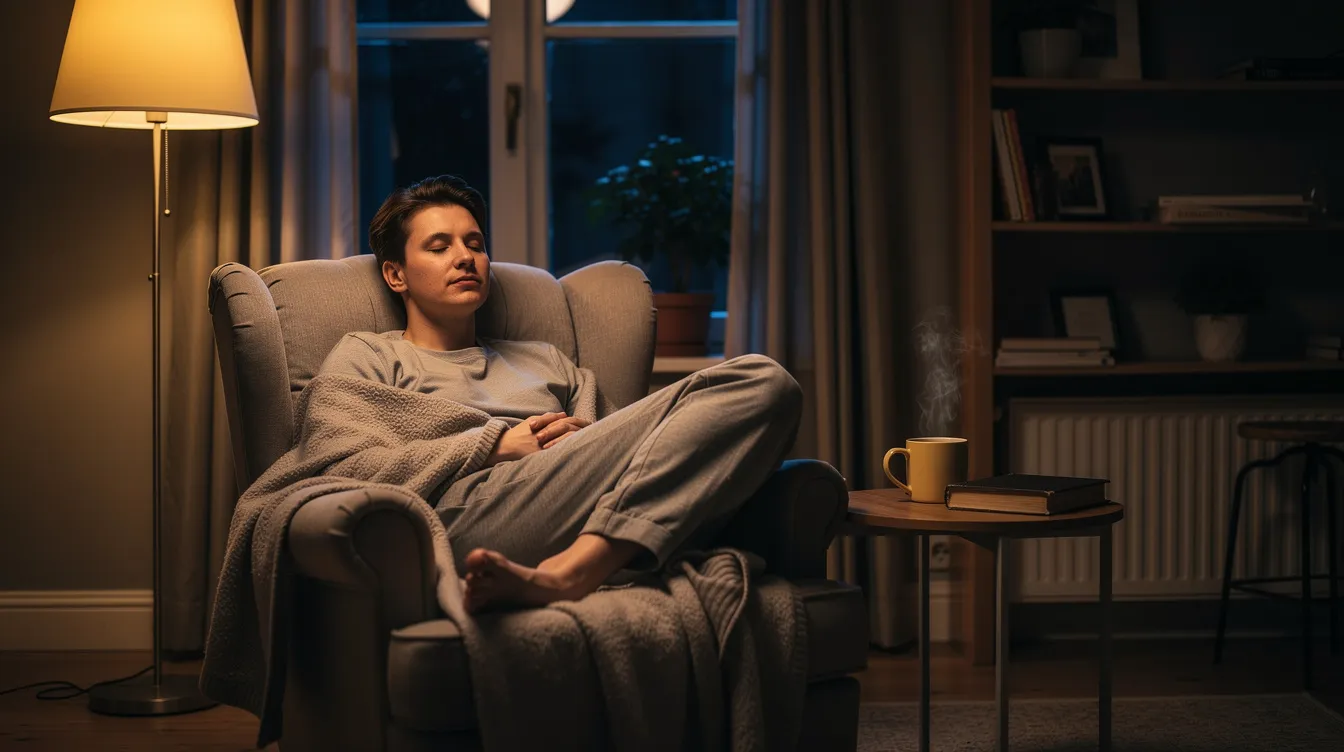
Manage Nighttime Activities When Awake
When you leave the bedroom during the night, move to another room with dim lighting. This prevents your brain from associating wakefulness with your sleep space.
To help you stay awake in a relaxed state without increasing alertness, choose calming activities that support the transition back to sleep.
Suitable calming activities:
- Light stretching or progressive muscle relaxation
- Meditation or breathing exercises
- Listening to calm audiobooks
- Reading dull magazines (not engaging books)
Activities to avoid:
- Screen use (phones, tablets, TV)
- Work emails or problem-solving
- Smoking or eating
- Anything causing tension or stress
Blue light from screens suppresses melatonin release, delaying sleep onset by 1-2 hours.
Sleep Restriction and When Not to Use Stimulus Control
Sleep restriction often integrates with stimulus control. The initial step involves reducing your sleep opportunity to match your actual total sleep time.
For example, if you sleep 5 hours but spend 8 hours in bed, restrict time in bed to 5.5 hours initially. Extend by 15-30 minutes weekly once sleep efficiency exceeds 85-90%.
Contraindications for this therapy include:
- Epilepsy (seizure risk from sleep drive buildup)
- Bipolar disorder (mania provocation risk)
- High-alertness occupations requiring safety
- Severe depression or unstable medical conditions
Combining sleep restriction with stimulus control yields 20-30% greater efficacy than either alone.
Implementation Timeline and Expectations for CBT-I

Stimulus control therapy – sleep restriction and when not to use stimulus control
Expect this timeline when starting treatment:
| Week | What to Expect |
|---|---|
| 1 | Transient daytime sleepiness, fatigue, possible mild mood dips |
| 2-3 | Sleep efficiency begins improving |
| 4+ | Most people notice consolidated sleep, reduced time awake in bed |
The temporary difficulties in week one reflect accumulated sleep debt and typically normalize as efficiency improves. Avoid napping to relax unless efficiency drops below 80%.
Monitoring, Measurement, and Sleep Diary Use
Keep a daily sleep diary tracking:
- Bedtime and rise time
- Estimated sleep onset latency
- Wake after sleep onset
- Total sleep time
- Any naps
Calculate sleep efficiency weekly using this formula:
Sleep Efficiency = (Total Sleep Time ÷ Time in Bed) × 100
Adjust your schedule based on weekly averages. If efficiency dips below 80%, delay bedtime. Extend time in bed only after efficiency consistently exceeds 90%.
Troubleshooting Common Sleep Problems During Therapy
Nonadherence: Identify barriers such as misconceptions like “one bad night justifies napping.” A therapist can help with cognitive restructuring around negative thoughts about sleep. It’s common to feel frustrated when progress is slow, but this can be managed with guidance and patience.
Comorbid conditions: For patients with chronic pain or physical limitations, modify out-of-bed activities to seated relaxation techniques.
Shift workers: Adapt fixed wake times to post-shift schedules using chronotherapy principles.
Medication review: If sleep-related behaviors include hypnotic dependence, temporary tapering may help. Studies show 50-70% of medicated adults successfully wean off pills post-CBT-I.
Benefits, Risks, and Evidence for Cognitive Behavioral Therapy
Stimulus control delivers durable results:
- 70-80% of patients achieve remission at 6-12 months
- Moderate-to-large effect sizes (Cohen’s d = 0.8-1.2)
- Improved mood, reduced anxiety, better daytime function
Short-term risks include transient fatigue and mild sleepiness during early sessions. These difficulties are far outweighed by pharmacotherapy risks like tolerance and dependence.
Over 100 randomized controlled trials position CBT-I as the gold-standard treatment for chronic insomnia symptoms.
Working With a Therapist for CBT I
Your therapist should describe the stimulus control rules in detail during your first session. Expect to focus on sleep works principles before addressing underlying anxiety or depression.
Schedule weekly follow-ups for 4-8 sessions. Each 30-50 minute appointment typically includes:
- Sleep diary review
- Troubleshooting adherence issues
- Cognitive work on beliefs like “I must get 8 hours”
- Gradual adjustment of sleep opportunity
Patient Handouts and Resources for Stimulus Control Therapy
Prepare these materials for home use:
One-page rule sheet covering:
- The six stimulus control instructions
- What to do when you can’t stay asleep
- Activities to avoid in the couch or bedroom
Sample sleep diary template with:
- Daily logging fields
- Weekly efficiency calculation
- Space for notes on effort and symptoms
List of calming nighttime activities:
- Breathing exercises
- Progressive muscle relaxation
- Listening to ambient sounds
- Light stretching
- Talking through worries earlier in the day
Follow-Up, Maintenance, and Relapse Prevention for Sleep Problems
Schedule check-ins at 1, 2, and 3 months post-treatment to reinforce maintenance. Long-term success requires vigilance: 60-70% of patients sustain gains with proper follow-up.
Teach patients to recognize relapse triggers and reinstate rules proactively:
- Reactivate sleep diary after two consecutive poor nights
- Resume strict bed-leaving rules immediately
- Avoid compensating with extra time in bed
Stimulus control therapy offers a structured, evidence-based path to improve sleep without relying on medication. Start implementing these principles tonight, and consider working with a qualified therapist to maximize your results.