The science of sleep encompasses the biological, neurological, and physiological processes that govern how your body rests, recovers, and consolidates memories. Far from passive downtime, sleep involves distinct brain wave patterns, hormonal shifts, and cyclical stages that actively process your daily experiences.
This guide covers brain basics of sleep regulation, normal sleep patterns across ages, the stages of sleep from light sleep to deep sleep and rem sleep, how circadian rhythms work, how much sleep you actually need, and practical strategies for quality sleep. You’ll walk away with actionable steps to improve your sleep patterns tonight.
Brain Basics
Sleep regulation depends on multiple brain regions working in concert. The hypothalamus houses the suprachiasmatic nucleus (SCN), which acts as your body’s biological clock. The thalamus relays sensory information and becomes active during REM. The pineal gland produces the hormone melatonin that signals sleep onset. The brain stem controls transitions between wakefulness and sleep, while the basal forebrain promotes sleep through chemical signaling.
Key Neurotransmitters That Affect Sleep
Several chemicals drive your sleep wake cycle:
| Neurotransmitter | Function |
|---|---|
| Adenosine | A chemical called adenosine accumulates during wakefulness, building sleep drive |
| Melatonin | Surges in darkness to induce sleep |
| GABA | Inhibits arousal centers to promote rest |
| Orexin | Sustains wakefulness during the day |
| Acetylcholine | Drives REM sleep and brain activity |
| Cortisol | Peaks in morning to promote alertness |
Caffeine works by blocking adenosine receptors, which is why your afternoon coffee can disrupt sleep even hours later.
Brain diagram note: The SCN sits just above the optic chiasm, receiving light signals directly from the eyes. The pineal gland sits posteriorly, releasing melatonin in response to darkness.
What Is Normal Sleep Across Ages

Science of sleep – brain basics
The amount of sleep needed varies by age and plays a crucial role in supporting health, brain function, and development.
Normal sleep requirements shift dramatically throughout life due to developmental changes in circadian regulation and sleep architecture.
Infants (0-12 months)
Infants exhibit polyphasic sleep, totaling 14-17 hours daily in short 2-4 hour bouts. Approximately 50% consists of REM-like active sleep, which is crucial for brain maturation. By 3-6 months, sleep patterns begin consolidating into longer nighttime stretches as the internal clock strengthens through light exposure.
Children (1-13 years)
- Toddlers (1-2 years): 11-14 hours including naps
- Preschoolers (3-5 years): 10-13 hours with one nap
- School-age (6-13 years): 9-11 hours nightly without naps
Growth hormone release during deep sleep makes adequate sleep duration critical during these years.
Adults (18+ years)
Adults typically need 7-9 hours of consolidated nocturnal sleep. Older adults (65+) may need 7-8 hours but often experience fragmented sleep from reduced slow wave sleep and weaker circadian amplitude. This isn’t necessarily a problem—short daytime naps can compensate.
Sleep Stages: Non REM Sleep (NREM) And Deep Sleep
A typical night consists of 4-6 sleep cycles, each lasting approximately 90 minutes. Your sleep cycle progresses from light nrem sleep through deep sleep, then into rem sleep before repeating. Each sleep stage is characterized by distinct patterns of brain waves, which help define the physiological changes that occur throughout the sleep cycle.
High-level comparison:
| Feature | Non REM Sleep | REM Sleep |
|---|---|---|
| Percentage of night | 75-80% | 20-25% |
| Primary function | Physical restoration | Memory processing |
| Brain wave activity | Slow, high-amplitude | Fast, wake-like |
| Heart rate | Decreased | Variable, irregular |
| Body temperature drops | Yes | Less regulated |
| Muscles relax | Progressively | Temporarily paralyzed |
Early cycles favor deep sleep for restoration, while later cycles extend REM duration—sometimes up to 60 minutes per episode.
Non REM Sleep (nrem sleep) Stages
Stage 1 (N1): This light sleep phase represents the transition from wakefulness. It lasts 1-7 minutes and accounts for roughly 5% of total sleep time. Your breathing slow and nervous system activity decreases. You’re easily aroused and may experience hypnagogic imagery—those vivid scenes that flash before consciousness fades.
Stage 2 (N2): This stage comprises 45-55% of your sleep. Brain wave activity includes distinctive sleep spindles (rapid 11-16 Hz bursts) that suppress arousal and aid memory consolidation. Heart rate and body temperature drop further. Each N2 episode spans 10-25 minutes.
Deep Sleep (Stage 3 NREM)
Deep sleep, also called slow wave sleep, occupies 15-25% of total sleep and concentrates in the first third of the night. Delta waves dominate brain wave patterns, making you minimally responsive to external stimuli.
Restorative functions during deep sleep:
- Growth hormone secretion for tissue repair
- Immune system strengthening
- Synaptic homeostasis (clearing neural waste via glymphatic flow)
- Energy expenditure reduction and metabolic restoration
Deep sleep percentage naturally declines with age. Young adults may spend 20-40 minutes in deep sleep during early cycles, while older adults see significantly less.

REM Sleep Overview
Rapid eye movement sleep presents a paradox: your brain activity mirrors wakefulness with beta and gamma waves, yet your body remains temporarily paralyzed through brainstem inhibition. This atonia prevents you from acting out dreams.
Dreaming occurs most vividly during REM due to heightened limbic system activity. Your breathing becomes irregular, blood pressure fluctuates, and heart rate varies unpredictably.
REM episodes start short (around 10 minutes) and lengthen progressively through the night, with final episodes reaching 30-60 minutes. Total REM accumulates to 90-120 minutes across a typical night. This stage is vital for emotional processing, procedural memory, and the brain’s ability to form new connections.
Circadian Rhythm And How It Helps Regulate Sleep

Science of sleep – sleep stages: non rem sleep (nrem) and deep sleep
Your circadian rhythm is an approximately 24.2-hour internal clock that governs when you feel alert and when sleep drive peaks. This process is controlled by the body’s biological clock, which regulates sleep and wakefulness in response to external cues like light. The suprachiasmatic nucleus serves as the master regulator, synchronizing your sleep wake homeostasis with the external world.
How Light Cues Shift the Rhythm
Light exposure is the primary signal that calibrates your circadian rhythms. Blue wavelengths (460-480nm) have the strongest effect. Morning light advances your rhythm, helping you fall asleep earlier that night. Evening bright light delays it, pushing sleep time later.
Practical tip: 30 minutes of bright morning light (10,000 lux) can phase-advance your rhythm by about one hour daily.
Melatonin Production Timing
The pineal gland releases melatonin as darkness falls. Dim light melatonin onset (DLMO) typically occurs about 2 hours before your natural bedtime. Production peaks between 2-4am, then drops to near-zero during daylight hours.
Jet Lag and Shift Work
Jet lag results from desynchrony between your internal clock and local time. Eastbound travel is typically harder—advancing the SCN proves more difficult than delaying it. Recovery occurs at roughly one day per time zone with properly timed light exposure and melatonin.
Shift work carries more serious risks. Chronic circadian misalignment elevates cardiovascular disease and cancer risk by 20-40%. Mitigation strategies include anchor sleep periods and bright light therapy during night shifts.

How Much Sleep Do You Need?
Sleep duration recommendations from the American Academy of Sleep Medicine:
| Age Group | Recommended Hours |
|---|---|
| Newborns (0-3 months) | 14-17 |
| Infants (4-11 months) | 12-15 |
| Toddlers (1-2 years) | 11-14 |
| Preschoolers (3-5 years) | 10-13 |
| School-age (6-13 years) | 9-11 |
| Teenagers (14-17 years) | 8-10 |
| Adults (18-64 years) | 7-9 |
| Older adults (65+) | 7-8 |
Individual Genetic Variation
Genetics account for 20-50% of variance in sleep need. Your chronotype (whether you’re a “lark” or “owl”) is largely inherited. Rare genetic variants like the DEC2 mutation enable some individuals to function well on 5-6 hours of sleep—but this represents less than 1% of the population.
If you naturally sleep longer than 9 hours or shorter than 6 hours without impairment, this may simply reflect your genetic baseline.
When to Seek Clinical Evaluation
Consider evaluation if you experience:
- Chronic fatigue despite adequate sleep time
- Mood decline or cognitive difficulties
- Less than 6 hours regularly with daytime impairment
Methods to Track Personal Sleep Needs
- Sleep diary: Track bedtime, wake time, and how you feel for 2 weeks
- Wearables: Devices like Oura or Fitbit can measure sleep efficiency and regularity
- Actigraphy: Clinical-grade movement tracking for accurate assessment
Aim for 85% sleep efficiency (time asleep divided by time in bed) as a baseline metric.
Quality Sleep And Getting Enough Quality Sleep

Science of sleep – how much sleep do you need?
Getting enough sleep matters less than getting enough quality sleep. Quality sleep is essential for the brain’s ability to process information, adapt to new situations, and maintain optimal cognitive function. Poor sleep quality can leave you feeling unrested even after 8 hours in bed.
Quality Sleep Metrics
- Sleep efficiency above 85%
- Less than 5% of time spent awake after initially falling asleep
- Adequate deep sleep (20%+ of total)
- Adequate REM (20%+ of total)
- Low fragmentation (less than 20 minutes total wake time)
- Subjective refreshment upon waking
Consistent Bedtime Routine
A regular sleep schedule leverages both homeostatic sleep drive and circadian regulation. Consistency can reduce the time it takes to fall asleep by up to 50%. Your body anticipates rest when trained to expect it.
Limiting Screen Exposure
Blue light from screens suppresses melatonin production by approximately 23% via specialized retinal cells. Limit screen use 1-2 hours before bed, or use blue-light filtering if screens are unavoidable.
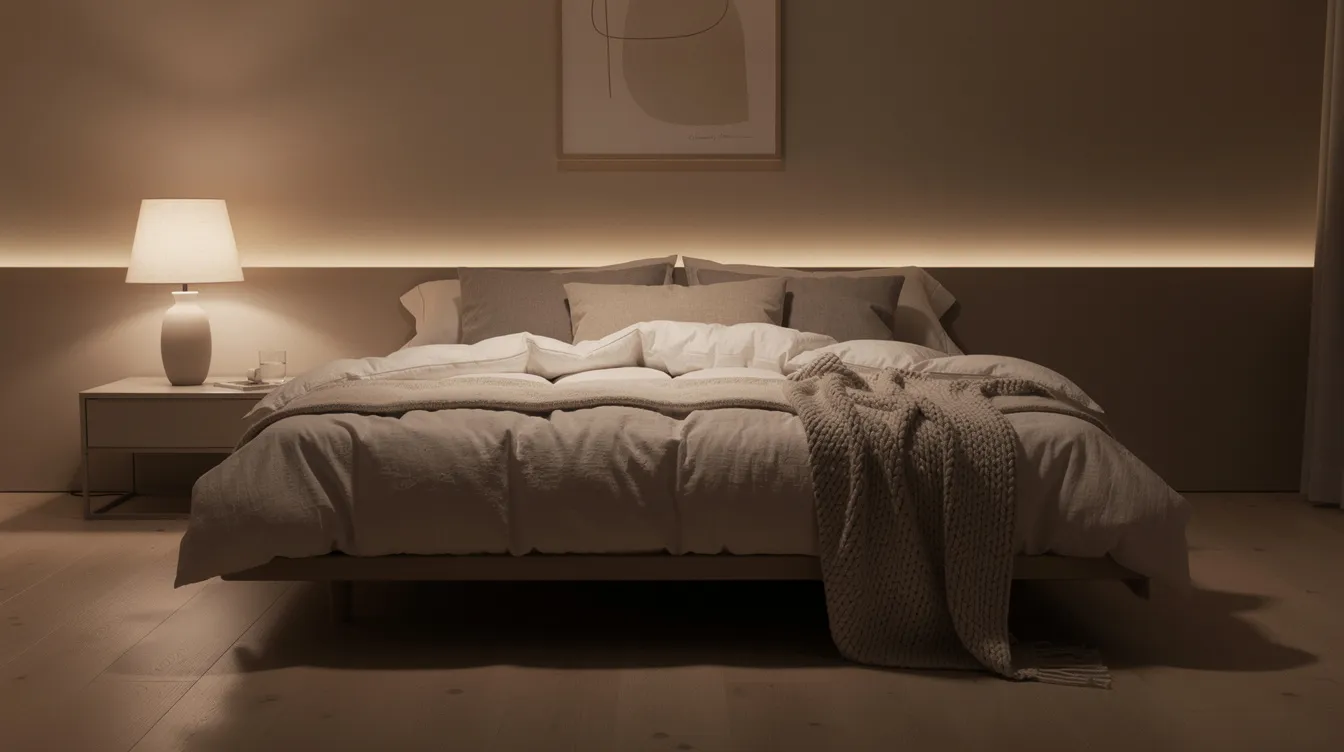
Bedroom Environment Checklist
| Factor | Optimal Range |
|---|---|
| Temperature | 60-67°F (15-19°C) |
| Light level | Below 3 lux |
| Noise level | Below 35 decibels |
| Mattress | Firm, supportive |
| Electronics | None visible |
Good Night’s Sleep Checklist
- Fixed bedtime within 30-minute window
- Wind-down routine (reading, stretching)
- No caffeine after 2pm
- No alcohol within 3 hours of bed (fragments REM 20-30%)
- Cool, dark, quiet sleep environment
- 7-9 hour sleep opportunity
Insufficient sleep and missed sleep accumulate as “sleep debt.” While you can partially recover, chronic sleep deprivation impacts physical health, healthy weight maintenance, and brain function.
Practical Tips To Regulate Sleep
Follow this stepwise sleep hygiene plan:
- Fix your wake time: Rise at the same time daily (±30 minutes), even on weekends. This builds circadian strength faster than controlling bedtime.
- Get morning light: 30 minutes of bright light exposure (ideally 10,000 lux) within an hour of waking phase-advances your rhythm.
- Limit naps: Keep naps under 30 minutes and before 2pm to avoid entering deep sleep, which causes grogginess (sleep inertia).
- Cut caffeine early: Caffeine has a half-life of about 5 hours and blocks roughly 50% of adenosine receptors. Set your cutoff 8-10 hours before bed.
- Dim evening lights: Red or amber bulbs in the evening can double melatonin production compared to standard lighting. This promotes sleep naturally.
- Create a buffer zone: The hour before bed should involve calming activities—no intense exercise, stressful conversations, or work emails.
Light exposure timing: Morning sun advances your rhythm; evening bright light delays it. Use this strategically when adjusting to new schedules.
When To See A Healthcare Provider
Persistent Insomnia
If you have trouble falling asleep or staying asleep more than three times weekly for three months or longer, and sleep hygiene changes haven’t helped, consult a healthcare provider. Conditions called sleep disorders affect a significant portion of adults—over one-third report daytime sleepiness monthly.
Suspected Sleep Apnea
Obstructive sleep apnea involves repeated breathing interruptions during sleep. Warning signs include loud snoring, gasping during sleep, morning headaches, and excessive daytime fatigue despite adequate hours of sleep. A sleep study (polysomnography) is the gold standard for diagnosis, capturing EEG, breathing patterns, and oxygen levels overnight.
Untreated sleep apnea increases risk of high blood pressure and cardiovascular disease.
Complex Cases
For conditions like narcolepsy, restless legs syndrome, or other neurological disorders affecting sleep, referral to a board-certified specialist in sleep medicine through an AASM-accredited center is warranted. These conditions require specialized testing beyond standard polysomnography.
Research Frontiers And Unanswered Questions
Genetic Discoveries
Recent research has identified genes like “wide awake” (wak) that regulate sleep timing across species from fruit flies to humans. Chronotype genes (PER2, PER3) explain 20-50% of individual variation in sleep phase preferences. Rare ADRB1 variants confer the ability to function on minimal sleep without cognitive deficits.
Areas for Future Study
Current research explores:
- Optogenetics: Enhancing delta power during slow wave sleep to boost restoration
- Glymphatic enhancement: Beta-amyloid clearance triples during sleep—could targeted interventions prevent Alzheimer’s disease?
- Chronotherapy apps: Personalized sleep recommendations based on individual genetic profiles
- Neural replay mechanisms: How exactly does the hippocampus consolidate memories during sleep?
Questions remain about sleep in microgravity environments and developing personalized pharmaceuticals beyond current orexin antagonists like suvorexant.
Key Takeaways
- Sleep is an active process involving distinct stages of sleep, each serving specific restorative functions
- Your circadian rhythm and homeostatic sleep drive work together to regulate sleep timing
- Quality matters as much as quantity—aim for 85% sleep efficiency and adequate deep sleep
- Consistent wake times, morning light, and evening dimness are your most powerful tools
- Persistent sleep issues warrant professional evaluation to rule out sleep disorders
Understanding why sleep is important transforms how you approach rest. Start tracking your sleep patterns this week, implement one change from the practical tips section, and build from there. Your brain and body will thank you.