

You set your alarm for eight hours of rest. You followed all the advice. Yet here you are, dragging yourself out of bed feeling like you barely slept at all. This frustrating experience—waking up tired after 8 hours—affects more people than you might expect, and the causes often have nothing to do with how long you stayed in bed. According to sleep research, scientific studies have explored why people may still feel tired after what should be a full night’s sleep, highlighting the complexity of sleep quality and its effects.
Non-restorative sleep describes a state where you log adequate sleep hours but wake feeling fatigued, groggy, or completely unrested. Research suggests that 10-20% of adults experience this chronically, with prevalence climbing higher in those over 40. Certain conditions, such as chronic illnesses or medical disorders, can also contribute to waking up tired after 8 hours. This isn’t just an inconvenience—it impacts daily life, productivity, and overall well being.
How Sleep Deprivation And Non Restorative Sleep Affect You
Sleep deprivation occurs when you simply don’t get enough sleep—typically less than seven hours for adults. This creates cumulative deficits affecting attention, memory, and immune function. The negative effects compound over time.
Non restorative sleep differs fundamentally. You might spend eight or nine hours in bed, but your body fails to cycle through normal sleep stages properly. Interruptions, shallow sleep, or inadequate deep sleep leave you feeling fatigued despite technically adequate sleep duration.
Understanding sleep cycles clarifies why this happens. Each cycle lasts roughly 90 minutes and progresses through non-REM stages 1-3 before entering REM. Deep sleep (stage 3 non-REM) is critical—adults need 1-2 hours nightly for physical restoration. During deep sleep, your brain clears metabolic waste through the glymphatic system, releases growth hormone, and consolidates memory. Without sufficient deep sleep, your body simply cannot recover properly, regardless of total hours logged.
Sleep Disorders That Cause Morning Tiredness
Several sleep disorders directly cause unrefreshing sleep, even when duration appears normal.
Common disorders linked to morning tiredness:
| Disorder | Key Symptoms | Impact on Sleep |
|---|---|---|
| Sleep apnea | Loud snoring, gasping, morning headaches | Fragments sleep into micro-arousals |
| Restless legs syndrome | Irresistible urge to move legs, evening discomfort | Delays sleep onset |
| Periodic limb movement disorder | Repetitive leg jerks every 15-40 seconds | Causes repeated arousals |
| Narcolepsy | Sudden sleep attacks, cataplexy | Disrupts sleep patterns |
| Chronic insomnia | Difficulty initiating or maintaining sleep | Reduces total quality sleep |
Sleep apnea deserves particular attention. Obstructive sleep apnea causes repeated upper airway collapses lasting 5-30+ seconds, fragmenting your night into hundreds of micro-arousals without you fully waking. You might stay asleep for eight hours yet never achieve restorative deep sleep. Untreated, it raises cardiovascular risk and can contribute to high blood pressure.
Restless legs syndrome, affecting 5-10% of adults, creates an irresistible urge to move your legs due to uncomfortable sensations—often peaking in evenings and making it difficult to fall asleep. About 80% of those with restless legs syndrome also have periodic limb movement disorder, where repetitive jerks throughout the night interfere with sleep continuity.
Screening questions to ask yourself:
- Do you snore loudly or gasp at night?
- Do you feel unrested despite 7-9 hours of sleep?
- Do leg discomforts prevent you from falling asleep?
- Does a bed partner notice unusual movements while you sleep?
Positive answers warrant medical evaluation to rule out related conditions.
Medical Conditions And Internal Medicine Causes
When lifestyle factors don’t explain your tiredness, internal medicine causes deserve investigation. In many cases, certain conditions—such as chronic illnesses, autoimmune disorders, or other underlying health issues—can contribute to waking up tired after 8 hours, even when sleep duration appears sufficient.
Medical conditions that cause fatigue despite adequate sleep:
- Iron-deficiency anemia: Reduces oxygen transport; symptoms include pallor, dizziness, cold extremities
- Hypothyroidism: Slows metabolism; causes weight gain, dry skin, excessive tiredness
- Anxiety and depression: Creates hypervigilance preventing quality sleep; physical symptoms like tachycardia exacerbate daytime fatigue
- Chronic fatigue syndrome (ME/CFS): Features profound unrefreshing sleep with post-exertional malaise lasting 24+ hours
- Long covid: Emerging research indicates persistent fatigue and poor sleep among recovered patients
Chronic pain syndromes like fibromyalgia amplify these issues through central sensitization, disrupting sleep architecture.
Recommended bloodwork:
- Complete blood count (CBC)
- Iron studies and ferritin
- TSH (thyroid function)
- Vitamin D and B12
- C-reactive protein (CRP)
Low iron can trigger restless legs syndrome, compounding sleep problems. Your doctor can identify deficiencies and other conditions requiring treatment.
Lifestyle, Environment, And Substances That Affect Sleep
Your daily habits profoundly affect sleep quality—sometimes more than you realize.
Caffeine has a 5-6 hour half-life, meaning half remains in your system six hours after consumption. Consuming too much caffeine or drinking it after noon can delay sleep onset and reduce deep sleep by 20-30%. Even moderate intake (around 200mg, or two coffees) fragments sleep in sensitive individuals.
Alcohol creates a deceptive pattern. Despite initial sedation, it suppresses REM by 20-50% and increases awakenings in the second half of the night via rebound effects. It also stimulates the bladder, leading to nocturia and poor consolidation. You may feel drowsy initially but wake feeling unrested.

Bedroom environment factors:
| Factor | Problem Threshold | Optimal Range |
|---|---|---|
| Temperature | Above 24°C or below 16°C | 18-22°C |
| Noise | Above 35dB | Below 30dB |
| Light | Above 3 lux | Complete darkness |
Evening screen exposure emits blue light that suppresses melatonin by 23-55%, delaying your circadian phase by 1-3 hours. Researchers recommend avoiding screens 2-3 hours before bedtime or using blue-blocking glasses.
Shift Work And Irregular Schedules
Night shift workers face unique challenges. Shift work disrupts circadian rhythms by misaligning your internal clock with natural light-dark cues, reducing melatonin amplitude and deep sleep. Studies show shift workers are 40% more likely to report persistent fatigue.
Strategies for shift workers:
- Strategic napping (20-30 minutes pre-shift)
- Bright light therapy post-wake, dim light pre-sleep
- Anchor sleep with consistent weekend schedules when possible
- Avoid rotating backward (night to evening to day)—forward rotation causes less disruption
Consulting occupational health can help advocate for schedule adjustments. Forward-rotating shifts minimize the jet-lag-like effects that happen when schedules constantly change.
How To Fall Asleep Faster

Waking up tired after 8 hours – how sleep deprivation and non restorative sleep affect you
A consistent wind-down routine 60-90 minutes before bedtime cues your brain for melatonin release. Dim the lights, read a book, or drink herbal tea. This signals your body that sleep is approaching.
Relaxation techniques that work:
- 4-7-8 breathing: Inhale for 4 seconds, hold for 7, exhale for 8
- Progressive muscle relaxation: Systematically tense and release muscle groups
- Body scan meditation: Focus attention progressively through body areas
These techniques reduce sympathetic nervous system activity by 20-30%, cutting the time it takes to fall asleep. They help calm the stress response that keeps your brain active at night.
Limit stimulating activities in the hour before bed. Checking work emails, watching intense television, or scrolling through stressful news can trigger cortisol spikes that keep you awake when you should be settling down.
Improving Sleep Hygiene For Better Sleep
Sleep hygiene encompasses the habits and environmental factors that promote better sleep. Small adjustments here make a big difference.
Core practices:
- Fixed sleep time: Go to bed within 30 minutes of the same time daily—even weekends
- Fixed wake time: Rise at the same time regardless of how you slept
- Optimal temperature: Keep bedroom at 18-22°C
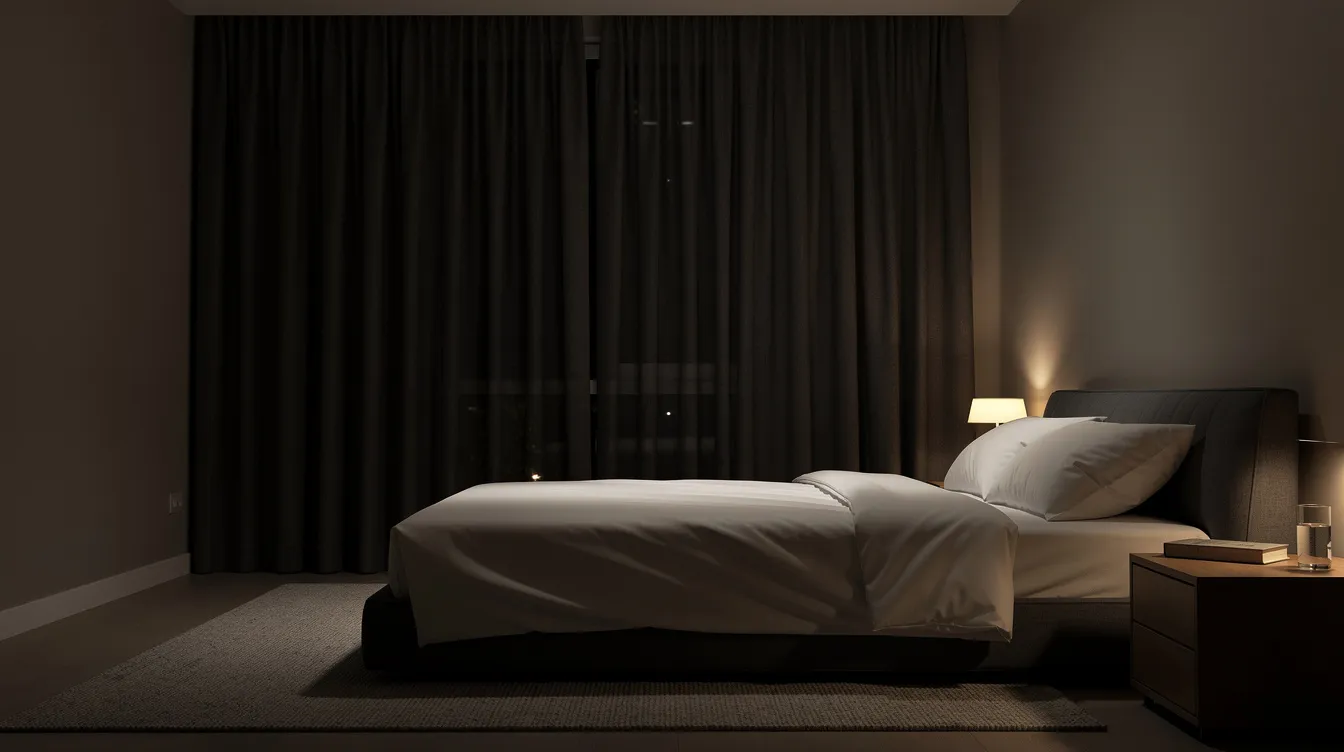
- Complete darkness: Use blackout curtains; even small light sources disrupt melatonin
- Quiet environment: Aim for under 30dB; consider white noise if needed
- Mattress quality: Replace every 7-10 years
Avoid heavy meals 3 hours before bed to prevent reflux and blood sugar fluctuations that interfere with sleep quality. Alcohol should be avoided entirely if you’re troubleshooting unrefreshing sleep.
When To Consider A Sleep Study Or Specialist
Certain symptoms indicate you need more than lifestyle adjustments.
Indications for a sleep study:
- Witnessed breathing pauses during sleep
- BMI above 30 with loud snoring
- Epworth Sleepiness Scale score above 10
- Persistent fatigue despite implementing sleep hygiene changes
A polysomnography (sleep study) monitors brain waves, airflow, and oxygen levels over 6-8 hours, providing diagnostic clarity. Referral to sleep medicine is appropriate when sleep disorders are suspected.
For medical causes like thyroid dysfunction or anemia, internal medicine referral addresses the underlying condition. If pain disrupts your sleep, addressing the source—not just adding sleeping pills—creates lasting improvement.
Bring a sleep journal to appointments documenting bedtimes, wake times, sleep quality ratings, and substance intake. This helps clinicians identify patterns faster.
Managing Sleep Inertia And Morning Grogginess

Waking up tired after 8 hours – improving sleep hygiene for better sleep
Sleep inertia is the transitional grogginess state immediately after waking—typically lasting 15-60 minutes. It impairs reaction time and cognitive function similar to 0.05% blood alcohol concentration. This is separate from feeling tired all day.
Strategies to clear morning grogginess:
- Bright light exposure: 10,000 lux for 30 minutes suppresses melatonin and boosts cortisol
- Short caffeine: 100-200mg provides adenosine antagonism without late-day crash
- Gentle activity: Walking or light stretching elevates heart rate and clears fog
If morning grogginess persists beyond an hour or happens regardless of sleep duration, it may indicate an underlying sleep disorder requiring more research into your individual patterns.
Tests, Treatments, And Follow-Up
Diagnostic options:
| Test | What It Measures | Best For |
|---|---|---|
| Polysomnography | EEG, airflow, oximetry over 6-8 hours | Gold-standard diagnosis |
| Home sleep apnea testing | Portable AHI measurement | Moderate-risk OSA screening |
Review all medications with your prescribing clinician—beta-blockers, SSRIs, and certain other drugs can fragment sleep. Sometimes adjusting timing or switching medications resolves the issue.
For chronic insomnia, cognitive behavioral therapy for insomnia (CBT-I) is first-line treatment, outperforming sleeping pills long-term. It reduces sleep latency by 50% through stimulus control and sleep restriction techniques, with less than 5% relapse rates. More research continues to support CBT-I as the preferred intervention.
Practical Two-Week Plan To Improve Non-Restorative Sleep

Waking up tired after 8 hours – tests, treatments, and follow-up
This systematic approach helps identify what’s causing your poor sleep and whether lifestyle adjustments alone can help.
Week 1-2 Daily Tracking:
Keep a nightly sleep journal recording:
- Bedtime and wake time
- Sleep quality rating (1-10)
- Number of awakenings
- Caffeine intake (mg and timing)
- Alcohol intake (amount and timing)
- Exercise (type, duration, timing)
- Mood and stress levels
Implement simultaneously:
- Set consistent 10pm-6am schedule (adjust to your needs, maintain 8 hours)
- No caffeine after 2pm
- No alcohol during the two weeks
- Screens off 2 hours before bed
- Bedroom temperature 18-22°C
After two weeks:
Compare fatigue levels before and after. A systematic review of your own data often reveals patterns—maybe alcohol on certain nights correlates with worse mornings, or caffeine timing matters more than you thought.
If you see less than 20% improvement, pursue medical follow-up. Studies suggest 30-50% of cases resolve with hygiene alone, but persistent symptoms warrant investigation by a doctor.
Resources And Further Reading
- National Sleep Foundation – Evidence-based sleep guidance
- American Academy of Sleep Medicine – Clinical guidelines and specialist directories
- Research on sleep inertia and countermeasures
- Clinical resources on non restorative sleep diagnosis and management
Quality sleep is achievable when you address the right factors. Start your sleep journal tonight, implement the two-week plan, and don’t hesitate to consult a specialist if symptoms persist. Small changes often make a big difference—and understanding why you wake tired is the first step toward finally feeling well rested.