If you’re among the 30-50% of adults who struggle with sleep each year, you’ve probably scrolled through app stores looking for a solution. The challenge? Distinguishing between apps that actually work and those built on marketing hype rather than sleep medicine principles.
This guide serves two audiences: consumers grappling with occasional insomnia or poor sleep habits, and clinicians seeking evidence-based digital tools for patient management. The goal is straightforward—help you make informed decisions by evaluating efficacy, evidence, and practical utility. Sleep apps can also provide a better understanding of your sleep patterns and overall sleep health, empowering you to make more informed choices about improving your rest.
The scope here covers consumer-facing mobile applications, with emphasis on digital cognitive behavioral therapy for insomnia (dCBT-I) platforms backed by clinical research. We’ll also examine relaxation tools and trackers, but prioritize apps supported by peer-reviewed evidence over anecdotal endorsements.
Digital Cognitive Behavioral Therapy and CBT-I: Definitions
Digital cognitive behavioral therapy represents an automated, app-delivered adaptation of traditional CBT. These software-based programs restructure maladaptive thoughts and behaviors using evidence-based protocols digitized for scalability—all without requiring constant clinician involvement.
CBT-I stands as the first line treatment for insomnia disorder. The following core techniques are key aspects of the therapy, with each technique addressing different aspects of sleep improvement:
- Sleep restriction: Consolidating sleep efficiency by limiting time in bed to actual sleep time
- Stimulus control: Associating bed with sleep via rules like avoiding wakeful activities in bed
- Cognitive restructuring: Challenging sleep-related misconceptions (e.g., “I must get 8 hours or I’ll fail”)
- Sleep hygiene education: Addressing environmental and behavioral factors
- Relaxation training: Techniques like progressive muscle relaxation to reduce arousal
These components typically yield sustained improvements—reducing sleep onset latency by 20-30 minutes and dropping Insomnia Severity Index scores by 5-8 points across meta-analyses.
The difference between guided and unguided dCBT-I lies in clinician oversight. Guided versions incorporate telehealth check-ins or therapist feedback, boosting patient adherence to 70-80%. Unguided, self-paced formats hover around 50% adherence but maintain efficacy for mild-to-moderate cases with effect sizes around 0.6-0.8.
Sleep Problems Covered by Apps

Best sleep apps – digital cognitive behavioral therapy and cbt-i: definitions
Sleep apps address several common issues that disrupt daily life:
| Sleep Problem | Definition | Prevalence |
|---|---|---|
| Insomnia | Difficulty initiating or maintaining sleep for ≥3 nights weekly over 3 months | 10-15% chronic |
| Sleep-maintenance issues | Frequent awakenings throughout the night | 20-30% of adults |
| Early morning awakening | Waking too early with inability to return to sleep | Common in depression |
| Circadian rhythm disorders | Delayed sleep phase syndrome and similar | 3-10% of adults |
| Anxiety-driven hyperarousal | Racing thoughts preventing sleep onset | Highly prevalent |
| Poor sleep hygiene | Irregular bedtimes, screen exposure | 30-50% report |
When to Seek Professional Help
Certain patient groups need clinician referral rather than app-based intervention:
- Severe chronic insomnia disorder (ISI scores >22)
- Suspected sleep apnea (snoring, daytime somnolence, Epworth Sleepiness Scale >10)
- Restless legs syndrome with periodic limb movements
- Bipolar disorder (where sleep manipulation risks mania)
- Untreated depression or other serious comorbidities
Apps alone show limited efficacy for these groups, with dropout rates exceeding 40% without professional support.
Types of Sleep Apps and Behavioral Therapy Modalities
Sleep technologies categorize by primary function into four groups:
- Trackers: Use phone sensors or wearable devices to monitor sleep stages (light, deep, REM) and disturbances, and track the amount of time spent in each stage, providing users with detailed sleep data.
- Relaxation tools: Deliver audio-guided meditation, nature sounds, or white noise
- Behavioral therapy platforms: Enforce structured psychological treatments and protocols
- Hybrid apps: Combine tracking with interventions
Delivery models range from fully automated unguided self-help to clinician-guided options with progress syncing. Prescription digital therapeutics like Somryst stand apart as FDA-cleared Class II devices requiring physician prescription for moderate-to-severe insomnia.
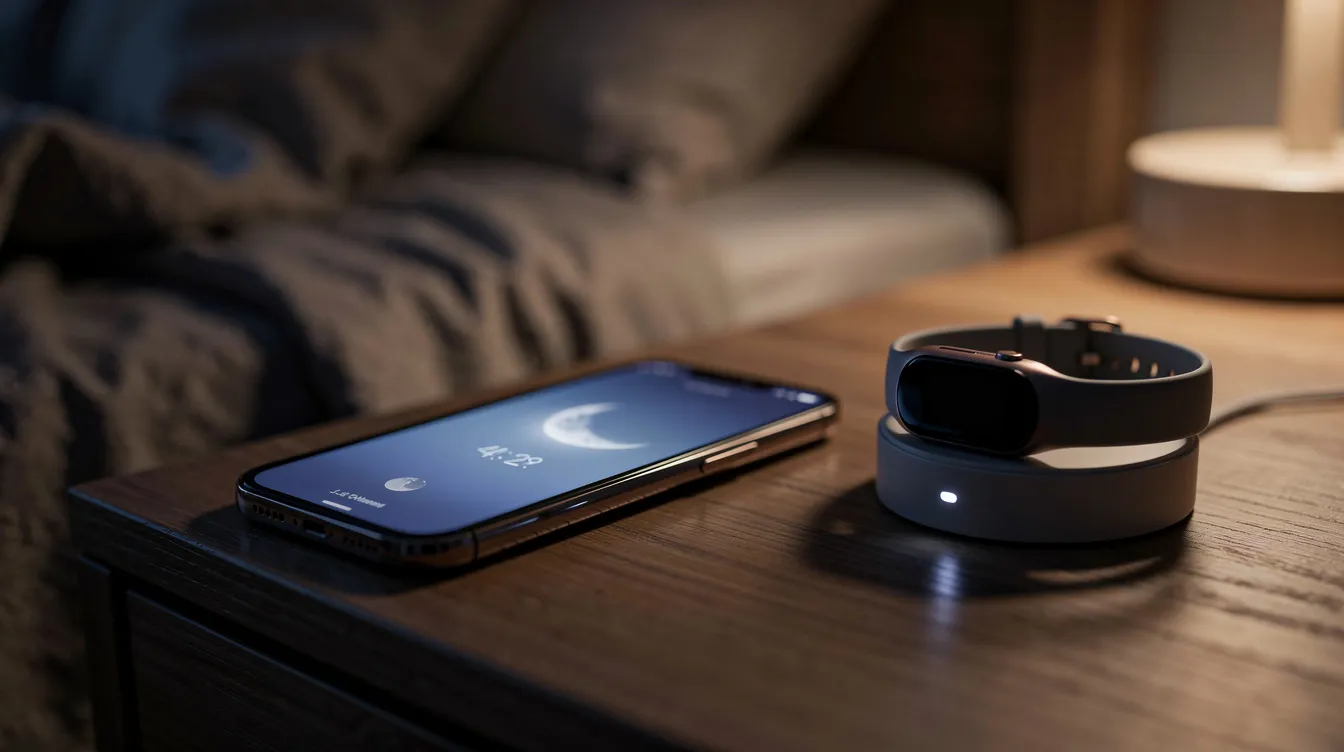
Apps pairing with wearables (Apple Watch, Oura Ring) enhance tracking accuracy to 85-90% for sleep stage detection via heart rate variability and actigraphy. Phone-only sonar methods achieve 70-80% precision—still useful but less reliable.
dCBT-I Platforms (Digital Cognitive Behavioral Therapy Apps)
Here are evidence-based dCBT-I platforms worth considering:
Sleep Reset
- Evidence Summary: Programs backed by certified sleep clinicians with 500+ modules covering sleep science, hygiene, and mental health
- CBT-I Components: Sleep diaries ✓, Stimulus control ✓, Cognitive restructuring ✓, Sleep restriction ✓, Relaxation ✓ (80-90% coverage)
- Accessibility: English with multilingual potential; iOS and Android devices
- Privacy: Robust policy with no third-party data sharing
CBT-i Coach
- Evidence Summary: VA-developed free tool with RCT data showing 50-60% remission rates in chronic insomnia
- CBT-I Components: Full coverage of all core techniques including thought diaries
- Accessibility: English only; available offline
- Privacy: Data stored locally without cloud vulnerabilities
Somryst (Prescription)
- Evidence Summary: FDA-cleared for moderate-to-severe insomnia; requires doctor prescription
- CBT-I Components: Complete evidence-based protocol
- Accessibility: Clinician-initiated; structured 9-week program
- Privacy: HIPAA-compliant
Non-CBT Behavioral Therapy Sleep Apps
Not all sleep apps deliver CBT. Here’s what else is available:
Relaxation and Mindfulness Leaders
- Calm: Sleep stories, guided meditation, and breath exercises for adults and children; users report 20-30% faster sleep onset in surveys, though evidence remains anecdotal
- Headspace: 500+ sessions that reduce pre-sleep anxiety by approximately 25% based on user data
- Pzizz: Psychoacoustic audio blending music and narration; claims 50% reduction in sleep onset time
Brief Behavioral and ACT Apps
- BetterSleep: Offers habit-building features and acceptance-based strategies without full dCBT-I depth
- Various apps incorporating brief behavioral therapy techniques focus on specific needs like wake-time consistency
These tools help users relax before bed but shouldn’t be confused with comprehensive insomnia treatment.
Evidence Base: Systematic Review and Meta Analysis

Best sleep apps – types of sleep apps and behavioral therapy modalities
The research supporting sleep apps shows moderate overall quality. Since 2015, 15-20 systematic reviews have examined dCBT-I, consistently finding it effective for insomnia. Recent research also includes network meta analysis to compare the effectiveness of various sleep disorder treatments, including digital therapeutics. However, tracker validity shows high heterogeneity across studies.
Key conclusions from systematic review work confirm that dCBT-I reduces ISI scores by 4-7 points at post-treatment, outperforming waitlist controls with a number-needed-to-treat around 3-5. Long-term data beyond 6 months remains sparse.
Summarize Systematic Review Findings
Twelve relevant reviews covering adults with primary insomnia have evaluated interventions including SHUTi, Sleepio, and CBT-i Coach.
Methodological Strengths:
- RCTs with objective actigraphy in 40% of studies
- Standardized outcome measures (ISI, PSQI)
Methodological Weaknesses:
- Self-report bias prevalent
- Short follow-ups (average 12 weeks)
- Underrepresentation of diverse ethnic groups (90% White participants)
- Industry funding in 30% of studies, potentially biasing toward positive outcomes
Summarize Meta Analysis Results
Six major meta-analyses since 2018 provide consistent findings:
| Outcome | Pooled Effect Size | Confidence Interval | Notes |
|---|---|---|---|
| ISI reduction | 0.72 (SMD) | 0.59-0.84 | Favoring dCBT-I |
| Sleep efficiency | 5-10% improvement | Varies | Clinically meaningful |
| Sleep quality (subjective) | 0.4 (d) | Small effect | Limited |
| Daytime impairment | 0.3 (d) | Small effect | Needs more research |
Heterogeneity runs high (I²=70-85%) due to varying app fidelity and populations (mostly middle-age females). Sensitivity analyses excluding high-bias studies confirm robustness, though publication bias may inflate effects by 0.2 SMD.
How To Choose The Best Sleep Apps
Selecting the right app requires matching technology to your specific needs. Here’s the process:
- Define your primary goal: Insomnia treatment demands CBT-I content. Pattern tracking prioritizes sensor accuracy >85%. Stress-related onset issues suit relaxation tools.
- Check for CBT-I content: When treating insomnia, verify the app includes core components via a checklist—sleep restriction, stimulus control, cognitive restructuring.
- Verify peer-reviewed evidence: Look for RCT data or meta-analytic inclusion over app store ratings. Sleep experts recommend clinical endorsements. Reaching the point of selecting an app with strong clinical support is a crucial milestone for effective sleep improvement.
- Evaluate privacy policy: Check for HIPAA-equivalent policies barring third-party data sales.
- Assess device compatibility: Ensure iOS/Android support and wearable sync if needed.
- Compare costs: Subscription prices typically range $5-15/month. Most offer 7-30 day free trials.
Compare Top Picks For Different Needs

Best sleep apps – how to choose the best sleep apps
| App | Price | Trial | Platforms | CBT-I | FDA Status | Best For |
|---|---|---|---|---|---|---|
| Sleep Reset | $15/month | 7 days | iOS, Android | Full | N/A | Personalized coaching |
| CBT-i Coach | Free | N/A | iOS, Android | Full | N/A | Evidence-based treatment |
| Calm | $15/month | 7 days | iOS, Android | Partial | N/A | Relaxation, meditation |
| SleepScore | Free tier | N/A | iOS, Android | No | N/A | Non-wearable tracking |
| Oura | $445 + subscription | 30 nights | iOS, Android | No | Partial | Wearable accuracy |
| Somryst | Prescription | N/A | iOS, Android | Full | FDA-cleared | Severe insomnia |
App Profiles For Best Sleep Apps
Sleep Reset
- Price/Platform: $15/month; iOS and Android; 7-day trial
- Core Features: Initial assessment, personalized coaching, 500+ modules, guided meditation, Apple Health integration
- Pros: Clinician-backed with comprehensive CBT-I coverage
- Cons: Subscription-only with no free tier
CBT-i Coach
- Price/Platform: Free; iOS and Android devices
- Core Features: Structured exercises, sleep diaries, thought diaries, education modules
- Pros: Evidence-based with RCT support; developed by VA sleep medicine experts
- Cons: Basic UI; English only
Calm
- Price/Platform: $15/month; iOS and Android; 7-day trial
- Core Features: Sleep stories, meditation library, breath exercises, yoga for relaxation
- Pros: Vast content library suitable for stress and anxiety management
- Cons: No tracking; CBT-I components limited to relaxation
SleepScore
- Price/Platform: Free tier with paid upgrades; iOS and Android
- Core Features: Sonar technology achieving 80% stage accuracy; detailed metrics
- Pros: No wearable required; comprehensive data
- Cons: Phone placement sensitive; no behavioral therapy
For Clinicians: Integrating dCBT-I and Behavioral Therapy Tools
Patient Selection Criteria
Select patients with ISI scores between 10-22 without red flags such as:
- Suicidality or active psychosis
- Suspected sleep apnea
- Substance abuse
- Severe comorbidities requiring direct treatment
Referral and Monitoring Workflow
- Complete baseline assessment using PSQI and ISI
- Prescribe tools like Somryst or refer to Sleepio/Sleep Reset
- Monitor weekly via app dashboards or telehealth
- Adjust if adherence falls below 70%
Documentation and Outcome Tracking
Document in EHR as “prescribed dCBT-I module X completed.” Track outcomes using standardized scales—ISI drops of >4 points indicate clinical response.
Contraindications
Efficacy plummets below 20% for patients with active psychosis or untreated substance abuse. These groups require direct clinical intervention rather than app-based treatment.
For Consumers: Practical Setup and Usage Tips
Onboarding Steps
Complete initial assessments accurately. Many apps like Sleep Reset use this data to personalize your program over several weeks. Rushing through undermines the process.
Boosting Adherence
- Enable bedtime reminders on your device
- Use streak rewards (increases completion by 40%)
- Set specific wake times and stick to them
- Track progress weekly to stay motivated
Combining Apps with Sleep Hygiene
Apps work best alongside behavioral changes:
- Dim lights 1 hour before bed (yields additive 15% efficiency gains)
- Limit screen light exposure
- Maintain consistent sleep schedules
- Incorporate physical activity earlier in the day
When to Seek Professional Evaluation
If you see no improvement after 4 weeks or symptoms worsen, consult a doctor. These patterns may signal underlying disorders requiring clinical assessment. Don’t rely solely on other apps or medication without professional feedback.
Research Gaps and Future Meta Analysis Priorities
The current evidence base, while promising, has notable gaps that research should address:
Head-to-Head Comparisons
Current noninferiority trials show dCBT-I roughly equivalent to face-to-face CBT-I (d=0.1 difference), but studies lack statistical power for subgroup analysis. Direct comparative efficacy trials are needed.
Longer Follow-Up Studies
With 30% relapse rates post-treatment, we need data beyond 12 months. Current trials average only 12 weeks of follow-up.
Diverse Samples
Less than 10% of study participants identify as non-White, limiting generalizability. Age and other factors also need better representation.
Standardized Outcomes
The field needs consensus on using ISI and sleep diary measures rather than app-proprietary scores that prevent cross-study comparison.
Cost-Effectiveness Research
Projections suggest $500-1000 savings per person versus clinic visits, but implementation trials in primary care show scalability challenges—including 50% clinician unfamiliarity with these tools. Prevention-focused research could optimize resource allocation.
Conclusion and Recommendations
For chronic insomnia, dCBT-I platforms offer the strongest evidence for sustained improvement. Apps like CBT-i Coach (free) and Sleep Reset (subscription) deliver comprehensive behavioral therapy protocols with documented efficacy.
Quick Guidance: Match App Type to Need
| Your Primary Goal | Recommended App Type | Top Pick |
|---|---|---|
| Treat insomnia | dCBT-I platform | CBT-i Coach |
| Track sleep patterns | Tracker with wearable | Oura or SleepScore |
| Manage pre-sleep stress | Relaxation/meditation | Calm |
| Severe insomnia | Prescription digital therapeutic | Somryst (confirm with doctor) |
Finally, remember that evidence-based selection outperforms app store ratings. Whether you’re a clinician integrating sleep technologies into practice or a consumer looking to improve sleep, focus on apps with clinical support rather than marketing claims. Start with a free option like CBT-i Coach, give it 4-6 weeks, and seek professional evaluation if you don’t see meaningful progress.