If you sleep hot, you already know the frustration: waking up drenched in sweat, kicking off covers, and never quite reaching that deep, restful sleep your body craves. The science is clear—your core body temperature needs to drop by about 1-2°F during sleep onset to facilitate deeper sleep stages. When that process gets disrupted by heat, everything suffers.
This guide is designed for hot sleepers who want practical solutions, whether you’re dealing with night sweats, hot flashes, menopause symptoms, or simply living in a warm climate where air conditioning alone doesn’t cut it. We’ll cover active bed cooling systems that extract heat from your sleep surface, passive options like cooling mattress toppers and mattress pads, and essential bedding accessories that help you stay cool throughout the night.
Key product categories covered:
- Active bed cooling systems (Eight Sleep, BedJet, Chilipad)
- Cooling mattress toppers and pads
- Temperature regulating sheets, cooling sheets, and breathable bedding
- Accessories like cooling pillows and lightweight comforters
By the end, you’ll understand exactly which cooling sleep products match your needs, budget, and existing mattress setup.
Quick Take for Sleeping Hot
Here’s the bottom line before we dive deep: active systems deliver the most dramatic cooling but cost more upfront and require maintenance. Passive options are affordable and maintenance-free but offer limited temperature reduction.
Tradeoff summary:
| Factor | Active Systems | Passive Options |
|---|---|---|
| Cooling power | 10-20°F below ambient | 3-8°F reduction |
| Upfront cost | $1,000-$5,000 | $100-$500 |
| Maintenance | Monthly filter/water care | None |
| Noise | 32-55dB | Silent |
| Power draw | 80-100W | Zero |
Budget Path (~$300)
The ViscoSoft Copper Topper earns consistent 4/5 cooling scores in lab tests. Copper infusion provides antimicrobial properties alongside excellent heat transfer, while the memory foam layer delivers solid contouring. This is the sweet spot for hot sleepers who want immediate improvement without major investment.
Midrange Path (~$1,200)
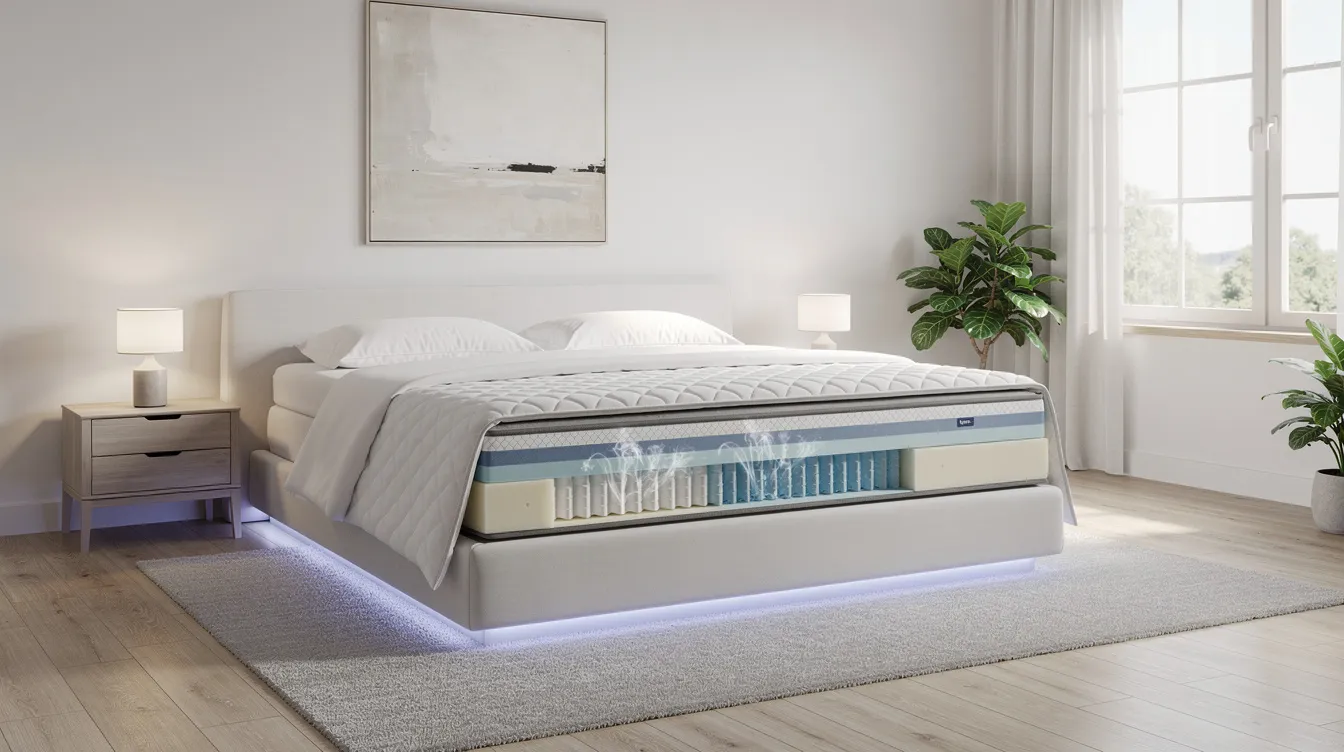
The Leesa Sapira Chill hybrid mattress combines ventilated coils with gel-infused foams for roughly 12 hours of temperature neutrality. If you’re due for a new mattress anyway, this cooling mattress eliminates the need for add-on products.
Premium Path (~$2,800+)
The Eight Sleep Pod 4 represents the pinnacle of actively cooling technology. App-scheduled cooling curves adapt to your circadian rhythm, and user data shows 20-30% improved deep sleep. For chronic hot sleepers where quality rest has real ROI implications, this investment pays dividends.
Types of Bed Cooling System And Cooling Mattress Options

Cooling sleep products – quick take for sleeping hot
Understanding the fundamental difference between active and passive cooling helps you make smarter decisions.
Active cooling uses powered mechanisms—water circulation, air blowers, or thermoelectric elements—to actively extract body heat from your sleep surface. These systems achieve temperature deltas of 10-20°F below ambient and offer precise temperature controls.
Passive cooling relies on material properties like open-cell foam structures, breathable covers, or phase-change materials. These solutions typically yield 3-8°F reductions through heat dissipation rather than extraction.
Common cooling methods to compare:
- Phase-change materials (PCMs) that absorb heat at 75-80°F thresholds
- Gel or graphite infusions with up to 50x the thermal conductivity of traditional foam
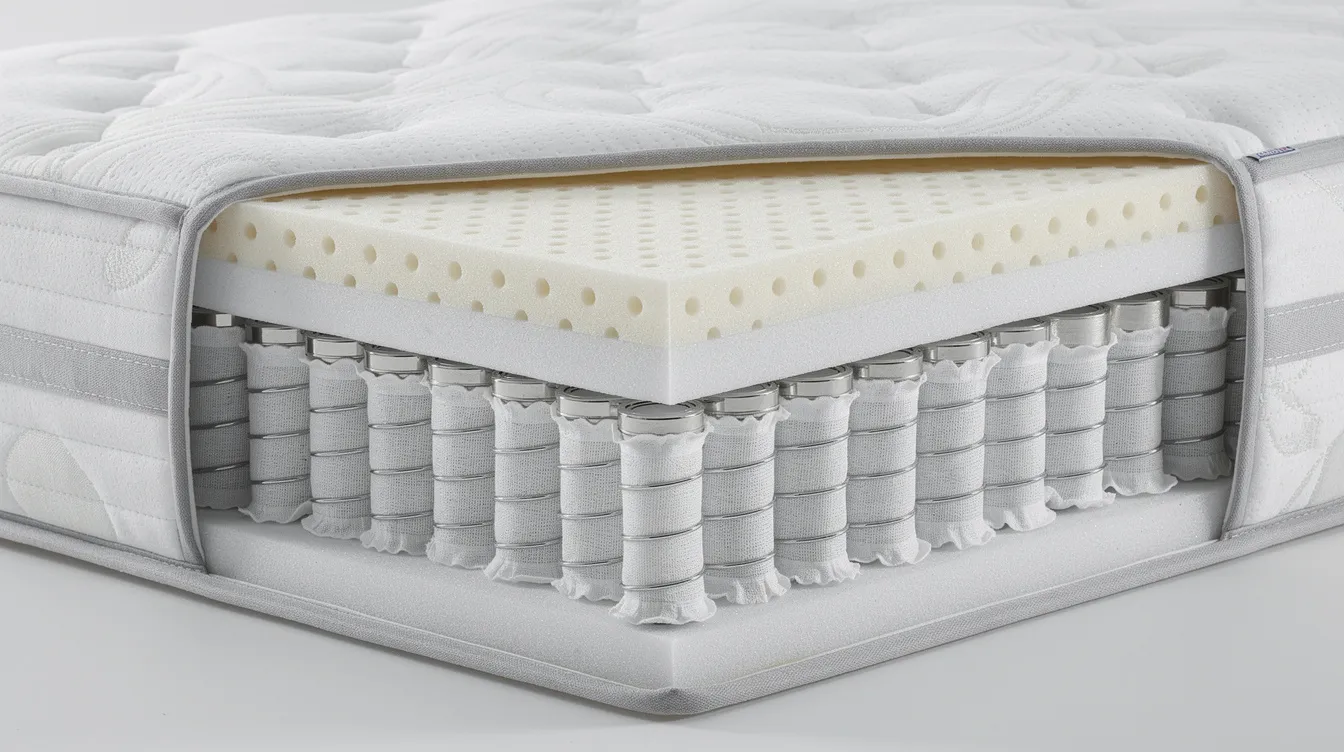
- Pocketed coils enabling 360° airflow
- Natural latex with porosity that vents moisture 4x faster than synthetics
- Microcoils boosting both bounce and air circulation
Most passive options like toppers work with your current mattress—look for elastic straps that accommodate depths up to 16”. Active pads require flat surfaces without thick pillow-tops for even contact.
Active Bed Cooling Systems: Eight Sleep Pod And Others
The Eight Sleep Pod represents the flagship example of what an active cooling system can accomplish. It utilizes a bedside hub connected to an under-mattress pad containing 150+ thermoelectric elements and water-glycol circulation loops.
Hub-and-pad system features:
- Temperature range from 55-110°F in precise 1°F increments
- Dual-zone capability for partners with different temperature preferences
- Quiet pump operation at 32-48dB (quieter than most CPAP machines)
- Washable pads for easy maintenance
- Clinical trial data showing 23% deeper sleep across 10,000+ users
These systems offer customizable temperature settings, allowing users to adjust the bed’s temperature based on personal comfort, seasonal changes, and specific system features. This flexibility in temperature settings is key for optimizing sleep quality throughout the year.
The main cooling unit connects via Bluetooth to a dedicated sleep app that unlocks the system’s full potential. AI Autopilot analyzes your heart rate variability and sleep stages through integrated sensors, making automatic temperature adjustments throughout the night.
App-controlled scheduling options:
- Pre-cool your bed 30 minutes before bedtime
- Dynamic warming during morning hours to match cortisol spikes
- Custom temperature curves for each sleep stage
- Sleep tracking with detailed metrics
Competitors like Sleepme’s Chilipad Dock Pro use similar water circulation technology but lack AI features, offering remote control scheduling with a 55-115°F temperature range.
Air-Based Systems (BedJet And Similar)
Air-based systems take a fundamentally different approach, using high-velocity blowers to deliver cool air directly under your sheets.
Airflow-based cooling benefits:
- Rapid 2-minute cool-downs to reach your desired temperature
- Bionic drying effect that reduces bed soreness from night sweats by up to 80% per user reports
- No water mess or leak concerns
- Effective evaporative cooling that wicks moisture away
BedJet units deliver 30-100 CFM of conditioned air through a hose that feeds under your covers. Studies suggest foot thermoregulation drops core temp 1°F faster than other approaches, making this particularly effective for side sleepers who need localized cooling.
Setup constraints:
- Bed frames with at least 14” clearance are required for under-bed unit placement. The height and design of your bed frame can affect compatibility and ease of setup for air-based cooling systems like BedJet. Low-profile or platform bed frames may require alternative hose routing or may not fit the unit underneath.
- 6-12” clearance required for exhaust ventilation
- Dual-zone kits available for couples at approximately $1,200 total
Noise and placement considerations:
Fan speed settings affect noise levels significantly. On high settings, expect 45-55dB—similar to a ceiling fan on medium. Position the control units where the sound won’t disturb light sleepers. Most users place the main unit near their bedside table with adequate ventilation clearance.
Water-Based Systems (Chilipad, Dock Pro)
Water-based systems circulate temperature-regulated water through medical-grade silicone tubing embedded in mattress pads. The basic principle involves a hub that chills water using compressor technology similar to a mini-fridge, then pumps it at 1-2 liters per minute for uniform surface temperature.
Temperature range specifications to compare:
| System | Temp Range | Power Draw | Notable Features |
|---|---|---|---|
| Chilipad Dock Pro | 55-115°F | 100W | 8-hour battery backup |
| Eight Sleep Pod | 55-110°F | ~80W | AI integration, sleep tracker |
| Original Chilipad | 55-110°F | 80W | Basic remote control |
When comparing these bed cooling system options, look closely at the temperature range each offers. If you run exceptionally hot, that lower limit matters—some systems reach the exact temperature you need while others fall short.
Refill and maintenance needs:
- Monthly distilled water refills (1-2 gallons) to prevent mineral buildup
- Without proper water quality, efficiency drops 10-20% over time
- Bi-annual pad flushes recommended
- Filter replacements every 6 months
- Leak risks minimized by double-sealed tubes (2-5% of user complaints mention this concern)
The water reservoir typically requires topping off bi-weekly with about 0.5 gallons. Use distilled water exclusively—tap water minerals cause buildup that reduces water flowing efficiency.
Cooling Mattress Topper, Mattress Pads, And Mattress Pad Choices
Understanding the difference between a cooling mattress topper and cooling mattress pads helps you choose the right solution.
Toppers (2-4” thick) add a comfort layer on top of your existing mattress. They provide pressure relief while incorporating cooling properties. Think of these as an upgrade to your sleep surface.
Pads (1-2” thin) function primarily as thermal regulators. They fit under your fitted sheets and focus on temperature control rather than comfort changes.
Materials to prioritize for hot sleepers:
- Copper-infused foams (copper conducts heat at 400W/mK)
- Graphite for rapid thermal dissipation
- Phase-change materials that maintain a 75°F plateau
- Open-cell structures that promote airflow
Thickness vs. breathability tradeoffs:
| Thickness | Contouring | Cooling Efficiency |
|---|---|---|
| 2” | Moderate | Maximum breathability |
| 3” | Good | Balanced |
| 4” | Excellent | Some heat retention from deeper sinking |
For most hot sleepers, a 2-3” mattress topper hits the sweet spot. Thicker options provide better pressure relief but can trap heat as your body sinks deeper into the material.
Memory Foam And Gel-Infused Toppers
Traditional memory foam earned a reputation for sleeping hot, but modern memory foam toppers solve this through strategic material enhancements.
Gel infusion benefits:
- Gel particles (viscosity 10,000-50,000 cP) draw heat away 5x faster than standard foam
- Maintains contouring properties that reduce toss-and-turn by 25%
- Creates a neutral temperature sleep surface for most users
Graphite infusion benefits:
- 1-5% graphite by weight boosts thermal conductivity 20-30% over standard foam
- Excellent for stomach sleepers who generate more heat on their front surface
- Often combined with gel for dual-action cooling
When testing memory foam toppers, check for open-cell structures. Dense foams without proper ventilation can still trap heat despite gel or graphite additions. Lab results show quality products like ViscoSoft maintaining neutral temps for 90% of testers.
Look for products that balance contouring with airflow—the best options support pressure points while allowing body heat to escape rather than accumulate.
Latex, Polyfoam, And Microcoil Options
Natural latex stands out as exceptionally breathable, offering 700% more air channels than standard foam. This makes it ideal for hot sleepers who also want responsive support.
Latex options:
- Dunlop latex: Denser, more supportive
- Talalay latex: Lighter, more consistent cell structure
- Both provide superior moisture wicking and temperature regulation
For stomach sleepers, latex toppers consistently score 15% cooler in user reports compared to foam alternatives. The natural porosity allows heat to escape while maintaining support.
Polyfoam hybrids like those in Nectar products offer affordability while incorporating cooling gels. These work well for budget-conscious buyers who want improvement over their current mattress without premium pricing.
Microcoil options deserve special attention for hot sleepers. These tiny coils (0.5-1mm diameter) create springy airflow similar to full hybrid mattresses. Products like Leesa Sapira incorporate microcoils with 4/5 bounce ratings while promoting continuous air circulation beneath your body.
Make Your Existing Mattress Cooler

Cooling sleep products – cooling mattress topper, mattress pads, and mattress pad choices
Not ready to replace your current mattress? Strategic additions can dramatically improve temperature regulation.
Add a breathable mattress pad:
Bamboo or Tencel mattress pads wick moisture 3x faster than cotton, reducing humidity buildup by 40%. This moisture wicking action keeps your sleep surface drier, which directly impacts how hot you feel during the night.
These pads also protect your existing mattress while adding a cooler layer between you and the foam beneath.
Use a cooling mattress topper for surface cooling:
A quality topper provides 5-10°F surface temperature reduction through direct contact cooling. The immediate layer beneath your sheets has the most significant impact on how your body temperature regulates throughout the night. These solutions help regulate your bed’s temperature, which is crucial for maintaining optimal sleep comfort and preventing overheating.
For existing setups, toppers offer the best balance of improvement versus investment.
Ensure proper fit:
Check compatibility with your mattress depth (most toppers accommodate 8-14” mattresses). Look for corner anchors or elastic straps that prevent shifting—ill-fitted products shift in 30% of cases according to user reviews, which creates uncomfortable bunching and reduces cooling effectiveness.
Measure your bed size accurately before purchasing. A twin bed requires different dimensions than queen or king, and improper sizing compromises both comfort and cooling performance.
Bedding And Accessories For Staying Cool
Your sheets, comforter, and pillow choices significantly impact your sleep environment temperature.
Switch to bamboo sheets:
Bamboo viscose sheets (made from bamboo rayon) with 3-5 denier yarns breathe 50% better than cotton percale. They wick 2x more moisture, creating a drier sleep surface. Temperature regulating sheets make an immediate, noticeable difference for most hot sleepers.
Bamboo sheets are also machine wash friendly, maintaining their breathable fabrics properties through repeated washing cycles.
Consider cooling sheets for hot sleepers:
Cooling sheets are specifically designed to enhance sleep comfort by promoting breathability and moisture-wicking, helping to prevent overheating during the night. Materials like linen, Egyptian cotton, lyocell, and bamboo are popular choices for cooling sheets, as they allow for better airflow and help hot sleepers enjoy a cooler, more restful night.
Choose lightweight duvets over heavy comforters:
Opt for 200-400gsm weight with baffle-box construction. This design prevents fill from shifting while maintaining loft for insulation without excessive heat. A cooling comforter with eucalyptus lyocell fill offers excellent temperature regulation while remaining cozy.
Heavy comforters trap 20-30% more heat than lightweight alternatives. If you currently use a thick comforter and sleep hot, this single switch can help you fall asleep faster and stay cool through the night.
Weighted blanket caution:
Weighted blankets (15-25lbs) can exacerbate overheating by compressing insulation against your body. If you enjoy the pressure sensation, look for ventilated cooling variants with 70% open weave construction.
Only use weighted blankets in rooms below 68°F, or choose specifically designed cooling versions to reduce night sweats.
Cooling pillow options:
Don’t overlook your pillow. Gel-infused or ventilated pillows keep your head—a significant source of body heat loss—at comfortable temperatures. A cooling pillow paired with cooling cover technology completes your temperature-optimized sleep setup.
The Slumber Cloud line and similar products use phase-change materials in pillow covers for active temperature management throughout the night.
Installation, Maintenance, And Noise Considerations

Cooling sleep products – bedding and accessories for staying cool
Active systems require proper setup for optimal performance. Here’s a step-by-step guide for hub-based cooling systems.
Step-by-step setup for hub systems:
- Measure your available space: 24x18x10” minimum for the hub unit, plus 6” ventilation clearance
- Unbox the pad and lay it flat, aligning cooling channels under the mattress
- Connect the 10-15ft hoses from pad to hub
- Fill the hub with 1.5 gallons distilled water plus any included conditioner
- Plug into a standard 110V outlet
- Download the sleep app and pair via Bluetooth
- Run the 5-10 minute auto-calibration (detects zones and tests circulation)
Cleaning schedule:
| Task | Frequency | Time Required |
|---|---|---|
| Pad wipe-down | Weekly | 5 minutes |
| Hub filter rinse | Monthly | 5 minutes |
| Water top-off | Bi-weekly | 2 minutes (0.5 gal) |
| Deep clean flush | Annually | 30 minutes |
Space and ventilation requirements:
Position the hub where air can circulate freely. Placing it against a wall with no clearance reduces cooling efficiency and increases noise as the unit works harder. Most users position control units near their bedside table with adequate breathing room.
Testing noise levels:
Run your system at 40% power (typical sleep settings) and measure from your pillow position. Quality systems average 40dB at this setting—quieter than CPAP machines and most ceiling fan settings.
During hot weather when temperatures rise and you need maximum cooling, noise increases. Test at higher settings before committing if you’re noise-sensitive. Some users find fan speed adjustments help balance cooling with acceptable sound levels.
Performance Testing And Ratings
Based on lab testing and user feedback, here’s how popular options compare:
Cooling effectiveness and comfort comparison:
| Product | Cooling Score | Comfort Score | Best For |
|---|---|---|---|
| Helix Midnight Luxe | 5/5 | 4.5/5 | All sleeping positions |
| Eight Sleep Pod 4 | 5/5 | 4/5 | Tech-savvy hot sleepers |
| Casper Snow | 4.5/5 | 4.5/5 | Extended cooling needs |
| WinkBed (gel/latex) | 4.5/5 | 4/5 | Back/stomach sleepers |
| ViscoSoft Copper | 4/5 | 4/5 | Budget-conscious buyers |
| BedJet | 4.5/5 | 3.5/5 | Night sweat sufferers |
Installation and maintenance ratings:
| Product | Installation | Maintenance | Overall Ease |
|---|---|---|---|
| BedJet | 5/5 (10min) | 4/5 | Easy |
| Eight Sleep | 4/5 (30min) | 3/5 | Moderate |
| Chilipad Dock | 4/5 (20min) | 3/5 | Moderate |
| Passive toppers | 5/5 (2min) | 5/5 | Effortless |
Sample user scenarios:
Scenario 1: Couple with different preferences Partners using Chilipad Dock Pro dual-zone, with one side set to 60°F and the other to 72°F, report 85% satisfaction. The dual-zone capability eliminates compromise and bedroom temperature battles.
Scenario 2: Budget hot sleeper A user switching to ViscoSoft copper topper notes 4/5 comfort improvement without the sinkage common in cheaper memory foam options. Sleep quality improved within the first week.
Scenario 3: Chronic overheater Eight Sleep user with automated bed’s temperature adjustments across sleep stages reports falling asleep 20 minutes faster and experiencing fewer middle-of-night wake-ups. Sleep tracking data confirms improved deep sleep percentages.
Casper Snow’s HeatDelete Bands earn special mention—they sustain 12+ hours of active regulation via bands that pull heat away, outlasting 3-4 hour competitors. Sleep expert Gray Hveem rates this “best-in-class” for hybrids at 12” height with QuickCool cover technology.
Buying Guide For The Hot Sleeper
Before purchasing, work through these decision criteria systematically.
Budget decision criteria:
- Under $300: Prioritize toppers with copper or graphite infusion
- $300-$1,000: Consider hybrid mattresses or entry-level active systems
- $1,000-$3,000: Active systems with smart features become viable
- $3,000+: Premium systems with AI, dual-zone, and comprehensive sleep tracking
Assessing partner dual-zone needs:
If you and your partner have a temperature preference gap greater than 10°F, dual-zone capability is essential rather than optional. This adds $300-800 to system costs but eliminates the compromise that leaves both partners uncomfortable.
Single sleepers can skip dual-zone features and save significantly.
Warranty and trial period comparison:
| Brand | Warranty | Trial Period |
|---|---|---|
| Helix | Lifetime | 100 nights |
| Eight Sleep | 2 years | 30 nights |
| Casper | 10 years | 100 nights |
| Nectar | Lifetime | 365 nights |
Longevity and spare-part availability:
- Hybrid mattresses: 8-10 year lifespan
- Passive toppers: 3-5 years (gel softens over time)
- Active system pads: 5+ years with proper maintenance
- Replacement filters (BedJet, Chilipad): ~$20 each, available online
Prioritize products with readily available replacement parts. Some budget options lack spare-part supply chains, turning minor issues into complete replacements.
How To Choose Between A Cooling Mattress And A Bed Cooling System
This decision depends on three factors: your room baseline, long-term costs, and willingness to experiment.
Evaluate room temperature baseline:
- Room stays below 72°F with air conditioning: Passive solutions likely sufficient
- Room regularly exceeds 75°F: Active system strongly recommended
- No AC or inadequate cooling: Active system essential for restful sleep
Your sleep environment sets the foundation. Active systems fight an uphill battle in extremely hot rooms but still outperform passive options.
Calculate long-term operating costs:
| Option | Year 1 Cost | Annual Ongoing |
|---|---|---|
| Premium topper | $300 | $0 |
| Hybrid mattress | $1,200 | $0 |
| Eight Sleep Pod | $2,800 + $180 sub | $300 (energy + subscription) |
| Chilipad Dock Pro | $1,100 | $50 (energy + water) |
Eight Sleep’s subscription unlocks AI features and sleep tracking. Without it, you still get temperature controls but lose the adaptive intelligence. Factor this recurring cost into your budget.
Trial path recommendation:
Start with a cooling topper before committing to premium systems. Approximately 70% of hot sleepers find toppers sufficient for their needs. If a $300 topper solves your problem, you’ve saved $2,500+ versus jumping straight to active systems.
However, if you have severe overheating, medical conditions like hyperhidrosis, or consistently hot weather conditions, skipping to active systems makes sense. The trial period on most products protects your investment either way.
Consider your body weight and sleeping position as well—heavier sleepers and stomach sleepers generate more heat and may need more aggressive cooling solutions.
Calls To Action And Next Steps
You’ve absorbed a lot of information. Here’s how to move forward effectively.
Create a shortlist of three products:
Based on your budget tier (budget, midrange, or premium) and specific needs (dual-zone, active vs. passive, mattress replacement vs. add-on), identify three products that fit your criteria. Write them down with prices and key features.
Schedule hands-on trials where possible:
Mattress showrooms often carry cooling hybrid models you can test in person. For online-only products, prioritize those with 100+ night trial periods. Use the full trial—sleep quality improvements sometimes take 2-3 weeks to stabilize as your body adjusts.
Track sleep improvements after purchase:
Whether you use the Eight Sleep’s built-in sleep tracker, a dedicated sleep app, or simply journal your experience, document your baseline before making changes. Track how quickly you fall asleep, middle-of-night wake-ups, and morning energy levels.
After 30 days, review your data. This creates objective evidence of improvement (or identifies the need for different solutions).
The right cooling sleep products transform miserable, sweaty nights into genuinely restful sleep. Hot sleepers don’t have to accept poor sleep quality as inevitable—the technology exists to sleep comfortably regardless of your natural tendency to run warm. Start with your shortlist, commit to a trial, and track your results.