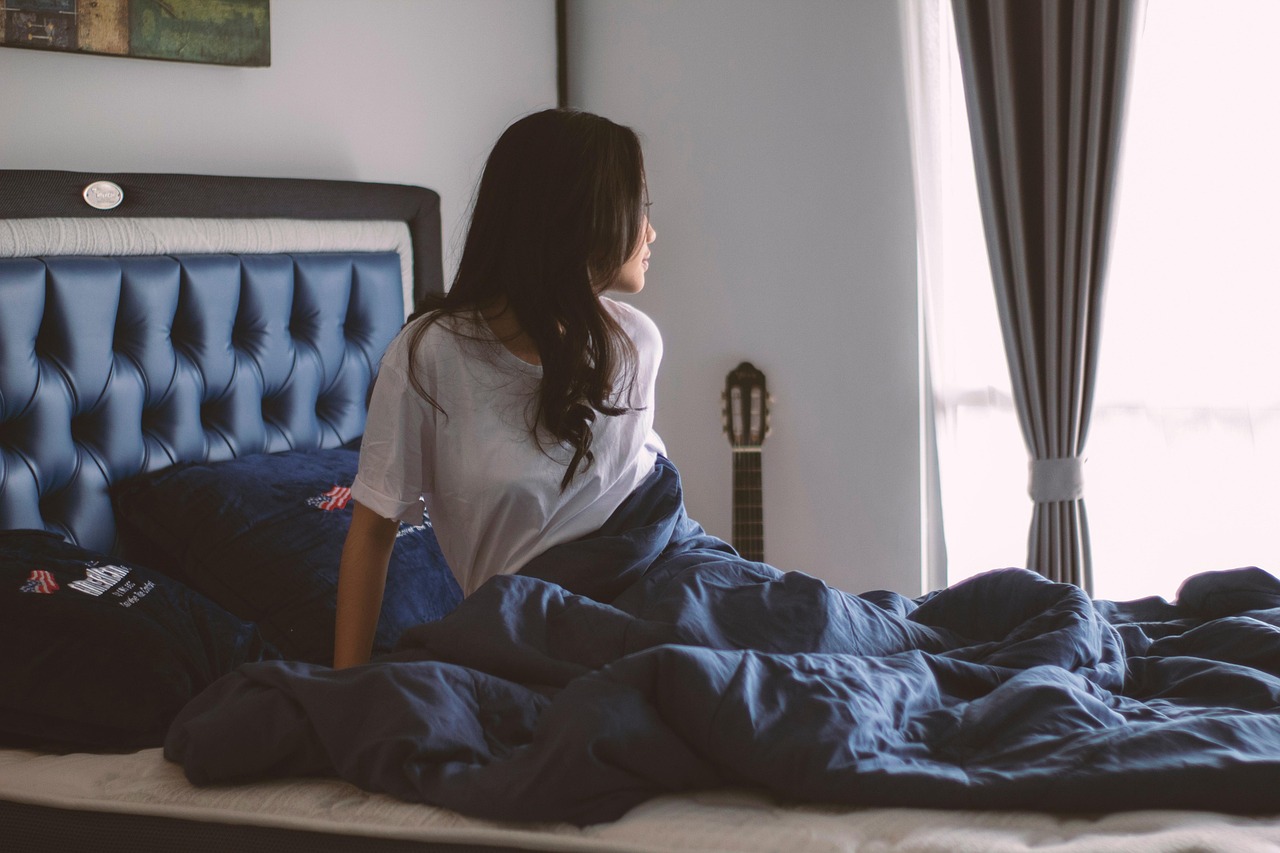

Getting quality sleep isn’t just about what time you go to bed. The temperature of your bedroom plays a critical role in how quickly you fall asleep and how well you stay asleep throughout the night.
Research suggests that most people sleep in rooms that are too warm, which can negatively impact everything from sleep onset to REM sleep cycles. This guide covers the science behind bedroom temperature, the best temperature for sleep across different age groups, and practical steps you can take tonight to improve sleep hygiene.
Quick Take: Best Temperature For Sleep
For adults, the ideal temperature for sleep falls between 60–67°F (15–19°C). This temperature range aligns with your body’s natural cooling process and supports deeper, more restorative rest.
Infants and young children benefit from slightly warmer rooms, typically 68–72°F (20–22°C), due to their immature thermoregulation systems and higher surface-area-to-volume ratio.
How Temperature Helps You Fall Asleep

Optimal bedroom temperature for sleep – quick take: best temperature for sleep
Your body cools down naturally as evening approaches. This core body temperature decline of about 1–2°C (1.8–3.6°F) signals your brain that it’s time to sleep. The process is controlled by your body clock, specifically the suprachiasmatic nucleus in the hypothalamus.
As your core temperature drops, your body’s ability to release melatonin increases. This sleep hormone peaks during the early hours of sleep when your core temperature is at its lowest. A cooler room supports passive heat loss from your skin, reducing the metabolic cost of thermoregulation and helping you fall asleep faster. Research by Lee P highlights that temperature regulation and brown adipose tissue activity not only influence sleep quality but also play a role in improving insulin sensitivity in humans.
When your bedroom is too warm, your cardiovascular system works harder to cool you down. Blood vessels dilate, blood flow to your extremities increases, and your body expends energy that should be going toward restful sleep.
Sleep Medicine Evidence And Age Differences
Sleep medicine experts from organizations like the American Sleep Apnea Association and the UCLA Sleep Disorders Center consistently recommend the 60–67°F range for adults. A dataset analysis of over 3.75 million nights from 34,096 U.S. adults found that for every 1°F increase between 60–85°F:
| Metric | Change per 1°F Increase |
|---|---|
| Sleep efficiency | -0.06% |
| Total sleep time | -0.45 minutes |
| Sleep onset latency | +0.04 minutes |
| Wake after sleep onset | +0.11 minutes |
Age changes temperature needs significantly. Research from Griffith University in 2026 found that older adults may benefit from warmer temperatures around 75°F (24°C), which reduced heart rate variability and improved autonomic recovery during sleep. The National Heart, Lung, and Blood Institute notes that elderly populations have impaired thermoregulatory efficiency, making the standard adult guidelines less applicable.
For pediatric sleep, the National Center for Infant Sleep recommends 68–72°F to prevent hypothermia while supporting natural temperature regulation.
Benefits Of A Cold Room For Quality Sleep
A cold room does more than help you fall asleep. It actively improves the quality rest you get throughout the night.
When your sleep environment stays cool:
- Melatonin production increases as your body more easily reaches the lower core temperature that triggers pineal gland activity
- Slow wave sleep improves by 20–30%, enhancing the restful stage critical for memory consolidation (also called slow wave sleep or deep sleep)
- REM sleep stability increases, supporting rapid eye movement cycles essential for cognitive function
- Metabolic benefits emerge, including up to 25% better insulin sensitivity post-sleep in controlled trials
These improvements compound over time. Better sleep quality leads to lower cortisol levels, reduced stress on your cardiovascular system, and improved glucose homeostasis.
Risks: Night Sweats, Overheating, And Too-Cold Bedrooms

Optimal bedroom temperature for sleep – benefits of a cold room for quality sleep
Both extremes of bedroom temperature can disrupt sleep and create health issues.
When you sleep hot or overheat:
- Night sweats increase due to eccrine gland activation
- Wake after sleep onset increases by 10–20%
- Sleep efficiency drops below 85%
- Warmer temperatures promote insomnia by forcing your body into active cooling mode
When the room is too cold (below 55°F/13°C):
- Blood vessels constrict, impairing circulation
- Blood pressure may rise by 5–10 mmHg during the night
- Shivering micro-arousals fragment sleep
- Feeling cold can trigger stiffness, especially risky for those with Raynaud’s or cardiovascular disease
Red flags that warrant medical review:
- Persistent night sweats unrelated to room temperature (possible sleep apnea or hyperhidrosis)
- Cold air triggers circulation issues or joint stiffness
- Trouble sleeping persists despite environmental changes
Practical Tips To Fall Asleep Faster And Improve Sleep Hygiene
Making changes to your sleep temperature doesn’t require a complete bedroom overhaul. Start with these evidence-based adjustments:
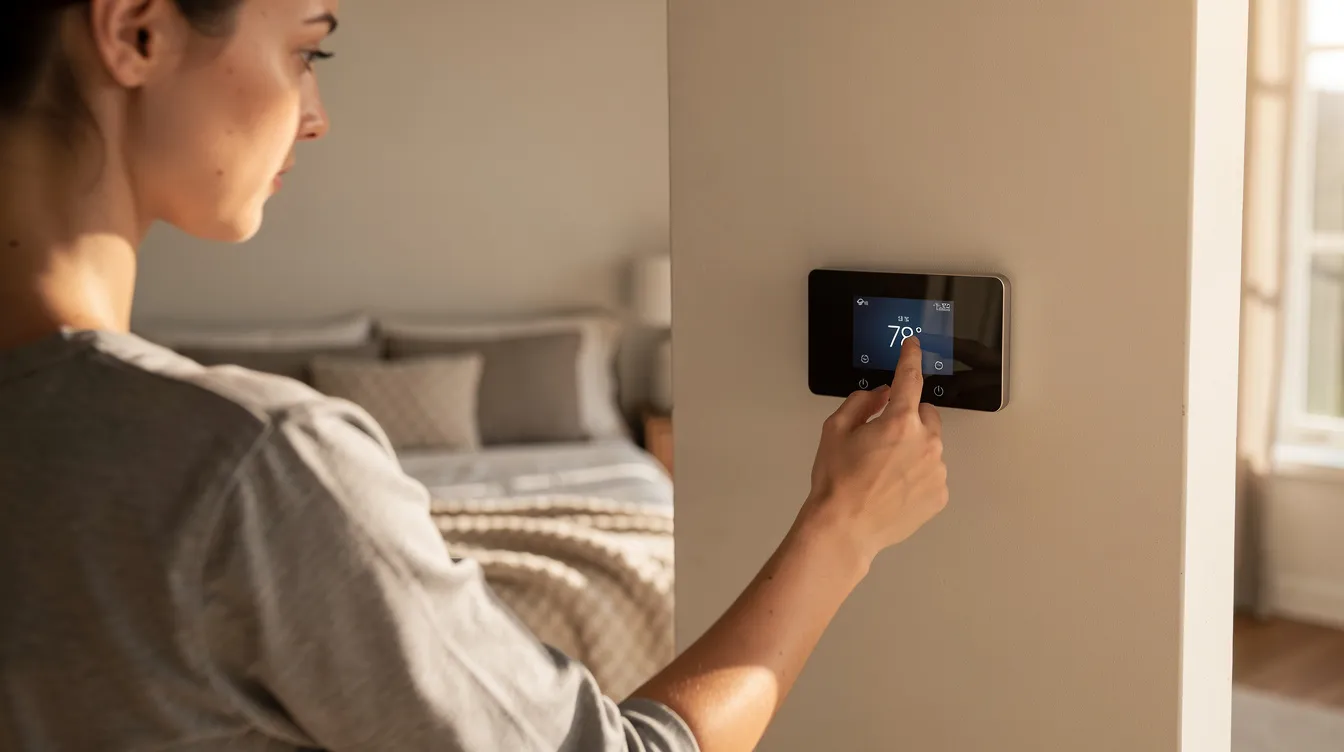
Lower your thermostat gradually. Drop the temperature by 1–2°F each week to prevent rebound discomfort. This allows your body to adapt over 2–4 weeks without spiking cortisol from abrupt changes.
Use breathable bedding. Natural fibers like 100% cotton or linen offer permeability above 300 CFM, dissipating body heat 20–50% better than synthetic materials.
Add cooling technology. Gel-infused foam mattress toppers or phase-change material pillows can maintain surface temperatures 5–10°F below body heat.
Time your exercise. Vigorous activity 3–4 hours before bed elevates core temp, creating a subsequent drop that helps you fall asleep.
Take a warm bath. A shower or bath 90 minutes before bedtime dilates blood vessels for improved distal heat loss as your body cools naturally.
Maintain a consistent sleep routine. Regular timing synchronizes circadian cues, amplifying temperature effects by 15–20% in efficacy according to sleep medicine research.
Limit Blue Light To Improve Sleep Onset
Light exposure, particularly blue light from screens, suppresses melatonin by up to 50% through intrinsically photosensitive retinal ganglion cells.
To improve your night’s rest:
- Stop screen use 60 minutes before bed
- Use 480nm-blocking filters that reduce melanopsin activation by 80%
- Switch to dim amber lights under 10 lux in the hour before sleep
- Pair darkness with a cooler room for the fastest core temperature drop
Disease control research from the National Institute of Health confirms that managing light stages before bed significantly impacts how quickly people sleep.
Bedding And Mattress Choices For A Cold Room
Your bedding can either support or sabotage your sleep temperature goals.
Best fabric choices:
- Cotton sheets (breathable, moisture-wicking)
- Linen (30% better breathability than polyester)
- Eucalyptus lyocell (natural cooling properties)
Mattress features for hot sleepers:
- Open-cell foam structures
- Graphite or gel layers
- Hybrid innerspring-gel models (outperform traditional memory foam)
Pillow recommendations:
- Latex cores with ventilated designs
- Test pillows in-store when possible for pressure relief and airflow
Bedroom Environment Checklist To Improve Sleep

Optimal bedroom temperature for sleep – practical tips to fall asleep faster and improve sleep hygiene
Use this checklist to optimize your sleep environment:
| Element | Recommendation |
|---|---|
| Thermostat set | 60–67°F (adjust for age) |
| Humidity | 40–60% (use a hygrometer) |
| Airflow | 5–10 air changes per hour |
| Fan placement | Oscillating, 3–4 feet from bed |
| Air conditioning | Even cooling without direct drafts |
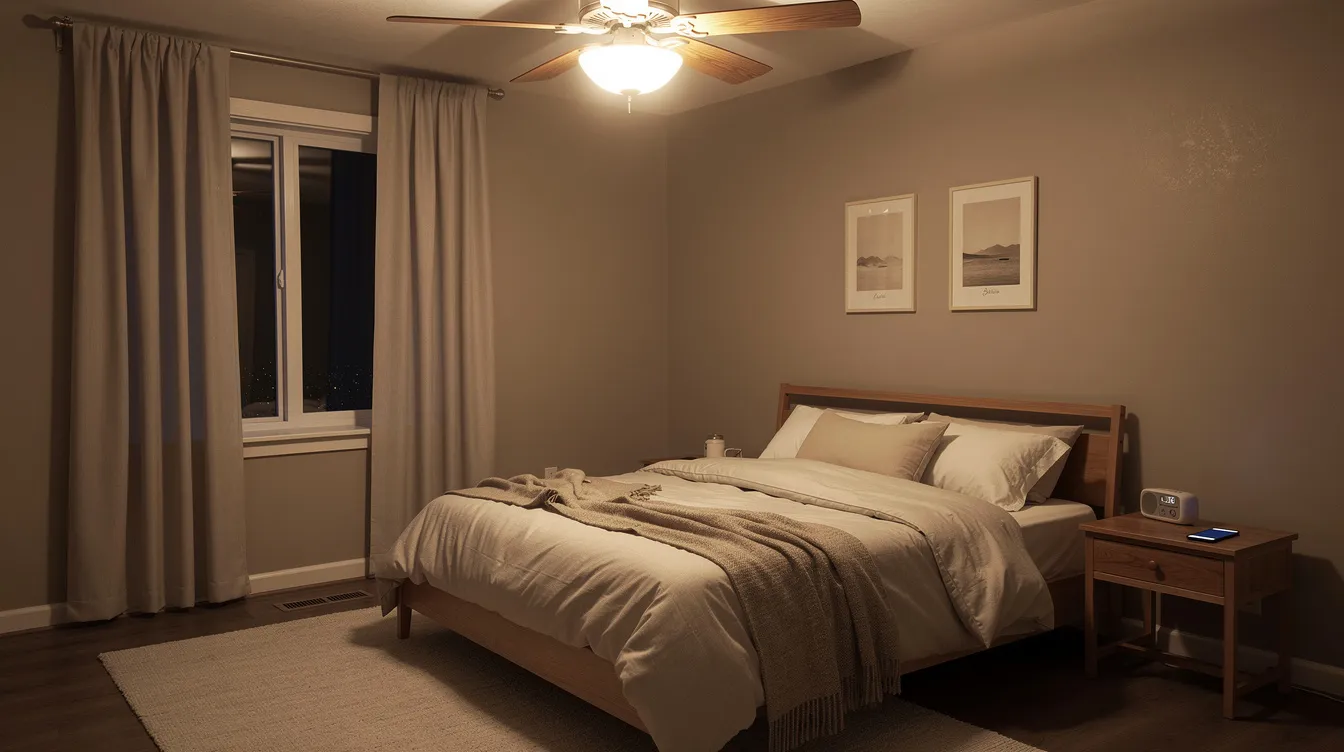
| Electronics | Remove charging devices emitting 5–15W of heat |
| Bedding | Natural fibers, light linens |
A small oscillating fan can provide 2–3°F of additional cooling without creating uncomfortable cold air drafts.
When To Consult Sleep Medicine
If you’ve optimized your bedroom temperature and still experience poor sleep for more than two weeks, consider seeing a sleep specialist.
Signs you should seek professional help:
- Sleep efficiency remains below 85% despite changes
- Persistent insomnia unrelated to environment
- Symptoms suggesting sleep disorders like apnea or thermoregulatory dysfunction
When you visit a sleep disorders program, bring:
- Temperature and humidity logs
- Actigraphy data from wearables
- Notes on symptoms and sleep patterns
Experts like MA S. Smith S. from Miami Miller School of Medicine and researchers published in Nagoya J Med Sci and Aging Neurosci emphasize that 10–15% of persistent sleep issues tie to undiagnosed disorders requiring polysomnography.
Quick Action Plan: Set Your Thermostat Tonight
You don’t need to wait for a complete bedroom renovation. Start tonight:
- Set your thermostat within the best room temperature range of 60–67°F (or adjust based on age)
- Remove extra blankets that push you outside your comfort zone
- Track your sleep for two weeks using a journal or wearable
- Adjust by 1–2°F based on whether you’re maintaining sleep or waking frequently
Small temperature adjustments can lead to a better night’s rest without major expense or effort. Finding your personal optimal bedroom temperature for sleep is worth the two-week experiment.
The science is clear: a cooler room helps you fall asleep faster, improves slow wave sleep and REM cycles, and supports your body’s natural thermoregulation. Make the change tonight and track what you discover.