
The smart mattress market has matured significantly, offering everything from pressurized air chambers that customize firmness on each side of the bed to hydronic cooling systems that maintain your exact temperature throughout the night. These sleep systems promise better sleep quality through data-driven insights, adaptive comfort, and advanced technology that responds to your body in real-time. The mattress industry has rapidly evolved with the integration of smart technology, leading to a new generation of connected sleep products.
But here’s the trade-off: smart mattresses typically cost between $2,000 and $9,000+ for queen sizes, often require subscription fees for full feature access, and need consistent electricity and internet connectivity. Increasingly, these mattresses integrate with smart devices such as smartphones and voice assistants, enhancing comfort and convenience through features like sleep tracking and automation. They’re sophisticated pieces of sleep technology that demand setup time and app familiarity to deliver their full value.
This smart mattress review is designed for couples with differing temperature preferences, side sleepers seeking targeted pressure relief, anyone tracking sleep data to address poor sleep, and tech-forward consumers ready to invest in optimization. Use this guide to understand which features actually matter, test the models against your specific needs, and avoid common purchasing mistakes.
What Makes a Smart Mattress and Sleep System
A smart mattress integrates pressure-sensing technology, adjustable firmness mechanisms, temperature control systems, and data collection into a single sleep surface, all powered by smart technology. Unlike a traditional mattress that offers static comfort, these beds actively adjust to your body and environment, leveraging advanced features such as sleep tracking, adjustable support, and automated climate control.
Core smart functions include:
- Real-time firmness customization via adjustable air chambers or zoning
- Active heating and cooling through air-based or hydronic systems
- Sleep tracking that monitors stages and generates daily sleep reports
- Biometric monitoring (heart rate, respiratory patterns) on premium models
- App-based or remote control adjustment
Primary hardware components to verify:
| Component | What to Check |
|---|---|
| Air chambers or foam zones | Number of chambers, dual-side independence |
| Air coils | Presence of air coils as an alternative to traditional steel coils for responsive support and improved pressure relief |
| Control unit | Tablet, app, or physical remote control |
| Temperature system | Air-based or water-based cooling mechanism |
| Sensors | Pressure mapping, biometric capabilities |
| Adjustable base | Compatibility, motor quality, lift positions |
Common subscription pitfalls:
Most smart mattresses require app subscriptions for full sleep tracking and climate control features. Firmware updates may introduce compatibility issues with older smartphones. Some manufacturers discontinue software support, creating potential obsolescence concerns. Always clarify ongoing costs and support timelines before purchasing.
Key Features To Evaluate Before Buying

Smart mattress review – what makes a smart mattress and sleep system
Before diving into specific models, establish your feature priorities. Not every smart bed excels at everything, and paying for capabilities you won’t use wastes money. The way a bed feels can vary significantly depending on the materials used and smart features like adjustable firmness and the ability to adjust temperature, which together influence comfort, support, and the overall sleep experience.
Feature priority checklist:
- Temperature regulation (essential for hot sleepers and couples; the ability to adjust temperature is a key differentiator among smart mattresses)
- Adjustable firmness levels (critical for combination sleepers)
- Sleep tracking depth (important if data drives your decisions)
- Adjustable base compatibility (required for zero gravity positioning)
- Partner independence (dual-zone for different firmness preferences)
- App quality and reliability (daily interaction point)
Budget versus features trade-offs:
- Under $3,000: Expect thinner comfort layers, basic sleep tracking, limited temperature features
- $3,000-$6,000: Full adjustable firmness settings, dual-zone temperature, comprehensive sleep data
- $6,000+: Active heating/cooling, biometric monitoring, premium foam technologies
The smart features you’ll actually use daily matter more than impressive specifications you’ll ignore.
Best Temperature Control: Climate Features Explained
Two primary cooling systems dominate the market: air-based and hydronic (liquid-based) systems.
Air-based cooling circulates temperature-controlled air through chambers beneath the sleeping surface. Models like the Saatva Solaire and Sleep Number beds use this approach. It’s effective for general temperature regulation and integrates naturally with adjustable firmness air chambers.
Hydronic systems use water circulation for more precise temperature adjustments. The Eight Sleep Pod Pro represents this category, offering superior responsiveness and the ability to adjust temp to specific degrees throughout the night.
The Tempur-Pedic TEMPUR-ActiveBreeze Smart Bed features active heating and cooling with separate temperature settings on each side—critical for couples with opposing temperature preferences. At $9,988 for a queen, it represents premium positioning for temperature-control-focused buyers.
Tests for night-long temperature stability:
- Measure cooling fade over 8+ hour sleep periods
- Verify temperature settings maintain consistency through multiple sleep cycles
- Test hot flashes response time (how quickly the system reacts)
- Check if the bed sleeps cool during summer months without excessive noise
Lab testing on the Leesa Sapira Chill Hybrid demonstrated measurable results: approximately 6 degrees cooler compared to standard mattresses using cooling gun testing. This provides concrete performance data beyond marketing claims.
Dual-zone capabilities matter for couples. Queen and larger sizes should offer independent temperature control on each side. Verify the system can handle opposite preferences (one partner wanting cooling, the other wanting warmth) simultaneously.
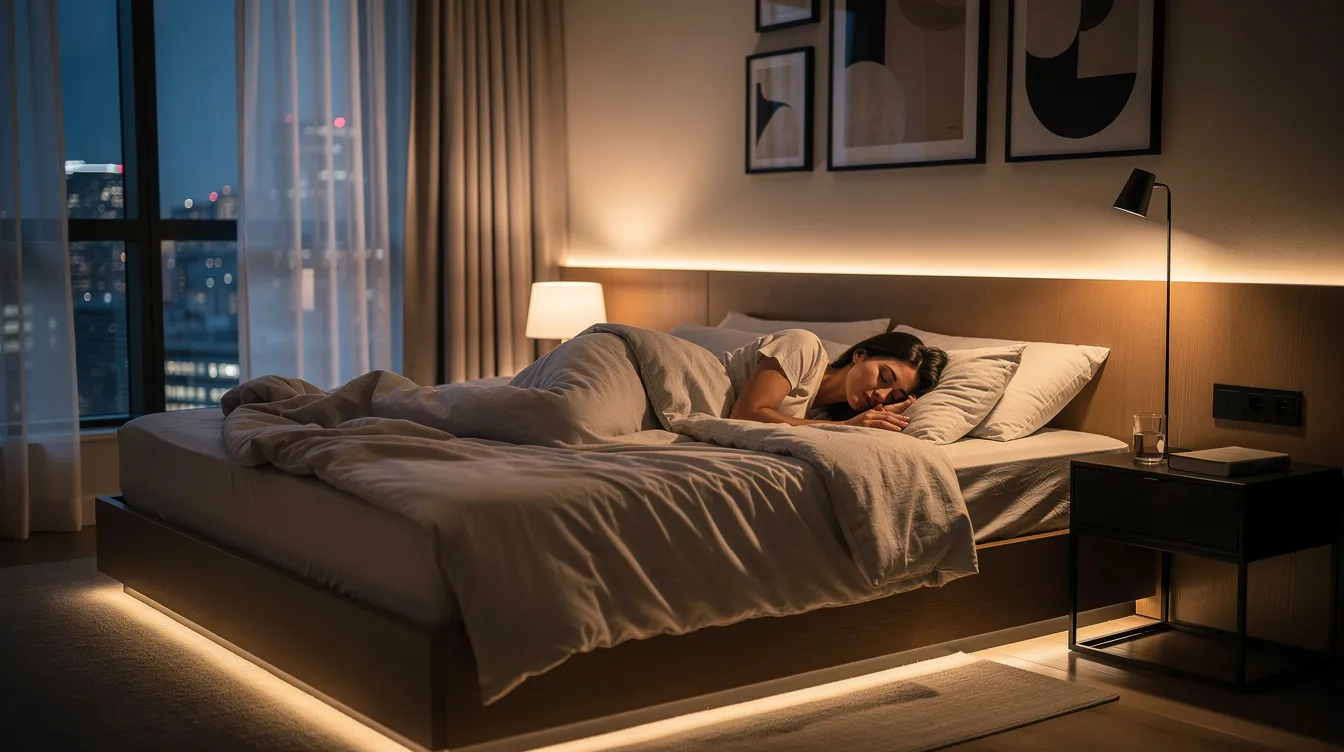
Adjustable Bed and Adjustable Base Functionality
Adjustable beds transform how you sleep and rest. The functionality extends beyond simple head elevation.
Key positioning modes:
- Zero gravity: Elevates head and feet to distribute body weight evenly, reducing spinal pressure. Named after NASA aerospace engineering principles, it’s particularly beneficial for back pain sufferers.
- Anti-snore elevation: Automatically raises the head section to open airways when snoring is detected. The Tempur-Pedic system’s SmartPowerBase specifically offers detect snoring capabilities.
- Flat return: Essential for returning to traditional sleep position smoothly and quietly.
- Lounge positions: Preset angles for reading, watching TV, or working in bed.
The Sleep Number 360 i10 offers dual adjustability—both sides of the bed adjust independently to different angles. Its 13-inch height provides enhanced lumbar support compared to standard mattress profiles.
Testing checklist:
- Verify auto-snore elevation triggers appropriately (not too sensitive, not missing events)
- Test return-to-flat for smooth, quiet operation
- Check programming reliability across multiple adjustment cycles
- Measure motor noise during position changes
Compatibility verification is essential. Not all adjustable bases work with all mattress types. Air-chamber systems like the Solaire require specific base pairings—Saatva offers its Lineal Base as a compatible option. Foam-based smart mattresses pair with designated smart bases, sometimes sold separately at significant additional cost.
Pressure Relief and Support For Side Sleepers
Side sleepers require targeted pressure relief in shoulder and hip zones where body weight concentrates during lateral sleeping. This is where mattress design separates adequate from excellent.
The Saatva Solaire contains layers of zoned latex and gel infused memory foam that contour evenly and enhance adjustable firmness. These materials provide cushioning that competitors with thin foam layers cannot match—specifically important for stomach sleepers who need different support than side sleepers.
Zoning and pressure relief checklist:
- Verify distinct zones for shoulders, lumbar, and hips
- Check for latex layer or memory foam in comfort layers
- Test contouring under side sleeper weight (130+ pounds particularly)
- Assess whether the mattress provides medium firm support without excessive hip pain
The Eight Sleep Pod Pro receives specific recommendations for back pain sufferers, offering comfort and support that addresses both pressure relief and postural needs.
Firmness range affects side sleeper suitability. The Solaire offers adjustment from 5.5/10 (softer than industry standard medium firm of 6.5/10) to 8/10 (firmest), enabling side sleepers to find their preferred firmness based on body type and sleep position.
Edge support testing:
- Measure body weight distribution at mattress borders
- Assess foam or coil compression at perimeter points
- Verify stability when sitting on edge or sleeping near border
- Check for “rolling off” sensation during position changes
Remote Control, App Experience, and Gentle Vibrations
The interface determines daily satisfaction. A sophisticated mattress with a frustrating app becomes a regret.
App evaluation criteria:
| Factor | What to Test |
|---|---|
| Responsiveness | Adjustment speed after input |
| Menu clarity | Intuitive navigation to common settings |
| Stability | Crash frequency, loading times |
| Offline functionality | Basic controls without internet |
| Compatibility | Works with your phone OS version |
Many smart mattresses now integrate with smart devices such as smartphones and voice assistants like Alexa, allowing users to control mattress settings and receive sleep data through connected platforms. This integration enhances convenience and enables features like automation rules and voice control.
The Sleep Number platform emphasizes app-based control with SleepIQ technology for sleep tracking, while offering physical remote control options for users preferring tactile interfaces. The Saatva Solaire received 4.8 out of 5 stars with customers specifically appreciating adjustable firmness settings—indicating the interface experience satisfies most users despite premium pricing.
Physical remote control tests:
- Measure latency between button press and mattress response
- Check battery longevity and replacement accessibility
- Evaluate button layout intuitiveness in darkness
- Verify all functions accessible without app dependency
Gentle vibrations serve dual purposes:
- Silent wake-up functions using subtle vibrations rather than audio alarms
- Position adjustment prompts for health conditions requiring periodic repositioning
Test vibration intensity ranges—some users find default settings too aggressive or too subtle. The best smart mattresses allow customization of vibration strength and patterns.
Sleep Tracking, Fall Asleep Tools, and Deep Sleep Metrics
Sleep tracking capabilities vary dramatically by system sophistication. Understanding what each platform actually measures prevents disappointment.
Sleep stage reporting verification:
- Confirm the system reports light sleep, deep sleep, REM, and wake periods
- Check if the sleep app displays a sleep fitness score or sleep score
- Verify data syncs with other health platforms if desired
- Assess accuracy against perceived sleep quality
The Sleep Number platform’s SleepIQ technology tracks sleep stages and provides improvement data. The eight sleep app and similar premium systems with biometric sensors track heart rate variability, respiratory patterns, and body temperature fluctuations.
Fall asleep aids to test:
- Audio features (white noise, guided relaxation)
- Gentle vibration patterns designed to induce relaxation
- Temperature pre-conditioning before sleep time
- Breathing guidance integrations
Important distinction: sleep stage tracking (reporting what occurred) differs from sleep stage optimization (actively improving deep sleep percentage). The system’s ability to improve sleep requires longitudinal comparison with baseline data.
The Eight Sleep Pod Pro’s biometric tracking capability exceeds basic motion and position sensing available in simpler air-chamber systems. This represents significant technical differentiation for health-conscious users prioritizing sleep patterns analysis.
Assessing deep sleep claims:
Collect baseline sleep data for 2-3 weeks before smart mattress use. Compare deep sleep percentages and sleep quality metrics after adaptation period. Improvement claims require personal validation—manufacturer statistics reflect averages, not individual results.
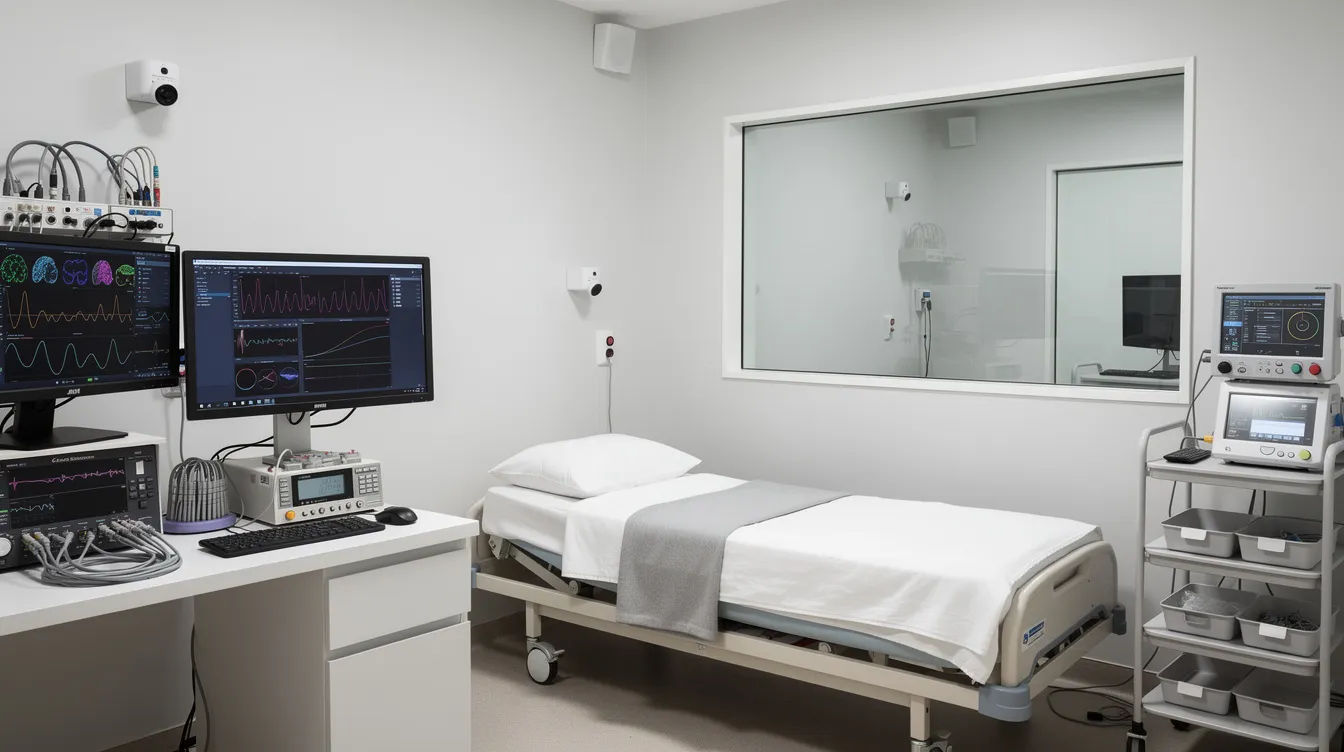
How We Test Smart Mattresses
Comprehensive smart mattress evaluation requires multiple methodologies across lab conditions and real-world use.
Sleep lab tests:
- Cooling gun measurements for temperature performance
- Pressure mapping under various body weights and positions
- Durability testing of air chambers and electronic components
- Electromagnetic field (EMF) exposure measurement
- Sound level testing during adjustment operations
- Firmness verification across full adjustment range
Real-user night trials:
- Minimum 14-28 night periods to allow adaptation
- Testing across diverse body types: lightweight (under 130 pounds), average (130-200 pounds), heavy (200+ pounds)
- Testing across sleep positions: back, side, stomach, and combination sleepers
- Partner disturbance assessment on dual-zone models
- Temperature preference validation across seasons
The Solaire demonstrated strong performance for testers across the board, particularly for those over 130 pounds—indicating weight-specific testing distinction.
Software stability assessment:
- Monitor firmware update frequency and notification clarity
- Test compatibility with various smartphone operating systems
- Track app crash incidents over extended periods
- Verify cloud data backup and restoration
- Assess feature degradation after updates
Customer review aggregation provides validation:
| Model | Rating | Sample Size |
|---|---|---|
| Saatva Solaire | 4.8/5 | 140+ reviews |
| Sleep Number c4 | 4.7/5 | 20,000+ reviews |
| Tempur-Adapt | 4.6/5 | Substantial sample |
However, reviews skew toward early adopters and enthusiasts. Return rates and warranty claim frequencies provide unbiased performance indicators but are rarely published.
Our Picks: Best Smart Mattresses

Smart mattress review – how we test smart mattresses
Our selection criteria prioritize real-world performance over marketing claims. Each model earned its designation through testing against specific use cases and user needs.
Labeling system:
- Best Overall: Highest combined performance across all categories
- Best [Category]: Superior performance in specific feature area
- Best Affordable: Optimal value with retained smart features
Best Smart Mattress Overall
Winner: Saatva Solaire
The Saatva Solaire earns top pick designation across multiple 2026 review sources, earning consistent 4.8/5 star ratings from Sleep Advisor, Sleep Foundation, and Mattress Clarity.
Why it wins: The pressurized air chamber technology, which utilizes air coils as a modern support system, enables customization on each side of the bed to different firmness levels—directly addressing the primary smart mattress value proposition for couples. These air coils offer responsive adjustment and improved comfort compared to traditional steel coils. Layers of zoned natural latex and gel-infused memory foam provide cushioning that cheaper competitors cannot match.
Standout feature: Adjustable firmness range from 5.5/10 to 8/10 accommodates virtually any preferred sleep position, from soft-preferring side sleepers to stomach sleepers needing firmer mattress support.
Practical details:
- Sleep trial: Standard trial period included
- Warranty: Long-term coverage on components
- Delivery: Free white glove delivery available
- Setup: Professional installation recommended
Customer reviews note the price point exceeds expectations, but overwhelmingly positive feedback suggests the all the features justify the investment for most users.
Best Temperature Control
Winner: Tempur-Pedic TEMPUR-ActiveBreeze Smart Bed
At $9,988 for a queen (California king pricing higher), this represents premium positioning for buyers prioritizing temperature regulation above all else.
Why it outperforms: Active heating and cooling with separate settings on each side addresses couples with opposing temperature preferences. The proprietary TEMPUR memory foam integrates with temperature technology rather than treating it as an add-on.
Technology approach: Unlike passive cooling through breathable materials alone, the ActiveBreeze actively adjusts temperature throughout the night based on body temperature changes and sleep environment conditions.
Dual-zone performance: Partners can maintain completely different temperature settings simultaneously without bleed-through. Critical for couples where one partner experiences hot flashes while the other sleeps cold.
The combination of premium foam technology and sophisticated climate control justifies the price for buyers who have struggled with heat retention on previous mattresses.
Best Smart Mattress For Side Sleepers
Winner: Saatva Solaire
Side sleepers need specific support characteristics that most smart mattresses address inadequately. The Solaire’s design directly targets these requirements.
Pressure relief suitability: Zoned latex and gel infused memory foam layers provide targeted cushioning in shoulder and hip zones. The contouring adapts to body curves without creating pressure points that cause morning stiffness.
Why it works: Unlike air-only systems that may feel bouncy or unsupportive, the Solaire’s foam layers provide consistent pressure relief regardless of firmness setting. Adjusting air chamber firmness fine-tunes overall support without eliminating the comfort layer benefits. The bed feels customizable for different body types and sleep positions, as the adjustable features allow each sleeper to personalize comfort and support to their preference.
Recommended firmness settings:
- Lightweight side sleepers (under 130 lbs): 5.5-6.5/10
- Average side sleepers (130-200 lbs): 6-7/10
- Heavier side sleepers (200+ lbs): 6.5-7.5/10
These settings provide hip pain relief while maintaining spinal alignment. The medium soft to medium firm range accommodates most side sleeper body types.
Best Affordable Smart Mattress
Winner: Sleep Number c4
The Sleep Number c4 positions itself as the best affordable smart bed option while retaining core smart functionality.
Premium features included:
- Responsive air chambers with dual-zone customization
- SleepIQ technology for sleep tracking
- App-based and remote control options
- Compatibility with Sleep Number adjustable bases
Feature compromises:
The c4 features a thinner comfort layer resulting in a firmer feel compared to premium Solaire or i10 models. Pressure relief capabilities are reduced—side sleepers may find insufficient cushioning without additional toppers.
Customer reviews note gripes about warranty clarity, suggesting communication gaps exist in the service experience. However, the c4’s 4.7/5 rating across 20,000+ reviews indicates strong overall satisfaction.
Value proposition: Core smart functionality (air adjustment, app control, sleep tracking) at lower cost through reduced material investment. Appropriate for buyers prioritizing adjustable firmness over plush comfort.
Best Sleep System (Eight Sleep and Alternatives)
The Eight Sleep Pod Pro represents hydronic cooling technology with superior biometric tracking capabilities. This positions it uniquely against air-chamber competitors.
Eight Sleep Pod Pro highlights:
- Water-based temperature control with precise degree adjustments
- Biometric sensors tracking heart rate variability and respiratory patterns
- Integration with the eight sleep app for comprehensive sleep data
- Specific recommendation for back pain sufferers
Hydronic versus air system comparison:
| Factor | Hydronic (Eight Sleep) | Air-Based (Solaire, Sleep Number) |
|---|---|---|
| Temperature precision | Higher | Moderate |
| Response speed | Faster | Slower |
| Maintenance | Water system upkeep | Air pump reliability |
| Firmness adjustment | Limited | Extensive |
| Biometric tracking | Advanced | Basic to moderate |
Testing app integration:
The eight sleep app provides detailed daily sleep reports and sleep fitness score tracking. Verify the app’s compatibility with your smartphone, responsiveness during adjustments, and accuracy of biometric data against perceived sleep quality.
Recommendation: If temperature control and biometric monitoring outrank adjustable firmness in your priorities, hydronic systems like Eight Sleep warrant serious consideration despite different trade-offs than air-chamber alternatives.
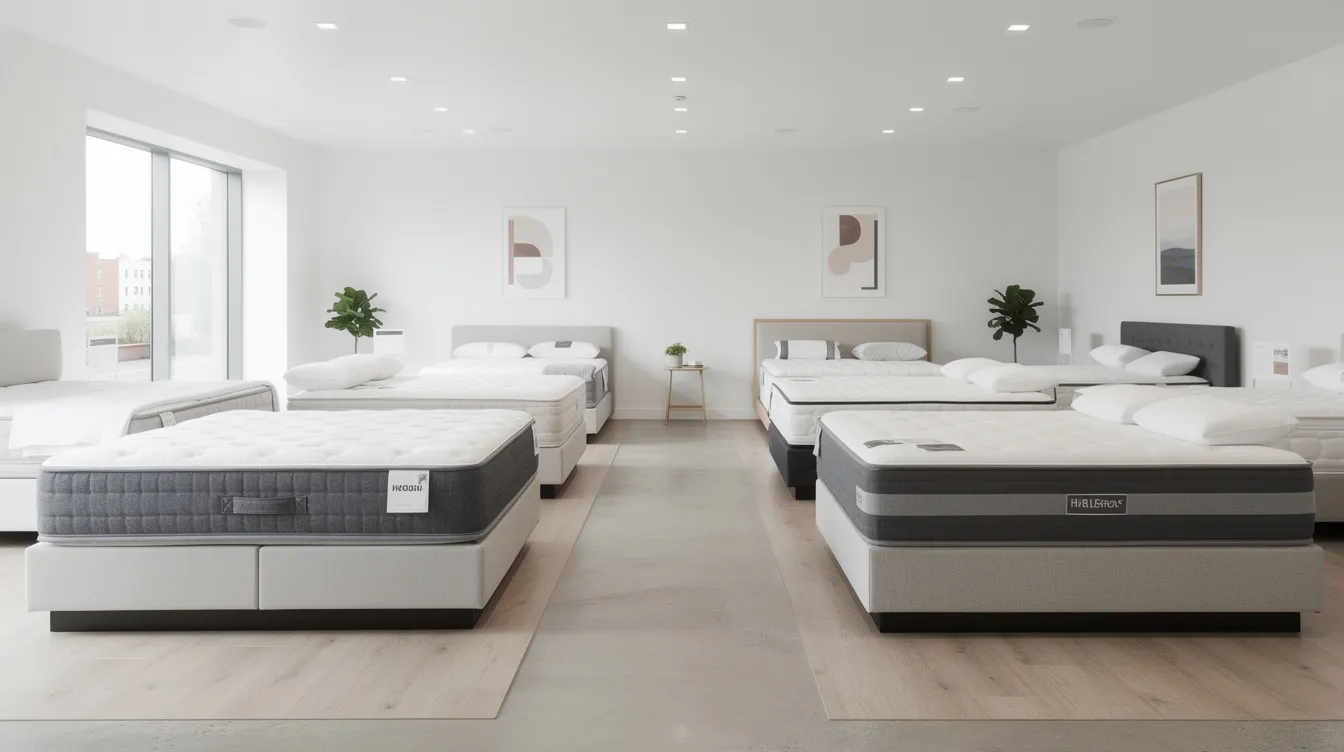
Compare the Best Smart Mattresses
This comparison table provides quick reference across key decision factors.
| Model | Price (Queen) | Trial Period | Warranty | Temperature System | Adjustable Firmness | Sleep Tracking | Adjustable Base Compatible |
|---|---|---|---|---|---|---|---|
| Saatva Solaire | Mid-High | Yes | Long-term | Air + breathable materials | Yes (air chambers) | Yes | Yes (Lineal Base) |
| Sleep Number c4 | Moderate | Yes | Standard | Air-based | Yes (air chambers) | Yes (SleepIQ) | Yes |
| Sleep Number i10 | High | Yes | Standard | Air-based | Yes (dual) | Yes (SleepIQ) | Yes (dual adjustable) |
| Tempur-Pedic ActiveBreeze | $9,988+ | Yes | Premium | Active heating/cooling | Limited | Yes | Yes (sold separately) |
| Eight Sleep Pod Pro | Premium | Yes | Standard | Hydronic | Limited | Advanced biometric | Varies |
| Leesa Sapira Chill | Mid | Yes | Standard | Passive (6° cooler) | No | No | Yes |
Key observations:
- Adjustable base compatibility varies—verify specific base requirements before purchasing
- Temperature systems range from passive (breathable materials only) to active (powered heating/cooling)
- Sleep tracking sophistication varies from basic motion sensing to comprehensive biometrics
- Trial periods allow real-world testing—use them fully
Split king considerations:
For couples wanting independent adjustment on both sleeping surfaces, split king configurations offer maximum flexibility. Each side functions as a separate mattress with individual firmness and positioning control. Verify the specific model supports split king before assuming availability.
Setup, Transport, and Accessories

Smart mattress review – compare the best smart mattresses
Smart mattresses require more consideration than traditional mattress delivery.
White glove delivery considerations:
Most premium smart mattresses include or offer white glove delivery as an option. This matters because:
- Air chamber systems require proper installation and inflation
- Electronic components need correct positioning
- Adjustable bases require assembly and calibration
- Old mattress removal simplifies transition
Free white glove delivery availability varies by brand and location. Saatva includes this service; others charge additional fees. Factor delivery costs into total purchase price.
Essential accessories to consider:
- Smart pillow: Some systems integrate pillow sensors for enhanced sleep tracking
- Mattress protector: Waterproof protection critical for electronics
- Compatible sheets: Deep pocket sheets for 13”+ mattress heights
- Backup power: UPS for adjustable base during outages
Smart pillow and blanket integration:
Advanced sleep systems increasingly offer ecosystem products. Verify compatibility and actual value-add before purchasing. Many sleep trackers duplicate functionality already present in the mattress sensors.
Bedroom preparation:
- Ensure electrical outlets within reach of control units
- Verify WiFi signal strength at bed location
- Plan cable management for clean appearance
- Confirm bedroom door width accommodates mattress dimensions
Troubleshooting and Maintenance
Smart mattresses require ongoing attention that traditional mattresses don’t demand.
Basic troubleshooting for common issues:
| Issue | First Steps |
|---|---|
| Firmness not adjusting | Check air pump power, verify hose connections |
| Temperature not responding | Confirm water levels (hydronic), check pump operation |
| App not connecting | Restart app, verify WiFi, check Bluetooth pairing |
| Sleep tracking inaccurate | Clean sensors, verify sensor positioning |
| Noise during adjustment | Lubricate moving parts, check for obstructions |
| Uneven firmness | Check for air leaks, recalibrate chambers |
Firmware update procedures:
- Connect mattress to stable WiFi network
- Open manufacturer app and navigate to settings
- Check for available updates
- Schedule updates during daytime hours (not during sleep)
- Verify completion before bedtime use
- Test core functions after update
Never skip firmware updates—they often address safety and performance issues. However, avoid updating immediately after release; wait 1-2 weeks for early bugs to surface and resolve.
Cleaning and hygiene routines:
- Weekly: Vacuum mattress surface with upholstery attachment
- Monthly: Wipe control units and sensors with dry cloth
- Quarterly: Check air hose connections, inspect for wear
- Annually: Professional deep cleaning recommended
- As needed: Address spills immediately (critical for electronic components)
Component replacement:
Air chambers, pumps, and electronic components have finite lifespans. Clarify warranty coverage for each component type and replacement costs after warranty expiration. Some manufacturers offer extended coverage for electronics at additional cost.
Who Should Buy a Smart Mattress
Smart mattresses solve specific problems exceptionally well—but they’re not for everyone.
Ideal buyer profiles:
Couples with different temperature preferences: If one partner sleeps hot while the other needs warmth, dual-zone temperature control eliminates nightly negotiation. This alone justifies premium pricing for affected couples.
Data-driven sleep optimizers: Users who track health metrics and make decisions based on data benefit from comprehensive sleep tracking capabilities. Daily sleep reports and sleep score trends inform adjustments and validate improvements.
Tech-forward users with smart devices: Those who already use smart devices in their home—such as smartphone apps, voice assistants like Alexa, or automation platforms—will benefit from the seamless integration many smart mattresses offer. Features like sleep tracking, temperature regulation, and automation rules (e.g., via IFTTT) enhance comfort and convenience.
Side sleepers with pressure point issues: Those experiencing hip pain or shoulder discomfort from inadequate cushioning benefit from adjustable firmness combined with zoned pressure relief.
Medical conditions benefiting most:
- Sleep apnea (auto-snore elevation features)
- Back pain (zero gravity positioning, adjustable support)
- Circulation issues (leg elevation options)
- Temperature regulation disorders (precise climate control)
- Sleep disorders being monitored (detailed sleep data for sleep medicine providers)
Who should avoid smart mattresses:
- Budget-conscious buyers: If price sensitivity is primary concern, traditional high-quality mattresses offer better value per dollar
- Low-maintenance preferences: Users who dislike apps, updates, and technology troubleshooting will find smart beds frustrating
- Frequent movers: Heavy weight and complex setup make relocation challenging
- Tech-skeptical sleepers: Those who prefer simple solutions without data collection
- Renters with short leases: Investment payback requires multi-year use
FAQs: Quick Answers About Smart Sleep
Do smart mattresses actually help you fall asleep?
Fall asleep tools vary by system. Audio features, gentle vibration patterns, and temperature pre-conditioning can aid relaxation. However, the primary benefit for falling asleep comes from optimized sleep environment settings learned over time. The mattress identifies your preferred firmness and temperature combinations, eliminating discomfort that prolongs sleep onset.
Effectiveness depends on individual responsiveness. Some users report significant improvement; others notice minimal difference. The 14-28 night trial period allows personal validation before commitment.
How do smart beds track deep sleep?
Most smart mattresses track sleep stages through pressure sensors detecting body movement patterns and, in premium models, biometric sensors monitoring heart rate and respiratory patterns. During deep sleep, movement decreases and vital signs follow predictable patterns.
The system correlates sensor data with sleep stage characteristics and presents findings in the sleep app. Advanced systems like Eight Sleep distinguish between light sleep, deep sleep, REM, and wake periods.
Accuracy varies by technology sophistication. Basic motion-sensing tracks general sleep versus wake patterns. Biometric systems provide finer distinction between sleep stages. Neither replaces clinical polysomnography for medical diagnosis, but consumer-grade accuracy suffices for optimization purposes.
Do adjustable bases work with all mattresses?
No. Compatibility depends on both adjustable base design and mattress construction.
Compatible mattress types:
- Most foam mattresses (memory foam, latex)
- Many hybrid mattresses (foam + pocketed coils)
- Air-chamber smart mattresses (with paired bases)
Potentially incompatible:
- Traditional innerspring with border rods
- Flippable mattresses
- Extra-thick mattresses exceeding base capacity
- Some smart mattresses requiring proprietary bases
Always verify compatibility with both mattress and base manufacturers before purchasing. Some smart mattresses only function with specific proprietary adjustable bases sold separately.
How long do smart mattresses last?
Foam and material components typically last 8-10 years, similar to traditional mattresses. Electronic components may require earlier replacement. Air pumps and climate control systems may need service within 5-7 years. Software support timelines vary by manufacturer—clarify expected support duration before purchase.
Are subscription fees required?
Many smart mattresses require subscriptions for full feature access. Basic functions (firmness adjustment, temperature control) typically work without subscription. Advanced features (detailed sleep analytics, AI-driven recommendations, extended data history) often require monthly or annual fees.
Clarify subscription requirements and costs during purchase process. Some brands include lifetime access; others charge $10-20+ monthly.
Final Recommendations and Buying Checklist
Pre-purchase checklist:
- Determine primary feature priority (temperature, firmness, tracking)
- Establish total budget including base, accessories, and subscriptions
- Verify bedroom electrical outlet and WiFi accessibility
- Confirm delivery logistics and white glove availability
- Check return policy specifics including restocking fees
- Research warranty coverage for electronic versus material components
- Test app compatibility with your smartphone before committing
- Read recent customer reviews for current-version feedback
Test-night routines for new owners:
Week 1-2: Use default settings to establish baseline experience. Resist constant adjustment.
Week 3-4: Methodically test firmness range, finding your preferred firmness. Document sleep quality at each setting.
Week 5-6: Optimize temperature settings based on sleep data feedback. Test temperature adjustments across the night.
Week 7+: Fine-tune combination of all settings. Use sleep data trends to validate improvements.
Returning or exchanging smart mattresses:
Smart mattress returns involve more complexity than traditional mattresses:
- Initiate return well before trial period expiration
- Clarify pickup versus drop-off requirements
- Confirm full refund versus restocking fee policies
- Return all components including remotes and control units
- Document condition at return with photos
- Request written confirmation of return completion
Final recommendation:
The right smart mattress investment depends on which features align with your specific sleep challenges. Couples with temperature differences benefit enormously from dual-zone climate control. Side sleepers with pressure point issues gain significant relief from adjustable firmness combined with quality foam layers. Data-driven optimizers extract genuine value from comprehensive sleep tracking.
Avoid purchasing based on impressive feature lists you won’t use. Identify your sleep problems, match features to solutions, and validate through full trial period testing before commitment.
Start with the sleep trial—it exists specifically to prevent expensive regret.